


Skip to Content
News

Will Congress Erode The Clean Water Act?

If passed, the PERMIT Act will undercut states, Tribes and municipalities when it comes to protecting water

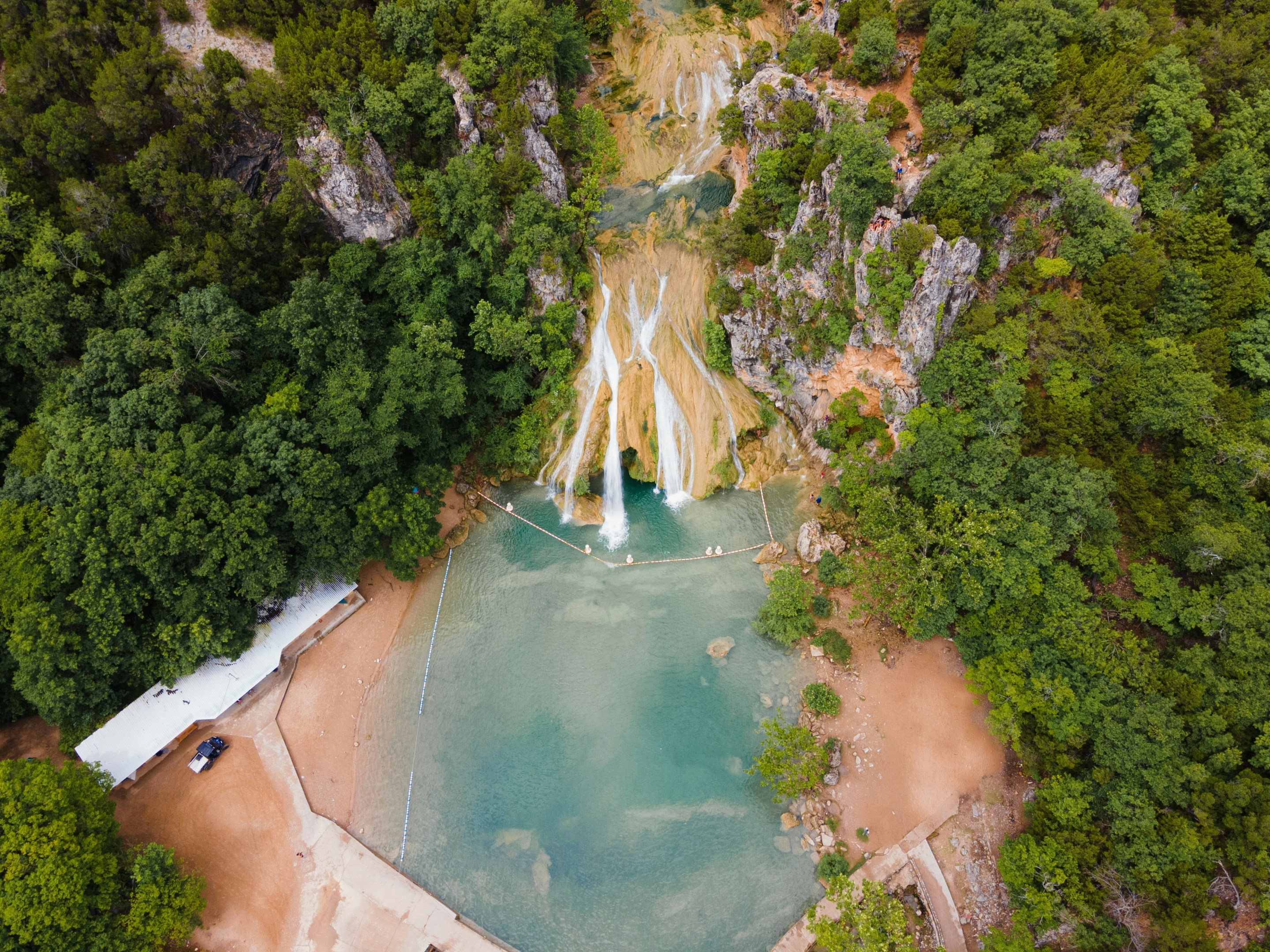
One of Oklahoma’s most beloved bodies of water, Turner Falls, located in Davis.

|J. Amill Santiago

The Pickup is an independent media company doing culture journalism for curious Tulsans. We write stories for real people, not AI scrapers or search engines. Become a paying subscriber today to read all of our articles, get bonus newsletters and more.

Strange as it seems, clean water could be a beneficiary of the Jeffrey Epstein controversy.

A full House vote on U.S. House Resolution 3898, called the PERMIT Act, stalled in late July as the House Rules Committee hit a procedural question, adjourned without a vote, and did not reconvene as the Speaker of the House sent members home until September, reportedly to avoid Epstein-related controversy. Easy majority passage had been expected. 

The pause gives people time to digest the Promoting Efficient Review for Modern Infrastructure Today Act, or PERMIT, and to contact their congressional delegation while they are at home. The act claims to “modernize” the Clean Water Act by removing environmental regulation hurdles to construction, mining, oil and gas development, and industrial agriculture. Critics say it is a death knell for the Clean Water Act.

Introduced in late June, the public has had little time to consider or take action, beyond efforts of groups like the National Wildlife Federation and the League of Conservation Voters. The subject is not sexy, mainstream media coverage has been minimal, but the matter is dire.

Boiled down, it’s about water, how it connects, and what is allowed in our streams, ponds, and marshes. The Clean Water Act governs “Waters of the United States” and, believe it or not, what waters are included in “WOTUS” has long been hotly debated.

When people think about the Clean Water Act, they envision a clearwater river that needs protection, or rusty pipes pouring dank water into a lake. But the Act touches everyone’s life, and it’s as near as the glass of water on your dining room table.

A weakened Clean Water Act could erode the ability of a state, municipality, or individuals to demand changes or call for a cleanup by limiting the definition of what is considered damage to a watershed and providing loopholes for bad actors.

Oklahoma’s most impactful Clean Water Act suit was brought by the state of Arkansas, and Arkansas lost. The landmark decision said, in essence, that upstream states must meet the water quality standards of downstream states. This led to greater cooperation among the states and forced municipalities and companies to modernize their treatment systems. It reduced the volume of effluent rich in nutrients that had turned clear streams deep green and produced eye-popping E. coli readings.

Improvements to these “point source” polluters were only a portion of the problem that continues. Poultry companies opted out of those cooperative efforts, and the Oklahoma vs. Tyson Foods, et. al, continues in Tulsa Northern District Court to this day. A weakened Clean Water Act could erode Oklahoma’s leverage against Tyson or future violators by limiting the definition of what is considered damage to a watershed and failing to hold bad actors accountable.

Which Waters Are Safe? 

Every Oklahoma farm kid knows a creek that runs dry. Whether it’s waist-deep after a storm or a dry rocky path that’s easy walking during deer season, it’s still “the creek.” The same goes for “the spring,” whether it’s bubbling up water or not. Even the Arkansas River, the Cimarron, and others run nearly dry at times, but everyone knows the water still flows somewhere underfoot.

Those same kids know they shouldn’t change the oil in their truck and dump it in that dry sandy creek. The EPA would have called that polluting “Waters of the United States.”

Emphasis on “would have.”

These are considered ephemeral, or seasonal, waters. Although most know they are closely linked with underground aquifers—the places our home wells draw water for drinking, gardening, and livestock—the government no longer seems sure.

The PERMIT Act would weaken protection for that creek, as it adds to other issues.

New regulations are emerging, related to a 2023 Supreme Court ruling that the federal government can no longer set rules on what people dump into wetlands near permanent rivers or lakes unless the marsh or swamp has “a continuous surface connection” to those waters.

Stay in touch

Sign up for our free newsletter, The Talegate

The gutting of regional EPA workforces with the Trump Administration’s Department of Government Efficiency cutbacks created backlogs and weakened enforcement and research.

Add the PERMIT Act to the mix, and the Clean Water Act could become toothless as millions of acres are removed from the definition of Waters of the United States.

The list of ephemeral and intermittent waters in Oklahoma is not complete because many are poorly defined or not documented, but it’s likely you swim, fish, or pull water for your garden or livestock from a waterway downstream of an intermittent tributary. A 2019 EPA map notes that of the 150,022 miles of linear streams in Oklahoma, 77 percent (115,611 miles) are intermittent or ephemeral.

The PERMIT Act limits the scope of the Clean Water Act to exclude waste treatment systems, ephemeral streams and marshes, prior converted cropland, groundwater, or “any other features determined to be excluded by the U.S. Army Corps of Engineers.”

It loosens or removes permitting requirements for industrial runoff and agricultural-use pesticides.

The PERMIT Act also allows that municipal or industrial wastewater discharge systems should only be required to use affordable systems that are “viably commercially available in the United States,” without further definition of what is “affordable.”

The Clean Water Act also directs state protection agencies, like the Oklahoma Department of Environmental Quality and the Oklahoma Water Board, to review in-state water quality standards at least once every three years. The Act removes that requirement and directs water quality status reviews to be done “from time to time.”

Here are a few more PERMIT ACT bullet points:

  • It allows industrial discharge of forever chemicals without reporting requirements.
  • It hinders states and Tribes from protecting waters from questionable development projects.
  • It allows for fast-tracking new pollution discharge requests that could destroy vast amounts of wetlands and streams without guarantee of mitigation measures.
  • It curtails the EPA’s authority to prevent dumping projects that endanger entire watersheds, except in very narrow circumstances.

The Politics In Play

In that late July House Rules Committee meeting, the bill’s author, Georgia Republican Rep. Mike Collins, said Democrats’ opposing points about Republicans doing the bidding of industry donors are “cliché to the point of embarrassment.”

He then dropped a series of clichés of his own, saying the Clean Water Act is “weaponized” by radical environmentalists and that “self-interested bureaucrats” regulate away America’s potential. He repeatedly called for a need to “unleash American energy independence.”

For too long, Collins said, the Clean Water Act has been used not to protect the environment but to block development for political and ideological reasons. Developers need assurances of expedited permitting and “protection from frivolous lawsuits,” he said.

“Republicans want clean water too,” he said, but he qualified that desire with a call for “American greatness” and an urgent need to meet increasing energy and electricity needs. He warns that China and Russia will win the race if regulations aren’t simplified.

Did you know that only 1.1% of The Pickup's readers are paying subscribers? Over 93% of our expenses as a business go to Oklahoma-based writers, photographers, reporters and other creatives who cover Tulsa with clear thinking and local savvy. Become a paying subscriber today to support local journalism!

The bill earlier sailed through the House Transportation and Infrastructure Committee on a Republican-only vote, where, Collins said, “We were focused on the theme of ‘America builds,’ and (H.R.) 3898 will unleash America’s ability to do so.”

Rep. Hillary Scholten, D-Michigan, countered Collins by acknowledging the 50-year-old Clean Water Act is due for an upgrade, that bipartisan solutions have been proposed and gained no traction with the majority party, and that immediate efficiency and speed of permitting processes would benefit from an infusion of experts on the subject.

Parts of the act are overly complicated; no one disputes that. But the Trump Administration’s widespread layoffs and gutting of regional EPA offices were no way to expedite permit processing, she noted.

“I, too, envision a world in which we can expedite permitting and protect access to clean water, but that’s not going to happen by continuing to erode the Clean Water Act,” she said. The proposed reductions in the PERMIT Act go too far, letting bad actors slide or ignore potential issues. Residents, especially those in rural towns and poorer neighborhoods, will absorb the harm and be saddled with the costs of cleanups, she said.

If you liked this story, please share it! Your referrals help The Pickup reach new readers, and they'll be able to read a few articles for free before they encounter our paywall.

Stay in touch

Sign up for our free newsletter

More from The Pickup

Samantha Fulnecky and Christian DEI

On college campuses and American victimhood

In ‘Monument Eternal,’ The Mountain Isn’t The Whole Story

Le’Andra LeSeur’s show at the TAF Flagship considers the weight of history, embodied resistance, and the texture of being present

December 4, 2025

Crawl To The Year’s Finish Line With These December Art Shows

What even is reality?? Ask a Tulsa artist this holiday season

December 3, 2025

Tulsa Picks: The Week’s Best Tulsa Events, December 3-December 9

First Friday, The Nutcracker, a concert at Tyler Thrasher's Materia shop, and insane amounts of Yuletide cheer

December 2, 2025
See all posts