


Editor's note: First published in three consecutive issues of This Land in 2012, science writer Ginger Strand's three-part Troubled Waters series zoomed out to a macro view of the state of Oklahoma's most critical natural resource. This is the second installment, originally published in This Land's Sept. 15, 2012 issue.
In a recent blockbuster film, 12 “Districts” are compelled, every year, to offer up two teenagers to fight to the death in a ruthless competition called the “Hunger Games.” Broadcast from a city known only as “the Capitol,” the games are avidly watched by bloodthirsty urbanites tricked out in garish makeup and Gaga-like get-ups. The decadent city folk sip cocktails at fancy restaurants while District kids fight for their lives. Meanwhile, back in the downtrodden Districts, homespun miners and farmers watch glumly while their children die gruesome deaths on live TV.
What’s being staged here—and it might remind you of our election-year partisan politics—is the divide between two increasingly separate factions in America: the country and the city. It’s a standoff also playing out in what has come to be known as Oklahoma’s “Water Wars,” a struggle that pits the Choctaw and Chickasaw Indians and residents of Southeastern Oklahoma against the Oklahoma City Water Utilities Trust—currently the biggest water retailer in the state—and the Oklahoma Water Resources Board (OWRB), the state agency that wants to help the utility grow its water empire by granting it storage rights to Lake Sardis.
Drive the road that circles Lake Sardis and you’ll come across a billboard put up by an angry local. It features a pigtailed little girl crying, next to the plea: “Daddy, how come OKC takes all our lakes?” The decadent capitol, it seems, is about to steal the reservoir, leaving the district of Southeastern Oklahoma high and dry.
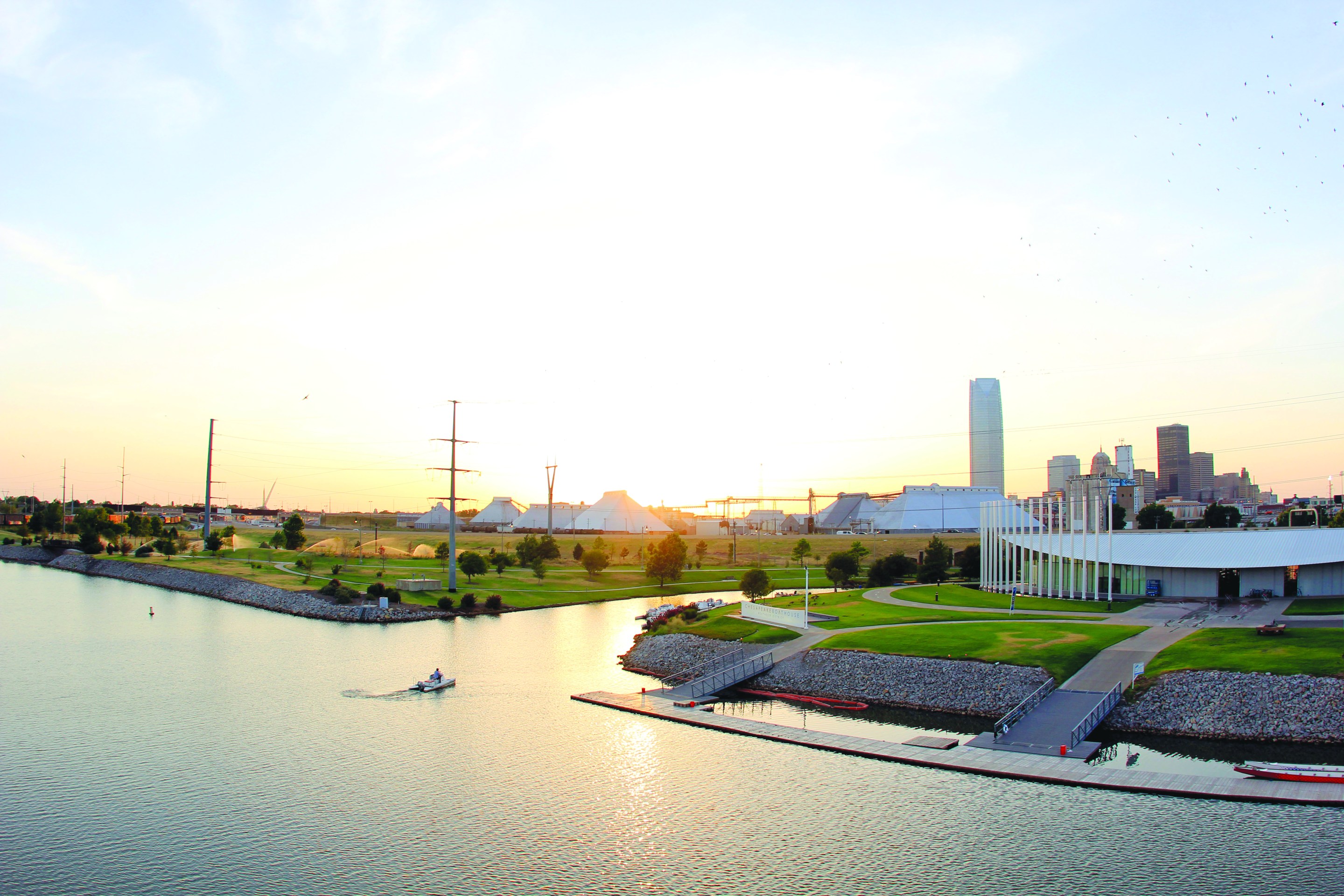
Meanwhile, Oklahoma City has discovered the magic of a waterfront. Nearly two decades into reviving its downtown by remaking its riverfront, OKC is seeing a payoff: This August, it had the lowest unemployment in a major U.S. city for the fifth straight month.
Now the city’s “Core to Shore” plan stakes the city’s economic future on more riverfront investment. Just as Senator Kerr predicted, water is growth. For city boosters, the complaints of a few Southeastern Oklahomans dwindle in the face of a proven economic engine.
Can this divide—between urban and rural, affluent and impoverished—be bridged? Or is Oklahoma doomed to play out its own cruel spectacle: the thirst games?
THE COUNTRY VERSUS THE CITY