


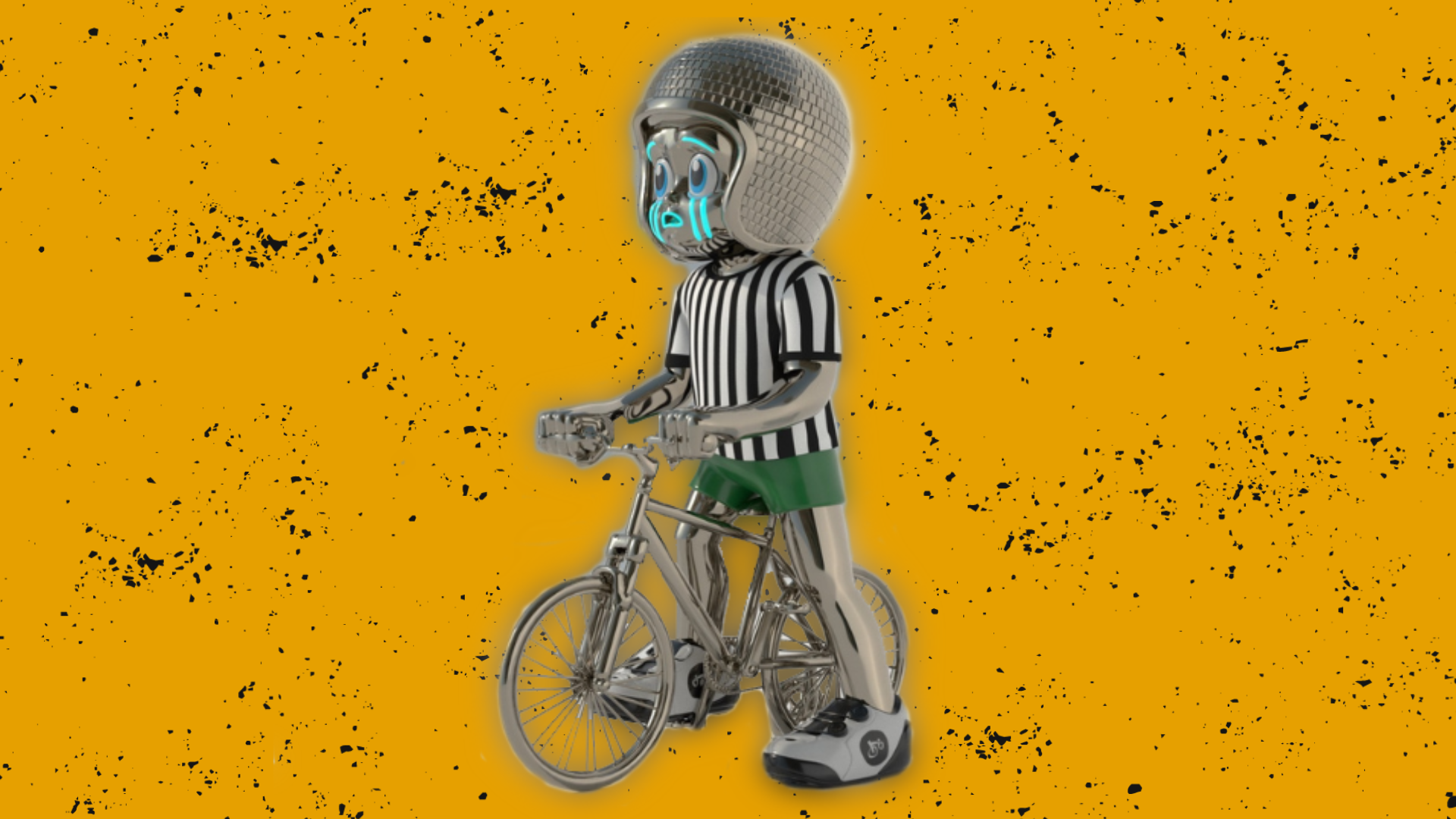
Remember this weeping, terrified infant? The one that’s supposed to represent our most festive, unhinged, joyful, homegrown community gathering in one of our most historic and beloved neighborhoods? It’s still out there, waiting in the ether to descend on us just as soon as the artist’s studio finishes production. (What you see above is definitely the final rendering, we are told.) Or as soon as the rest of the Route 66 development projects get going around Cry Baby Hill. Or possibly never.
We haven’t forgotten, even though public officials probably hoped we would. As Tulsa gears up for whatever the next round of news is about this thing, I’m thinking back on how it started: with a leaked design by New Hampshire artist Ken Kelleher—whose proposal, called “Cry Baby Cry,” was chosen by the City of Tulsa as the awardee of $250,000 and a permanent spot in the Riverview neighborhood—and a subsequent outpouring of public vitriol hotter than a sun-baked bicycle seat. In response to that community outrage, Kelleher revised his design, which, shock of all shocks, generated a second round of hate.
Tulsans haven’t expressed themselves so ferociously about a public art project since Elon Musk’s face got slapped onto the Golden Driller. Okay, that wasn’t public art, strictly speaking. It was a stunt, a lure, a moment of cringe—which, to me, is what this looks like, too.
There are layers to this community response: about the City not listening to stakeholders soon enough or seriously enough, about public funds for art leaving the state, about the framing of the City’s Request for Proposals itself, most about the sculpture just being ugly and probably A.I.-generated. The City, which seems to have expected Tulsa to love “Cry Baby Cry,” admits it could have handled the process better. “What we realized shortly after the selection is that it turns out we’re not perfect. It’s impossible to be inclusive of everyone,” said Ellen Ray, who heads the City’s Design Studio, at a Riverview Neighborhood Association meeting last September. “We want to have a conversation tonight that helps everybody to understand each other and for us to use this as an opportunity to do better.”
Public officials urge us to hang tight. Maybe it will grow on us. It’s all subjective anyway, right? In a Tulsa World op-ed, Ken Busby—Route 66 Alliance CEO, former Executive Director of the Arts & Humanities Council, and Tulsa's "cultural czar"—reminds us that Tulsans hating public art proposals is nothing new. Among other historical controversies, he notes that we missed out on getting a Claes Oldenburg piece at the Tulsa Performing Arts Center complex back in 1977 because the public (and even the Tulsa World’s fine arts editor) thought it was ugly.
Putting aside the suggestions that a) Tulsans have bad taste and a knee-jerk dislike for art made by non-locals, and b) Kelleher’s art is on the level of Oldenburg’s, the quality of the work itself doesn’t seem to be a consideration here at all. Busby encourages us to remember that other cities have seen big economic impact from big-name public art that, surely, some citizens didn’t like. In an interview with the World’s Ginnie Graham (in which he sensibly suggests the City should have listened better and might want to put this whole thing on ice for a while), he opines that public art is supposed to elicit a reaction. “The great thing about public art,” he writes in his op-ed, “is that if you see something that you don’t like, you can walk a few blocks and find another piece of public art that might just resonate with you.” (Just move, Riverview residents! It’s very easy and convenient to just move.) All this hate is not productive, in other words. Especially because cultural tourism dollars are at stake.
But I think we should keep talking—and more importantly, thinking—about this, not just stuff our opinions into the closet so they can explode again at the next development in the story. Expressing opinions about the public art the City chooses for us is healthy, even if it’s just a silly roadside attraction whose real purpose, we know, is tax revenue. (Whether Facebook comments sections are healthy is another question.)
Fairly evaluating even work I don’t like is a priority for me. But the visceral “nope” with which I responded to both versions of “Cry Baby Cry” has stayed with me through every attempt I’ve made to give it the benefit of the doubt. I’m standing with the haters, who are right: this thing sucks.