



The Pickup's Culture coverage is brought to you by Tulsa Artists' Coalition Gallery, 40 Years of Empowering Tulsa Artists. Visit TAC Gallery to see American Highway Revisited by VC Torneden and Melinda Harvey Green, June 5 – 27, 2026.
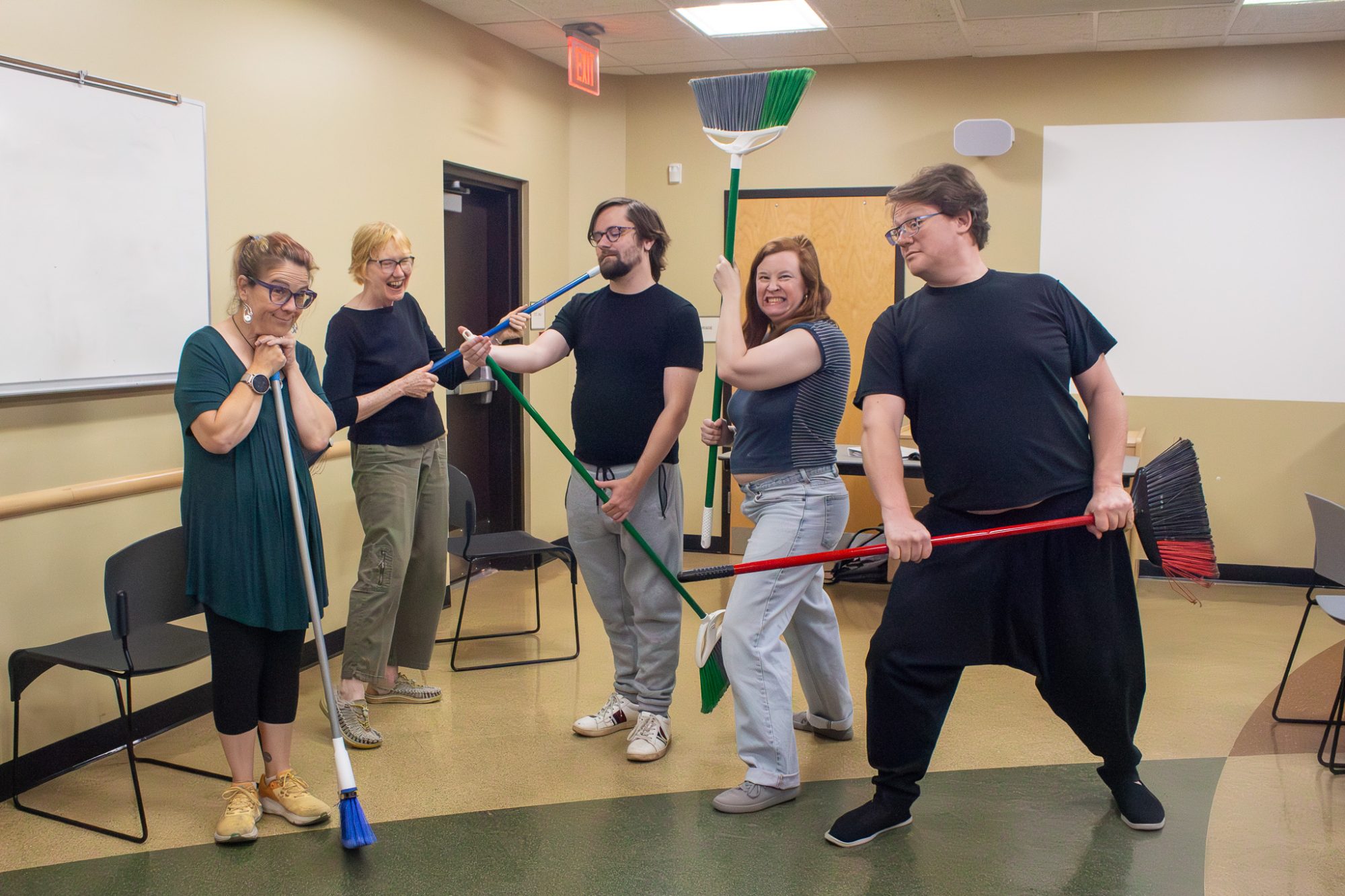
Michael Wright is no stranger to experimental theatre. His work with The People Playhouse in New Orleans first sparked an interest in nontraditional performance, which later led to years of practice and international travel that introduced him to the work of artists like Viola Spolin, Jerzy Grotowski, and Richard Foreman. During his time in Tulsa, that experimental wind blew him to the Tulsa Artists’ Coalition Gallery, which for more than a decade has been the site of his own playful exploits, including a brand new piece premiering Friday and running through next weekend.
Experimental theatre can take different forms, and Wright’s repertoire at TAC has offered a feast of uniqueness through the years. In one of his shows, the audience played amateur detectives and were tasked with solving a fictional disappearance based on three stories they heard from actors and an evidence wall. Another year, the performance included a gallery of black and white photography as well as color photography of human faces depicting “emojis that don’t exist.” In another piece, Wright stewed apples during the performance and everyone got a warm snack at its conclusion.
While every experience is different, one element remains consistent: the audience is an active participant in the piece. In a conventional audience experience, the performers are on a stage and the audience sits in rows away from them in their own separate space. In Wright’s pieces, that orientation gets tweaked by adjusting where the audience sits in relation to the actors, adding moments where audience members move from their seats during the piece, and playing with how the audience views the action in the space (accomplished one year by placing mirrors around the gallery). It’s a flexibility allowed by nontraditional spaces like the TAC Gallery, where the lack of stage and risers allows the audience and the actors to intermingle.
“What happens to most people is that they have an expectation of what theatre should be,” says Wright. “My ambition is that the person that goes away from seeing one of [these] shows says to themselves, ‘Can I reexamine what I think about theatre?’”