


Skip to Content
News

The Florida Billionaire Who Now Owns The Tulsa World Really Cares About High School Sports Coverage

What’s the future of the local paper of record?

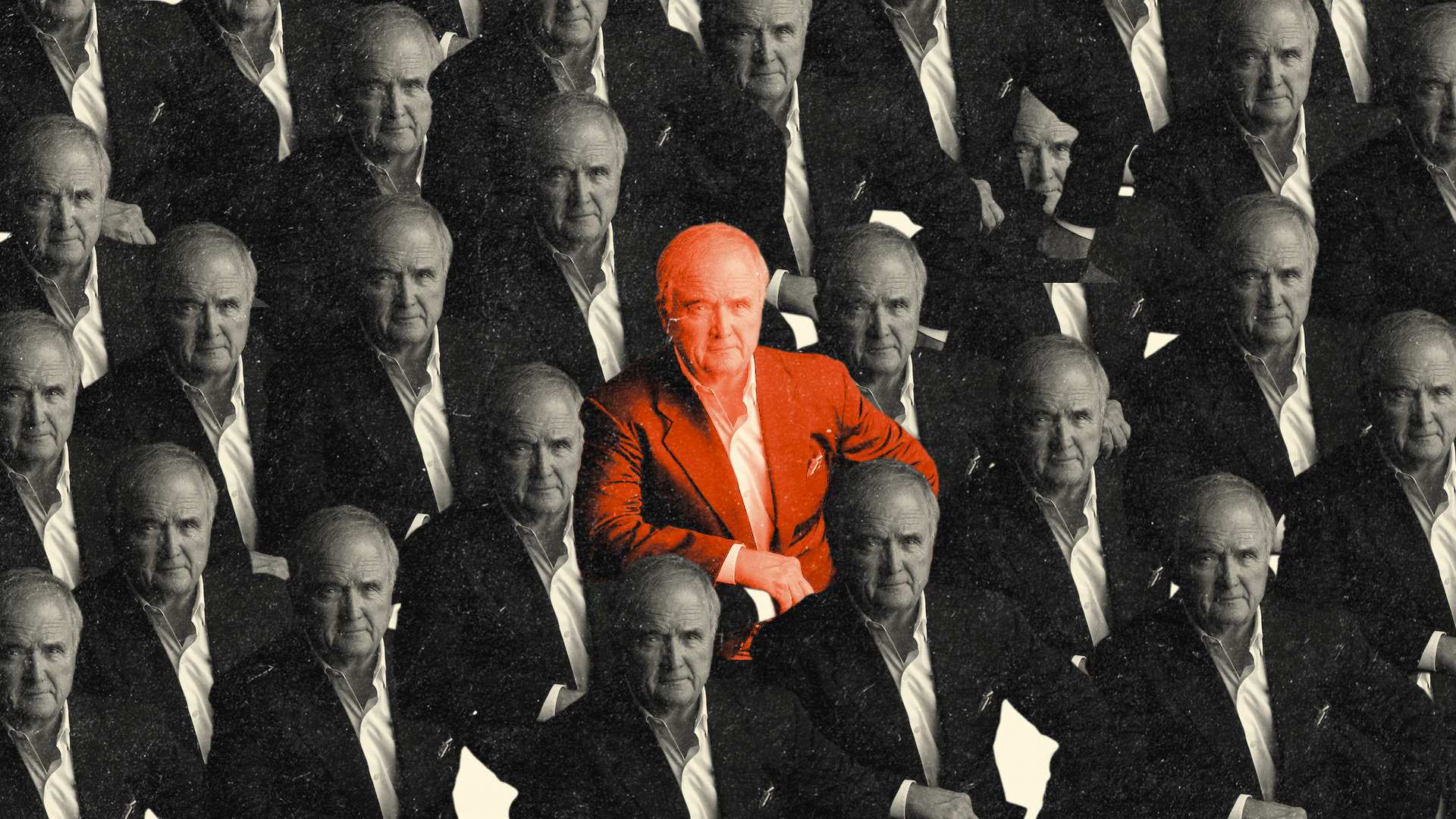
David Hoffman.

|Illustration by The Pickup staff

Earlier this year Florida billionaire David Hoffmann took over Lee Enterprises, the Tulsa World’s parent company. 

While finding out that a local business has fallen into the possession of a Florida billionaire is typically cause for concern, this wasn’t a surprise to the nerds1 who pay attention to this kind of stuff. Over a year ago, St. Louis Magazine clocked that Hoffmann, dissatisfied with Lee’s management, had bought up enough of the company’s stock to become its second largest shareholder. 

Lee owns media properties in 25 states, enough to make it one of America’s largest newspaper companies. But a poor quarterly earnings report coincided with a buying rampage from Hoffmann big enough to attract the attention of the New York Times. His ambition appears to be boundless. Hoffmann told the Seattle Times last year that the plan is to eventually surpass Gannett and become the country’s largest newspaper publisher.

While it may seem a little crazy to buy up newspapers in the 2020s, Hoffmann’s move doesn’t cut against existing media industry trends. Newspapers and TV stations have been steadily consolidating across the country for decades now, often getting swapped by private equity or stripped for parts by hedge funds. And when you read up on Hoffmann and the strategy for his media businesses, you see that he’s not exactly reinventing the wheel. 

Stay in touch

Sign up for our free newsletter, The Talegate

The word “Netflixification” comes up early and often when he and his people talk about news business models, meaning that they understand that big tech killed the advertising industry and a renewing subscription to a digital product is the most reliable source of revenue for publishers these days. This is common knowledge by now, not just in media but in basically every industry that makes a product for your smartphone that you use more than a few times a month.

But what about the World? It’s been trapped in corporate hell ever since the Lorton family sold it to Berkshire Hathaway in 2013, and is now stumbling along as a crumbling local institution saddled with out-of-town ownership. Like most legacy newspapers, its transition from print to digital hasn’t gone so hot. Revenues are sagging industry-wide and fewer U.S. adults are following the news closely, but it’s clear that the World didn’t invest enough in its own digital products—like a fast-loading website or a smooth app experience—and now lacks the funds to do so.2 

A newspaper business consists of two parts: the talent working for it, and the technology delivering their work to the audience. On both fronts, the World’s been on the decline for some time. Their newsroom’s been hit by steady layoffs and departures for years now. Veteran education reporter Andrea Eger joined Oklahoma Watch in March after 23 years with the World, and former executive editor Jason Collington back in the fall left rather than continue making cuts to the newsroom. And on the tech side, the World’s website interface is basically hostile architecture,3 with an entry-level digital subscription that still costs more than Netflix. 

Meanwhile the local media landscape got considerably more crowded this fall, when the nonprofit Tulsa Flyer entered the chat. Backed by the American Journalism Project and $14 million, the Flyer hired veteran World journalist Ginnie Graham and has been steadily producing a healthy stream of daily digital news for free, with aggressive attention to the education beat. And other nonprofits like Oklahoma Watch and Oklahoma Voice are getting larger by covering beats where the World was previously more competitive, like the state legislature 

And of course, you can’t look past yours truly here at The Pickup, backed by dozens of dollars, a couple of laptops and a dream. The World has more competition for readers than it did just two years ago, which is to say nothing of the merciless, winner-take-all attention economy of influencers, creators and brands all vying for the same eyeballs the morning newspaper once took for granted. 

Who Rules The World

So does new ownership for Lee Enterprises mean anything for the World? And who is this Hoffmann guy, anyway? Is he more of the same, or does he actually have a vision for how to turn the World around? Is that even possible at this point? 

Fortunately the American media is nothing if not navel-gazing, and so you can find plenty of stories in other outlets speculating as to what Hoffmann may or may not do with this new bounty of papers. I spent some time reading over them (yes, I did my own research) and came away with a few findings. 

As far as Florida billionaires go, Hoffmann seems not so bad? Scouring the internet, I couldn’t find any evidence of out-there partisan behavior on Hoffmann’s part. The philanthropies he and his wife support all seem to be pretty nonpartisan: the Boys and Girls Club of Naples, a childhood diabetes research institution, an effort to restore the Florida Everglades. They also serve on the board of trustees for The Naples Children & Education Foundation. And in interviews he has consistently reiterated the importance of community news and journalistic independence. While that isn’t exactly a business plan, it would at least seem to indicate that he understands the risk of becoming the next Jeff Bezos.

He does seem to be a “bootstraps” guy, but it reads as more or less wholesome. Here he is talking about what an honor it is to receive the Horatio Alger award, named for the 19th century author famous for stories about impoverished boys who climbed life’s ladder by way of hard work and determination:

Hoffmann clearly cares about two things in his media companies: high school sports coverage and making returns on his investments. In an interview with Editor & Publisher from June 2025, the CEO of Hoffmann’s media company, Pason Gaddis, said “If you asked [Hoffman] about newspapers today, he would pull out of his shoebox a clipping of him as a football star with his high school football game, of him being in the newspaper.” The Times story also mentioned Hoffmann’s love for sport, which is endearing in an outmoded sort of way. The World already covers high school and college sports plenty, so it seems like our local paper of record and Hoffmann are a match made in heaven. 

Gaddis also did seem to evince tenets of good management of Hoffmann-owned newspapers, like giving senior staff ownership shares and control of their own P&L sheets, as well as the understanding that readers pay for quality content like investigations and original work. And in that story in the Seattle Times, Hoffmann said that his newspapers have a 25% profit margin. If that’s true, then the $35 million he committed to invest in Lee Enterprises maybe doesn’t seem so crazy. 

While Hoffmann and his people have demonstrated that they can own and responsibly operate all these newspaper companies, this isn’t exactly an affirmative, forward-looking vision for how an American media company can serve its community in the 2020s. 

Which brings us back to the Tulsa World. What does all this mean for them, and for us as Tulsans? Honestly, for the World it probably means very little. It’s just one paper in a constellation that Hoffmann now owns, and his business portfolio goes well beyond legacy media. It’s difficult to imagine a scenario where Hoffmann himself took interest in the paper’s day-to-day operations.  

The World seems to use the same tech stack to power its website that most if not all other Lee companies use, which is a popular vertical consolidation tactic in the modern media industry. A single team of coders can push updates to, and build new tools for, a content management system used by dozens of publishers (in Lee’s case) if not, theoretically, hundreds across the country.

You can see this tactic in action yourself. The home page format on these five other Lee newspaper sites is basically identical to the World’s. You might notice as you’re browsing them how prevalent local high school and college sports coverage is on their home pages:

Lincoln Journal-Star
Waco Tribune-Herald
Winston-Salem Journal 
The Pantagraph (Bloomington, Illinois)
Corvallis Gazette-Times 

These content management systems are total workhorses, and if the World is using Lee’s one-size-fits-all solution, they’re probably totally dependent on this centralized team of coders for its support, and therefore don’t have a lot of leverage to push back against upper management. While the World does still employ a small handful of tenured journalists, the steady cutbacks and departures would suggest that Lee is in a cost-cutting mood. And big stories cost time and money to produce. If I had to gaze into my local media crystal ball, I can see the World continuing to tack in the direction of hyper-local sports coverage, mainly because it’s relatively inexpensive and reliably interesting to its legacy audience.  

Unfortunately at this stage of its 100-plus year existence, the World’s greatest asset may be its archives, and they have more sentimental and historical value to Tulsans than they have cash value to any business. Now, the corporate distance between the World’s newsroom and its ownership is further than ever before. The annals of our community history are owned by some billionaire. What about the future? It’s up to us to build, I suppose.

Footnotes

  1. It, decisively, me.Return to content at reference 1
  2. One notable exception to this unfortunate industry trend is the New York Times, which now boasts more daily Wordle players than the population of some small countries. Return to content at reference 2
  3. The fact that the World’s website is covered in ads any given day would suggest that the company is hard-up for cash, given that website traffic has been declining across the industry for years now.Return to content at reference 3

If you liked this story, please share it! Your referrals help The Pickup reach new readers, and they'll be able to read a few articles for free before they encounter our paywall.

Stay in touch

Sign up for our free newsletter

More from The Pickup

The Best Tulsa Events: April 29 – May 5

Gillian Welch is playing Guthrie Green for FREE, Soundpony's 20th anniversary and more!

Chamber Music At Discovery Lab? It Makes More Sense Than You’d Think

The cheekily-named woodwind quintet WindSync explored music through nature, play, ephemerality, and legacy

April 24, 2026

In A Tiny Gallery, “Fragmented Landscapes” Layers Space With Memory

Caty Smith’s global travels inspire a vulnerable, meditative body of photographic experiments

April 23, 2026

The Obscure Sci-Fi Author Who Became Tulsa’s Tall-Tale Biographer

R.A. Lafferty captured a city that doesn’t really exist anymore. And maybe never even existed at all.

Cycles Of Violence Repeat. “Antigone & Ismene” Reckoned With How To Break Them.

Riff Raff Tulsa's new adaptation of an ancient play felt urgent, unsettling, and deeply human

April 21, 2026

Tulsa Picks: The Best Tulsa Events, April 22-28

This week: LitFest, Kölsch Fest, "Gypsy," and some badass women musicians

April 21, 2026
See all posts