
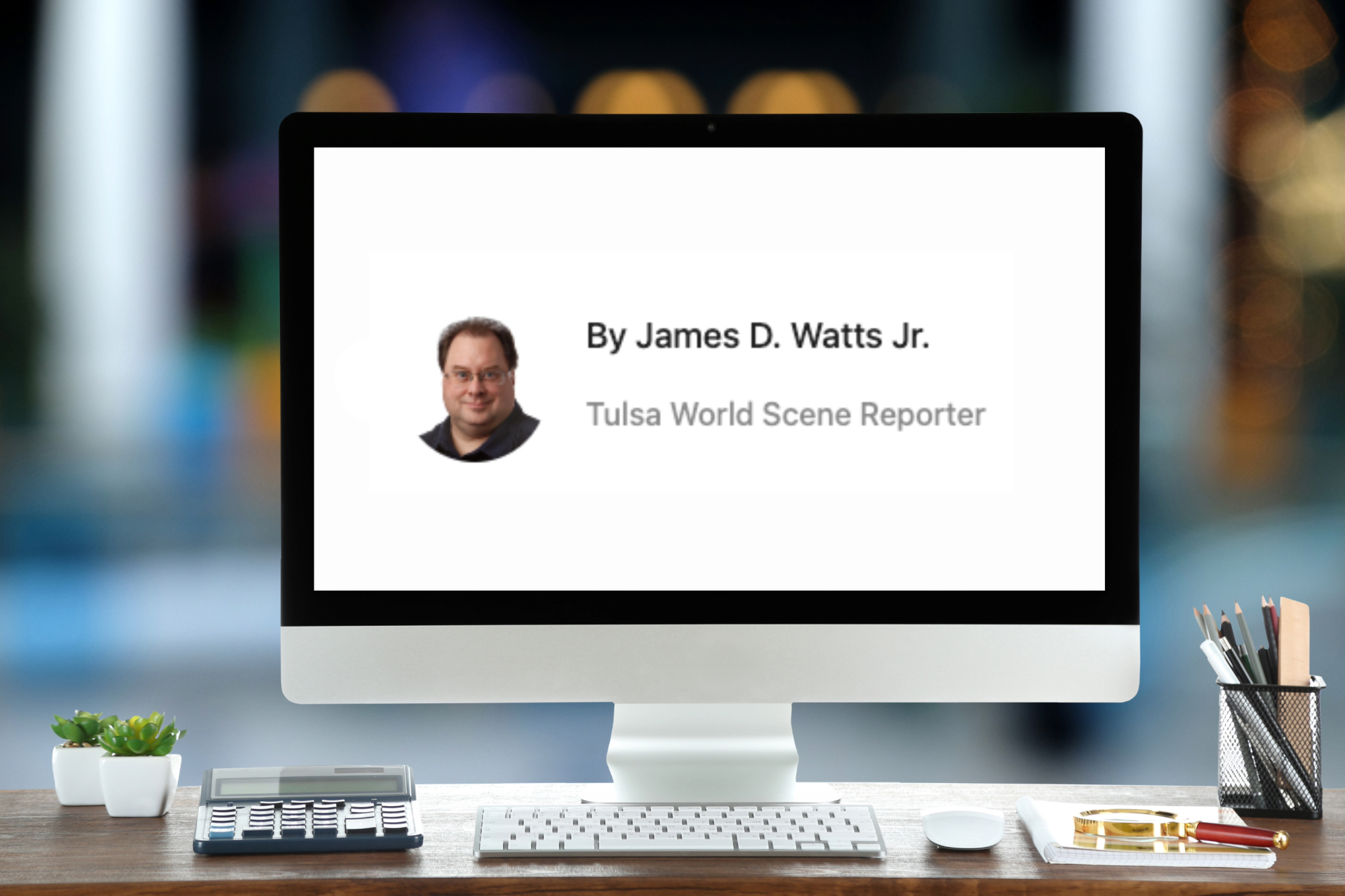
As a nerdy, art-obsessed ‘90s teen in Broken Arrow, discovering James Watts’ writing in the Tulsa World was like finally having someone (who wasn’t my mom) to talk to about the thing I loved most. Much of what I learned about the arts in Tulsa during those years, I learned from reading his stories in the paper: who the local painters were, where the galleries were, what the theater companies were performing, what big names the opera and ballet and orchestra were bringing to town. I’d read about the national AIDS crisis in Sassy Magazine, but it was Watts who told me that the Tulsa arts community was responding.
It made me feel like I was living in a real city. The world of art was literally at my doorstep; he helped open the door.
When I went to TU and started seeing more of the arts scene for myself, I was well-primed with the cultural education Watts’ stories had given me. By then, I’d started to read other arts writers in national magazines, but they only wrote about what was going on in big cities. Watts gave me the chance to know about my own. More than that, he helped me understand—as the big-city critics were doing, too—how to think critically about everything he covered (which was everything). When I’d seen the same thing he’d seen, and agreed or disagreed with his assessment, I had to consider why.
I moved away from Tulsa after college, and before long started publishing reviews of my own in New York. Would I have known “arts writer” was a real job that someone from Tulsa could do, if Watts hadn’t first planted that seed? Living in a city with dozens of arts writers was eye-opening: so many perspectives, so many good tough arguments about tastes and trends and triumphs and failures, so many emerging and marginalized artists lifted up for tens of thousands of readers to see.
When I came back to Tulsa and started writing about the arts for the city’s alt weeklies, Watts’ coverage in the World was both anchor and compass as I navigated the scene here. He was also personally and professionally gracious to me, when he could have treated me like the interloping upstart I was.
But what happened last week—when Watts’ employment at the Tulsa World was terminated after 33 years—is more than personal. What does a city of our size lose when an arts and culture writer of this stature is removed from its major newspaper? It loses two crucial pieces of infrastructure: a bridge between local creators and local audiences, and a bridge between those creators and the rest of the world.
The internal bridge is vital, not just to people’s awareness but to Tulsa’s economy. If you’re not an art-obsessed nerd, it’s really hard to find out about and keep up with everything on offer. Arts companies do what they can to spread the word themselves, but there are many Tulsans—not to mention tourists—who’ll never see that Instagram post about a show that might have given them a great night out or, you know, changed their life. Arts communication is like science communication: it ensures that everyone has an access point into this important storytelling, truth-telling, perspective-shifting world, which reflects us back to ourselves like nothing else.