


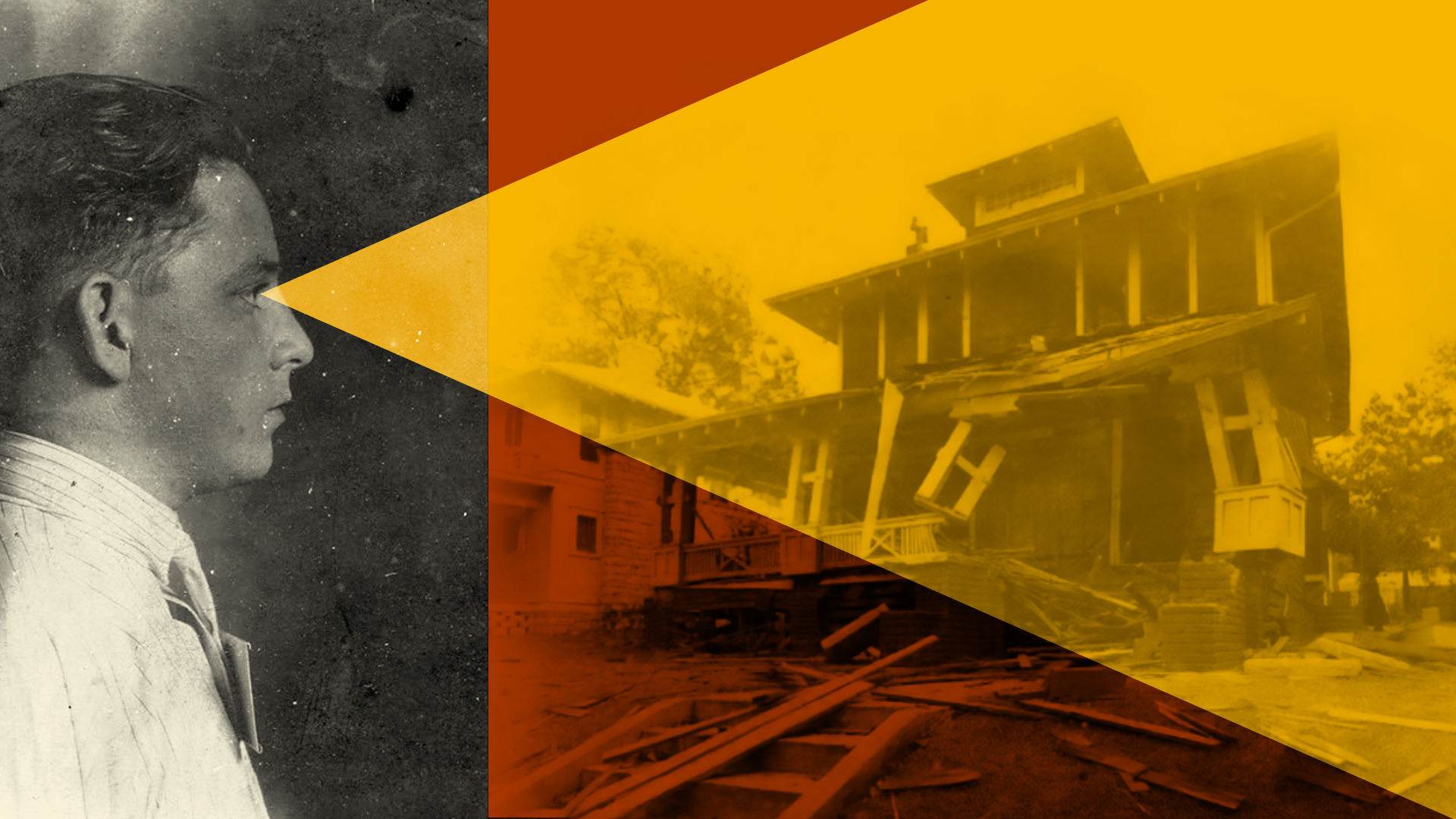
If you’ve found yourself searching for an analog to this moment of political chaos, consider 1917. The United States was divided over a war in Europe involving Russian expansionism. The president ignored the constitution, cracked down on immigrants, and barely concealed his belief in white supremacy. But the most eye-popping parallel between now and then was the high cost of living. In 1917, the issue of “H.C.L.” was so common the media turned it into a proper noun and gave it its own acronym.
Forget the post-Covid inflation rates of 8-9%. Inflation in 1917 was over 20%, the highest recorded in U.S. history. Labor unions, socialists, and protestors of all sorts urged President Woodrow Wilson to do something about H.C.L. But Wilson looked to his right and saw the real threat to the hegemony of his Democratic Party: Republicans running on the slogan “America First” and accusing the president of allowing America to become a “dumping ground” for immigrants. These Republicans overrode Wilson’s veto of an explicitly racist immigration act in 1917 that forbade entry to the United States of people from the “Asiatic Barred Zone.” “America First” soon became the rallying cry of the Ku Klux Klan, which, by the early 1920s, had completely infiltrated Tulsa’s media and political elite.
But prices were the talk of the day, and every newspaper in Tulsa had theories about why they were so damn high and what should be done about them. The Tulsa Morning Times thought women’s civic clubs could cure H.C.L. with gardening, canning, and dieting. The Tulsa Democrat claimed unchecked immigration from Mexico was part of the problem.
But the readers of the Tulsa World were told not to worry. Tulsa was becoming the Oil Capital of the World, after all. The demand for oil pushed up prices in the Mid Continent Oilfield and widespread prosperity would thus create relief from these high prices. Black gold wealth would trickle down to Tulsa shantytowns where the tap water ran brown.
Meanwhile, readers of the Age of Reason—a new socialist rag in Oklahoma City—got a completely different perspective. Corporate control of food and transportation had created a gilded class of millionaires on the backs of millions of working stiffs. Age of Reason said what many working class Oklahomans felt: “the food situation overshadows all others” and it wouldn’t be solved by gardening or deporting Mexicans. Anyone could see that across town from the new mansions in Maple Ridge were shacks on the Sand Springs Line, where a working man “could stretch a tent” on a plot of land. In nearby oil patch towns like Drumright and Kiefer, roughnecks rented space on top of pool tables to sleep.
Radicals believed they had identified the real culprit of H.C.L.: the capitalist system itself. The Industrial Workers of the World (I.W.W.) advocated direct action against corporate power. This meant strikes, work slow-downs, music, marching and general hell-raising. A minority advocated for violent sabotage of pipelines and refineries.
Oklahoma had one of the most successful Socialist Parties in the nation in the 1910s. At least 175 socialists were elected to local and county offices in 1914, including six to the state legislature. In 1917, angry farmers protested U.S. entry into World War I in rural eastern Oklahoma by starting an armed struggle called the Green Corn Rebellion. Rebels planned to march to Washington on a diet of barbecue and green corn, but the protest was short-lived. They were crushed before they made it to Arkansas.