


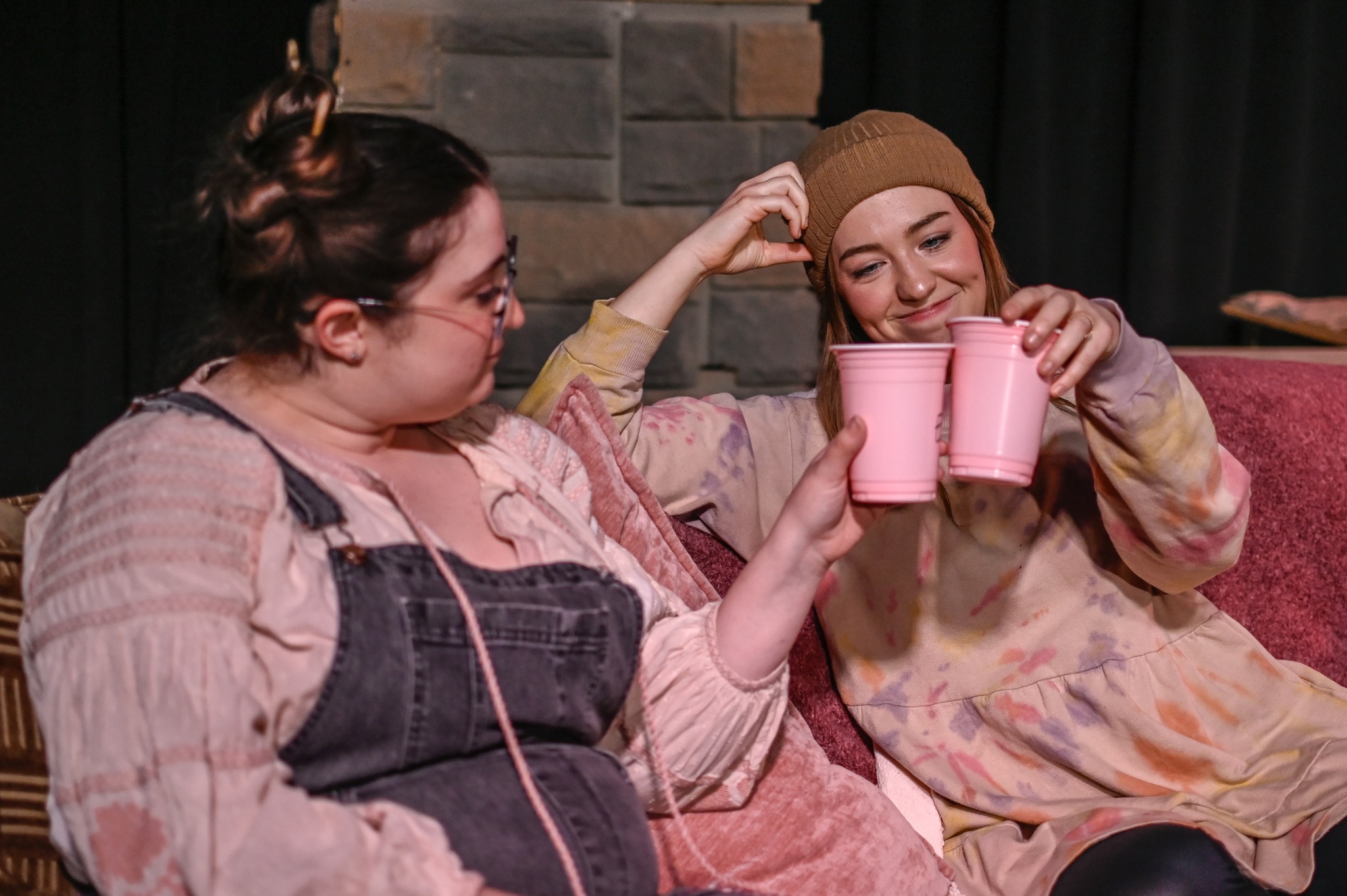
Heller Theatre Company: Double Feature
Lynn Riggs Theater
March 15, 2025
I can’t imagine how hard it is to write a play that works.
It's like writing a poem that works, only with multiple characters whom you also have to make move around, interact, and talk like real people (unless you’re Samuel Beckett). Delivering clear emotional resonance while creating believable situations is the craft of theatre, and Double Feature—Heller Theatre Company’s annual spring showcase of two new short plays by local writers—is always an education for me in those creative mechanics: what sort of pacing lets emotional beats hit, what sort of dialogue lets the story sing, how a playwright wrangles the universal into the particular.
This year’s plays—Wilson Bledsoe’s Return (by David Blakely) and The Reunion (by Alex Isaak)—both revolve around an absent woman: in the first case, a mother who died by suicide, and in the second, a sorority sister taken by leukemia. In both cases, the absence is present in the lives of those left behind, who are (or are not) dealing with the hole in ways that reveal their own broken bonds and fractured selves. How we deal with loss, both plays suggest, shows us how we’re not dealing with ourselves and our relationships.
In Wilson Bledsoe’s Return, we aren’t told about the family’s loss until late in the play. The reveal helps make sense of the inexplicable tension among a father (Steve Barker as Truman Bledsoe) and his two sons (Quinn Blakely as Jefferson Bledsoe and the terrific Aniq Zoha, new to Tulsa theatre, as Wilson Bledsoe) that ricochets through the play’s first half—tension that mounts, breaks, then mounts again after the father tells his sons about his terminal diagnosis. The questions that roil under the surface at the start—why is Wilson Bledsoe returning, and from where? why do the brothers hate each other? why is Jefferson always at some kind of boiling point? why has the father redone his patio in homage to a long-ago family trip to Taos?—are never fully resolved; we only see further into their messy depths.
A stirring, unifying monologue for Barker is the play’s centerpiece, but its revelatory clarity doesn’t change much for the family: the boys return to bickering, the father returns to regretting his inability to fix them, the audience returns to wondering what this “return” might turn into. The characters’ presidential names could be a clue here, mirroring a broken nation that badly needs to face its own inheritance of falsehoods, violence, and betrayal. A powerful prayer by Blakely’s Jefferson closes the play: “Transform all of us if you can, for we are in sore need.”