

The Pickup's Arts & Culture coverage is supported by Brut Hotel, featuring a rooftop VIP after party for Tulsa Irish Fest on March 14.
Malinda Blank tells me that, in the same way people use the phrase, “musician’s musician,” Bruce Goff is an “architect’s architect.” And as the Director of the Tulsa Foundation for Architecture (TFA), she would know. “I think that anybody who is passionate about this industry and this art form, they find Goff and they fall in love with him.”
“I really think it’s the creativity that he brought; that’s what really attracts people,” Blank tells me, leading me into TFA’s basement archive, where she’s laid out all of the Bruce Goff materials that the Foundation holds. “He feels like a springboard for a lot of other people, a lot of other architects. He’s a fascinating person and his work’s beautiful. Tulsa should be proud that he’s a part of our story and history.”
Here's a selection of the digitized photos in the Goff collection from TFA:
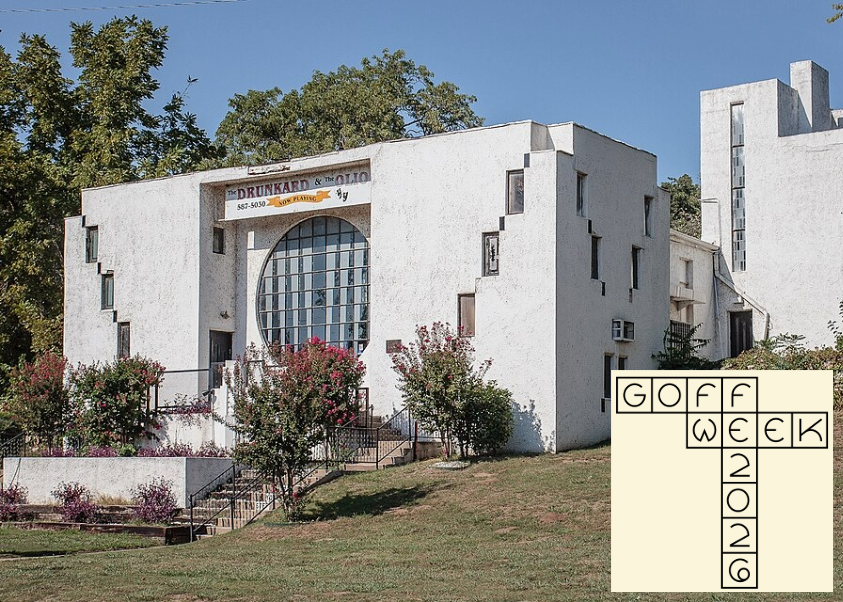
The Spotlight Theater (Exterior):
From TFA: Riverside Studio, locally known as Spotlight Theater, was originally designed in the 1920s by Bruce Goff for Patti Adams Shriner, a Tulsa musician and teacher.
The Spotlight Theater (Interior):
These photographs of the interior of the Spotlight were taken in 1997.
Architectural Plans for Tulsa Spotlight Theater:
It's fun to see how consistent Goff's vision for the building remained, from his sketches to the plan to the final result.
The Skelly Building:
The top three floors of the Skelly Building were designed by Goff and built in 1929. The headquarters of Skelly Oil at Boulder and 4th, the building was completed in three phrases, starting in 1913. It was demolished in 2004.
The Shin’enKan Residence:
Built in 1948, the Shin'enKan Residence in Bartlesville was the home of Joe Price, and was destroyed by arson in 1996.
A Letter from Bruce Goff to David Chaney:
A fun letter in which Goff gets excited about Debussy's "La Mer":
Tulsa Magazine Article: Will We Goof Over Goff?:
Dated 1974, this article argues against the demolition of the Page Building, a Goff that was commissioned by Charles Page and used as a storage building. The building was eventually demolished in 1977.