


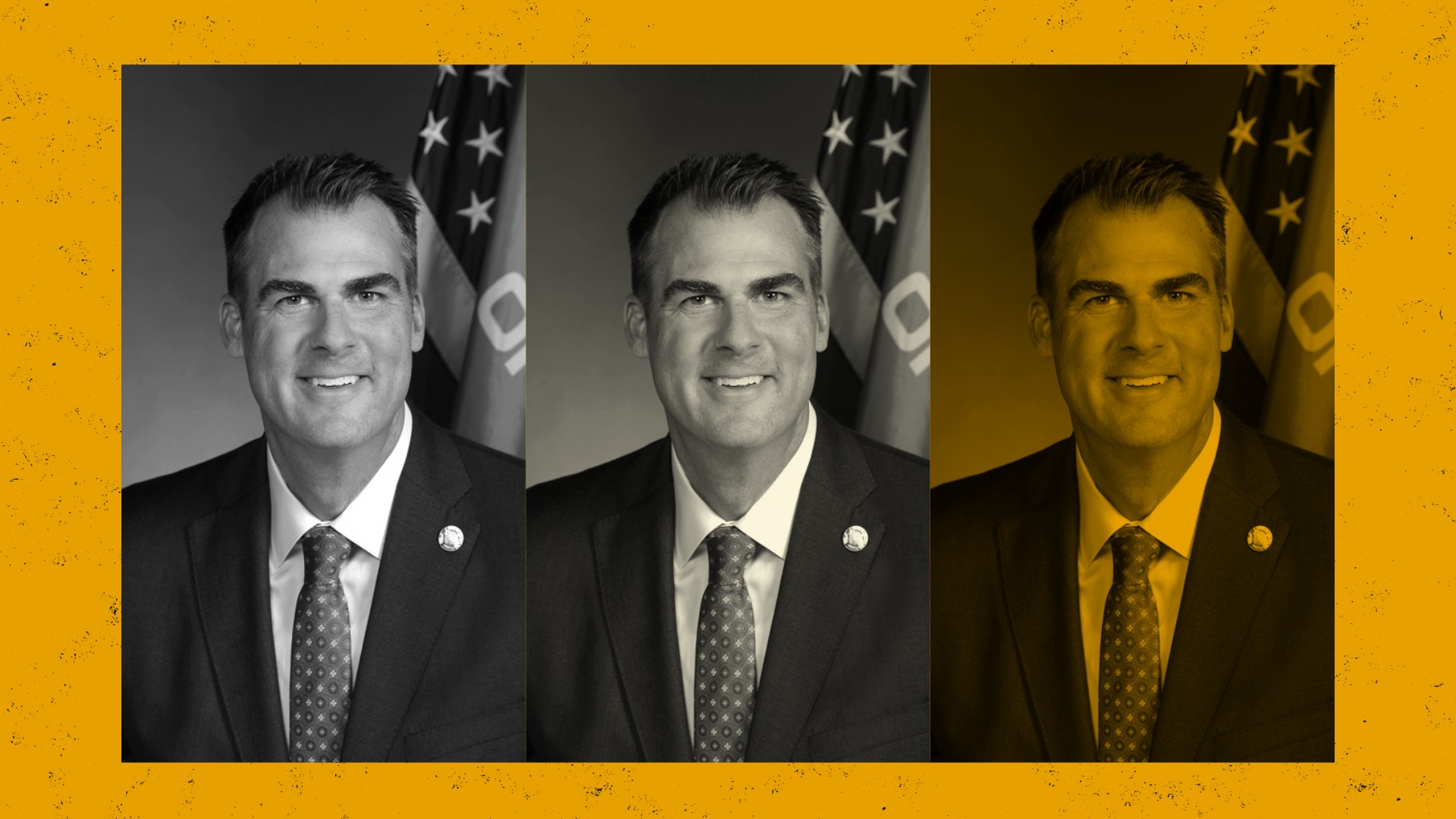
It’s not news that the state of Oklahoma frequently treats people like garbage. Last weekend, in a move worthy of the most cartoonish political strongman, Governor Kevin Stitt literally did just that as he swept into Tulsa with “Operation SAFE,” designed to clear state property of the evidence of Oklahoma's failure to support the most vulnerable of our neighbors. Since the weekend, Stitt claims, over 250 tons of “debris and hazardous materials” have been removed from homeless encampments across the city by the Oklahoma Highway Patrol and the Oklahoma Department of Transportation. Presumably by “debris and hazardous materials” he’s talking about people’s belongings.
The humans who are also being removed are being offered nothing more than “a ride”—either to a local social service agency, all of which are overwhelmed already, or to jail. It gets worse: Stitt promises that if these Tulsans return to these sites, they’ll be removed again by state patrols. “And after two or three times, guess what? They’re not going to come set their tent back up because they know it’s going to be taken and thrown in the trash. And they’ll move on to Portland or Los Angeles or San Francisco or somewhere else,” Stitt said.
“Tulsa families deserve to be at peace in their own city,” Stitt said in a recorded video announcing the operation from behind a gleaming, taxpayer-supported desk. Are many of the homeless not “Tulsa families”? Is this not their city too? What about their safety?
Sweeps like this are a well-worn move from the Republican playbook, akin to Trump calling in the National Guard on Los Angeles, more about advancing a political career than about actually governing. Tulsa Mayor Monroe Nichols called out Stitt’s move for what it is: “I think the best way to maybe go to Iowa as a presidential candidate is not to talk about how you stuck it to the Democratic mayor in Tulsa, but to talk about how you got your state off the bottom of every list out there,” Nichols said.
More interested in flexing his muscle than in working with ongoing local initiatives that are actually addressing root causes and pursuing effective and compassionate care, Stitt—in Nichols’ words—“has shown himself again to be an unserious person.”
Stay in touch
Sign up for our free newsletter, The Talegate
The Oklahoma Eagle reported yesterday that “since the sweep began on Thursday, 30 encampments have been removed, nobody has been taken to jail and only one person has been taken to services, according to OHP spokesperson Sarah Stewart.” Furthermore: “Last month, Tulsa City Council approved $6 million as part of a rapid rehousing program that includes individualized wraparound services. Nichols said Monday his staff was preparing to announce the first milestone in a few weeks. But due to the governor’s program, which isn’t tracking people, service providers have to start over.” And, per NonDoc, the Oklahoma Department of Mental Health and Substance Abuse Services has just cut 300 mental health contracts across the state, a move that directly impacts local efforts to create sustainable solutions to homelessness.
“When I took office,” Nichols wrote in a statement, “I inherited a homelessness crisis largely unaddressed by anyone in public office, including our two-term governor, who disbanded the interagency council on homelessness, which had a crippling impact on service providers, leading to what we have today. Instead of spending my time engaging in activities that won't reduce homelessness, I have created the Safe Move Initiative, which aims to get hundreds of people off the streets for good, rather than simply shifting the problem elsewhere. We have a goal to end homelessness by 2030, and we're on the pathway to doing that. I'm going to continue doing the job I was elected to do, and I am not interested in being lectured by someone who has proven time and time again that he only cares to intervene to score political points.”
Who Will Think Of The Tragedy Enablers?