By now you know that “Lee Raybon”—the name of Ethan Hawke’s character in Sterlin Harjo’s The Lowdown—links back to Lee Roy Chapman, the “history recovery specialist” and DIY artist whose work provoked and galvanized Tulsa in the early 2010s.
But Chapman isn’t the only Tulsa giant we hear echoing through that character’s name. If you’ve never heard of Bill Rabon, get ready to meet a key figure in Tulsa’s art history, whose rambling, outsider ways and dogged perseverance remind us of some qualities shared by a certain ”truthstorian.”
With Gaylord Oscar Herron and Dan Mayo, Rabon was one of the forces behind Vagabond, the trailblazing 1975 book of Herron’s photographs and writing that would become legendary for its experimental form and its mesmerizing look at Tulsa’s darkness and light—and, later, for being nearly impossible to find.
Herron, Mayo, and Rabon had been running around Tulsa together for a while, and when the idea for the book started to take shape, Rabon—a painter—became a source of inspiration. In a 2012 This Land Press documentary about Vagabond, directed by Sterlin Harjo and Matt Leach, Rabon described his role in the book’s creation as “maybe kind of a spiritual advisor.”
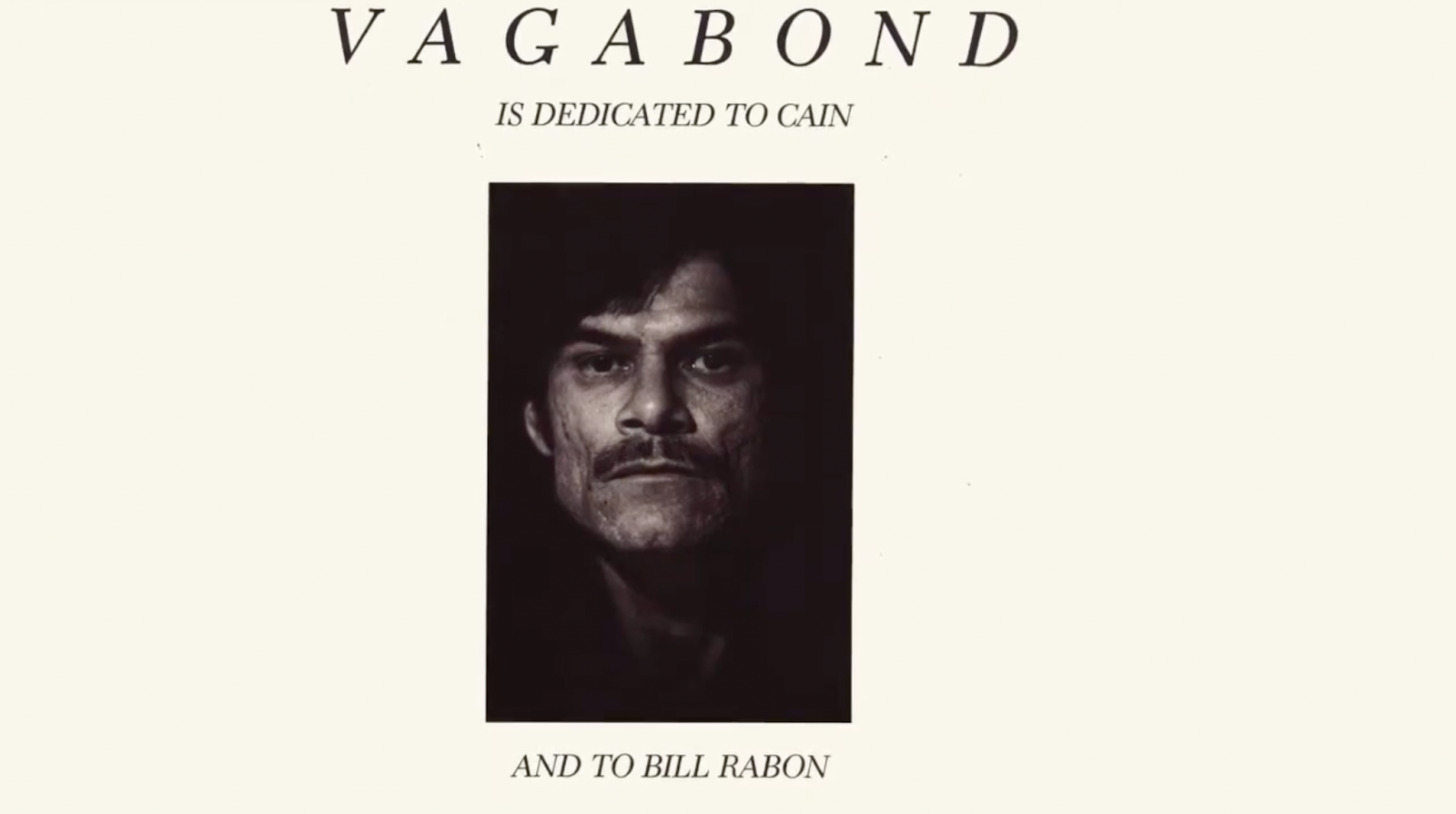
As Mayo remembers it, “Somebody said ‘vagabond’ and Gaylord got real interested in the Bible story of Cain and Abel, and I think we saw Bill as a person that was on the loose. There was no home, there was no house, there was no family.” Herron dedicated the book “to Cain and to Bill Rabon”; it’s Rabon you see on the book’s dedication page.
Born in Muskogee in 1938, Rabon attended Central High School (like Joe Brainard, a Tulsa artist directly referenced in The Lowdown) and studied art with the legendary Alexandre Hogue at TU. From 1962 to 1972 he lived in Tulsa’s “Little Bohemia,” south of downtown, which he once described as being “like Greenwich Village (in New York) or the Left Bank (in Paris)—lots of artists, Tulsa painters, photographers, writers.” He was known for his Oklahoma landscape paintings, as well as still lifes and abstract works.