


Skip to Content
News

How It Feels To Live In Minneapolis Right Now

We interviewed a local living through Operation Metro Surge.

Photo by Avery

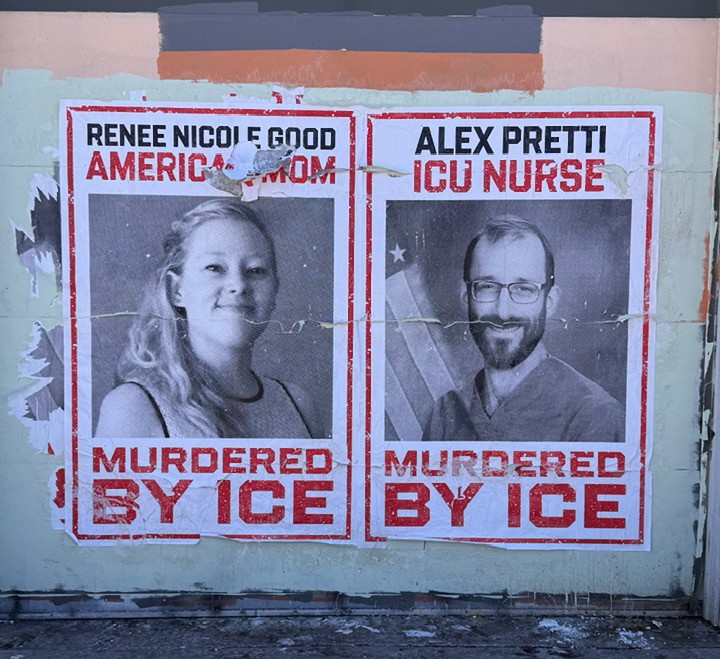
Operation Metro Surge is still going on in the Twin Cities. Since the full-scale immigration crackdown began in December 2025, federal agents have killed two American citizens in separate incidents, Renée Good and Alex Pretti. A Nicaraguan man named Victor Manuel Diaz, also died in an ICE camp in Texas after he was detained in Minneapolis in January.

Demonstrators have filled the streets, ICE raids have netted over 4,000 arrests and the crackdowns have dragged down everything from Minneapolis’s housing market to school attendance and even quality of life for restaurant workers.

Trump administration border czar Tom Homan announced last week that the number of immigration officers will be cut by 25 percent, a number that still leaves more than 2,000 federal agents present in the area. Today it’s unclear when or if that number will ever return to the normal level of 150.

With all this happening, I texted an old friend, who I’ll call Avery because he asked not to be identified by his real name for fear of reprisal. He played in bands that I’d see from time to time when we both lived in Norman and we struck up a friendship that was mostly online. Over the years I watched on Facebook as Avery, a longtime Oklahoman, got married, had a kid and more recently moved with his family up to Minneapolis.

I reached out asking what he’d seen up there. I was more or less curious what it felt like to live through an occupation. The following interview is a series of texts and emails that we exchanged over the last few weeks, which I compiled and edited for clarity.  


Matt Carney: What have you seen since the feds stepped up their presence in your new hometown? Are there a lot of ICE and border patrol agents roving around?

Avery: It felt like a slow burn at first. ICE has been active for a year throughout the country, and in December it was more of a hushed notion that they were targeting Minnesota. It all jumped off quickly right around the holidays. There was an uneasy sense they were here, and then suddenly they were everywhere. We left town for five days and came back to the beginning of a siege. 

Yeah, you see them. We are in south Minneapolis, maybe seven or eight blocks from where Renee Good was murdered. Very close to where George Floyd was murdered. The living memory of that resonates in the community, you see activists occupying George Floyd Square every morning even now, almost six years later. It’s a messy and yet sanctified space, made more surreal by the presence of large SUVs rumbling through. 

Photo by Chad Davis / Wikimedia Commons

I have seen ICE agents run stop signs and red lights. I have seen them speed down residential streets where children walk home from school. I have seen large tinted SUVs skulking slowly up and down streets and alleys, looking for job sites where they could quickly snatch up workers. I have seen abandoned cars just awkwardly sitting halfway in the road where a driver was abducted and secreted away before anyone had a chance to blow a whistle. 

But mostly I hear the ambient sound of whistles and car horns echoing through the gridded streets. ICE seems to move in pulses, starting in the city, then backing off when it gets too hot, switching focus to suburbs and smaller towns, only to return a few days later to pick up where they left off. And so the sounds ebb and flow, some days further, some days closer.

When leaving home I now find myself pausing at my car before getting in, craning my neck in an attempt to triangulate the sound of shouting and honking and, on days they’re targeting this specific neighborhood, the nearly nonstop sound of whistles. Is that just around the block? Is it at the park down the street? Is it at the church handing out groceries? And what if anything am I supposed to do?

I have not personally seen physical violence. My wife has. She saw masked agents pointing guns at an elderly man at a St. Paul gas station. She called to ask what she’s supposed to do. I told her to come home because I’m selfish and I don’t want to raise my child alone. But it wasn’t as though she was the sole witness. Anywhere they pop up, the neighbors emerge, swarm in to make their presence known. To make sure the agents know they are being watched. Make sure they know they’re not welcome.

The whistles just materialized. Handed out block by block, protest by protest. It seems like every person in the city is carrying one. It is the least that’s expected of you, to stop and raise the alarm. At first it felt like the easy thing to do, innocuous even. Then they started shooting us and now the whistle feels loaded. When it pops off in front of you, what kind of agents are they? The ones that just quickly slink off knowing their cover is blown? Or the one that will make an example of you?

I’m wandering a bit here. Short answer, yes, they’re everywhere. I have seen them almost every day of the last month. Usually I see them when they’re on their way somewhere else, I have not witnessed an abduction. Only seen the aftermath a few times.

Matt Carney: Wow. How do you go about your day with all that going on? How do you think about work or your family or everyday sort of things, to the extent that that’s even possible? 

Avery: The most surreal thing about this is that everyone is still having to live their lives. The protestors, the rapid responders, the grocery delivery people. They carve out what little time they have to help however they can. Despite the constant refrain, absolutely no one is being paid for anything. I think we all know that, but when you see parents juggling their responsibilities to their children and their jobs with the responsibility they feel to protect their neighbors, you can feel how vile and stupid that lie really is. It undercuts the very real sacrifices people make to show up, to help.

I’m lucky to work from home and set my own schedule. I keep my curtains open and almost compulsively check up and down the street for anything. I find excuses to be out — shoveling snow or whatever— just to have eyes on the area. Like I could do much of anything other than bear witness.

For the teachers and nurses and normal nine-to-fivers on my street I have no idea how they’re finding the time to be so active. But a lot of them are. More so than me.

A memorial to Alex Pretti. Photo by Avery.

My kid keeps me grounded, and has thus far kept me from entering the more dangerous protests. The people who seek out and actively find and antagonize the agents as they carry out the abductions. Those are the people putting direct pressure on an outside force sent here to intimidate, and those are the people I imagine you see on the news. I don’t know how anyone could accurately document the tens of thousands of people who every day get up and help in some quiet personal way.

I have to drop off and pick my son up from school, and it gives my day a reliable rhythm that helps stave off panic. Though I feel lucky to have a child just young enough to be somewhat oblivious to what’s happening. He knows there are bad people in the city doing bad things. But when we see an SUV of agents he doesn’t notice and I don’t tell him. Just quietly, as quietly as possible, determine the best course of action. Usually in my case simply reporting when and where I saw them so that the response groups can at least try to track activity.

Matt Carney: What acts of solidarity and resistance have you seen? 

Avery: The resistance is layered and tailored to the individual. Everything from the more affluent neighborhoods daily gathering at highway overpasses to protest to the decentralized rapid response networks ready to get people anywhere in the city in a matter of seconds.

There are the remnants of networks that sprang up during the Floyd era that have been reorganized and expanded. There is no leader here, no one is waiting on orders from the mayor or the governor or some shadowy figure. Each neighborhood, each block, is finding out what works best for them.

It’s so fluid and so natural that it still overwhelms me. Honestly, I do kinda see why people think this is all some sort of grand conspiracy, but in reality it’s this organic response born of rage and empathy and necessity. 

There are coffee shops and bars collecting food and coats and supplies to donate out to those in need. City council members pushing for an eviction moratorium. And on street corners throughout the city, people simply posted up, sometimes holding signs, wearing neon green vests. Just standing there. Watching, checking, nodding, waving, soliciting appreciative honks from passing cars. In some cases setting up makeshift roadblocks. Not to stop ICE from getting through, but to slow them down enough that the number of cars and agents can be quickly relayed to the wider area. It’s all about giving people a chance to hide.

I don’t think I can list all the ways the city is resisting because of just how many walks of life are involved.

Matt Carney: The killing of Alex Pretti is on top of the whole country’s mind right now. How are your colleagues, friends, and neighbors talking about it? 

Avery: I’m working remotely, mostly with people still back in the Oklahoma-Texas area. I work at home, and call in for meetings. And frankly, none of my colleagues are talking about it. None of them are asking how I’m doing, what it’s like. And if I hint at the fact there’s federal cops running through the streets of my neighborhood, they just somewhat chuckle and comment on the bad timing of having moved here.

People I encounter are swimming in a sea of rage and sadness but also determination. Nothing slowed, or stopped when Alex Pretti was murdered. There was no momentary hesitation, just a renewed push to keep going, keep protecting the city. If anything it activated even more people.

There’s a segment of the American population that seems incapable of applying any sort of historical context to the actions the government is taking. This, to them, is all hyperbole. But I don’t know anyone that I’ve interacted with in the last week that doesn’t understand the weight of what has happened and what could happen. In any given public setting, every conversation I overhear is focused on the murders and abductions. Picking my kid up from school, walking past chatting parents, I catch snatches of conversations full of incredulity, outrage, sadness, but also determination. Sitting in restaurants I hear families and friends commiserating. People talk openly about this city being at the front of whatever is coming next for America. Our state spans a fathomless crevasse, and if we are pitched in the union will follow. It sounds like hyperbole, but as it stands there are no dead ICE agents in the streets of Minneapolis, while two of our own are dead and gone. With no arrests. No names even. The men who pulled the trigger (ten times) disappeared into the ether, just like the people they’ve abducted. The city cries out for it to stop, and for justice, and so far the answer is a resonant nothing. And the city provides its own answer in the form of resistance.

People are preparing. Block by block, community by community, everything is becoming tighter, more interwoven, growing in density and purpose. A process of organization that began when George Floyd was murdered is now entering a new phase of maturation. No one knows exactly what is coming next, but everyone knows that the city as a whole will continue to protect itself. 

If you liked this story, please share it! Your referrals help The Pickup reach new readers, and they'll be able to read a few articles for free before they encounter our paywall.

Stay in touch

Sign up for our free newsletter

More from The Pickup

The Week’s Best Tulsa Events: Valentine’s Day Edition

Make all your Valentine's, Galentine's and early Mardi Gras plans right here.

February 10, 2026

“Beauty And The Beast” Still Has The Stuff

The touring show cut through any pretensions I might have had about it

February 10, 2026

A Night With Brooklyn Rider At WOMPA Delivered Strings, Glass, And Grit

Who knew Philip Glass would sound so good in an industrial warehouse?

February 6, 2026

Tulsa Opera’s “The Pirates of Penzance” Was As Touching As It Was Hilarious 

Set, cast, stage management, and orchestra were all top-notch in director Eve Summer’s version of the classic Gilbert & Sullivan operetta

February 5, 2026

There’s No Better Time To Start Reading Eddie Faye Gates 

One of the great historians of the Tulsa Race Massacre has some lessons for this moment

February 5, 2026

In “Doctor Faustus,” A Reckoning With Morality—And Puppets! 

Gaslight Theatre’s surprising directorial additions make an old play feel fresh

February 4, 2026
See all posts