


Dan Lyn Pham: "I Bear the Fruit of My Ancestors"
Belafonte
March 1, 2024
A dimly lit space permeated with the smell of burning incense greeted visitors, many of whom waited in line before the doors opened, to Tulsa artist Dan Lyn Pham’s “I Bear the Fruit of My Ancestors.” The three-part show was a journey between the symbolic and the literal, exploring Vietnamese ancestral worship, a cultural custom that has endured generations—beyond any specific religion, beyond colonization, and then across the world into the homes and gathering spaces of Vietnamese immigrants and refugees.
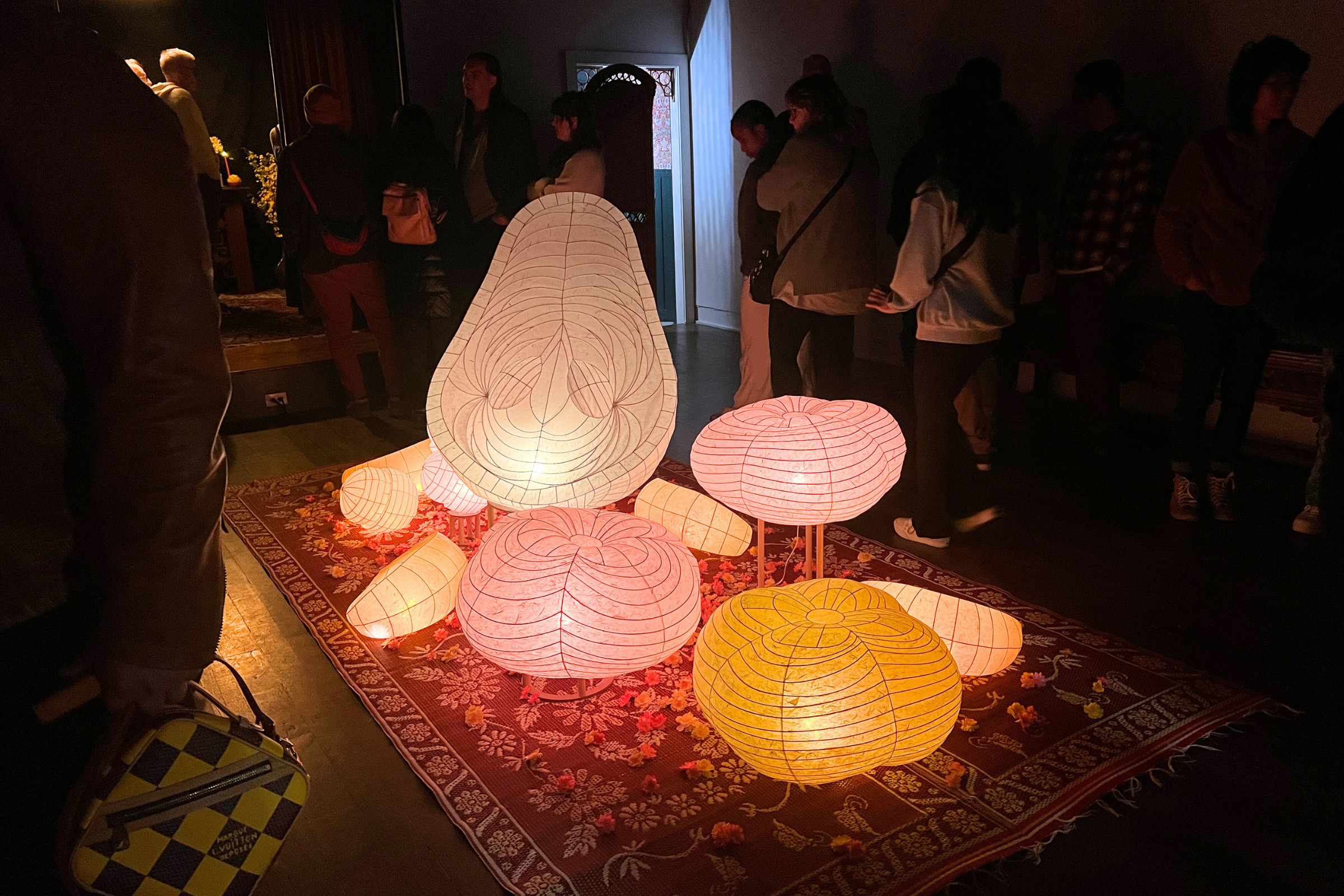
The first installation in the show took up most of the main space at Belafonte: a jumble of glowing, oversized paper lanterns in the shape of cut fruits arranged over a rug. The pear, persimmons, lychee, mandarins, and mangosteen were beautiful and delicate in their own right, while also imbued with deep cultural resonance.
Having a plate of cut-up fruit placed in front of you in the home of an East Asian person is as ubiquitous as a westerner’s offer of, “Can I get you something to drink?” Cut fruit has been an enduring theme in Pham’s work, with focus on the implications of the offer: not merely rote hospitality, but an act of service and of love, especially within the family. (A personal anecdote to drive this home: on a recent trip to visit extended family in Korea, most of whom we had not seen in decades, almost every relative we visited insisted we not leave before partaking in a shared plate of cut-up Korean pear or apple.) Turning this small, common act of kindness into a glowing centerpiece brought its meaning front and center.
The second installation was presented on Belafonte’s diminutive stage. The Vietnamese ancestral altar is a sacred space created in Vietnamese homes to honor ancestors and keep present the connection between the living and the departed, the past and the future. While these fixtures are perpetual, the altar is also used as a gathering place on the death anniversary of a departed loved one.