

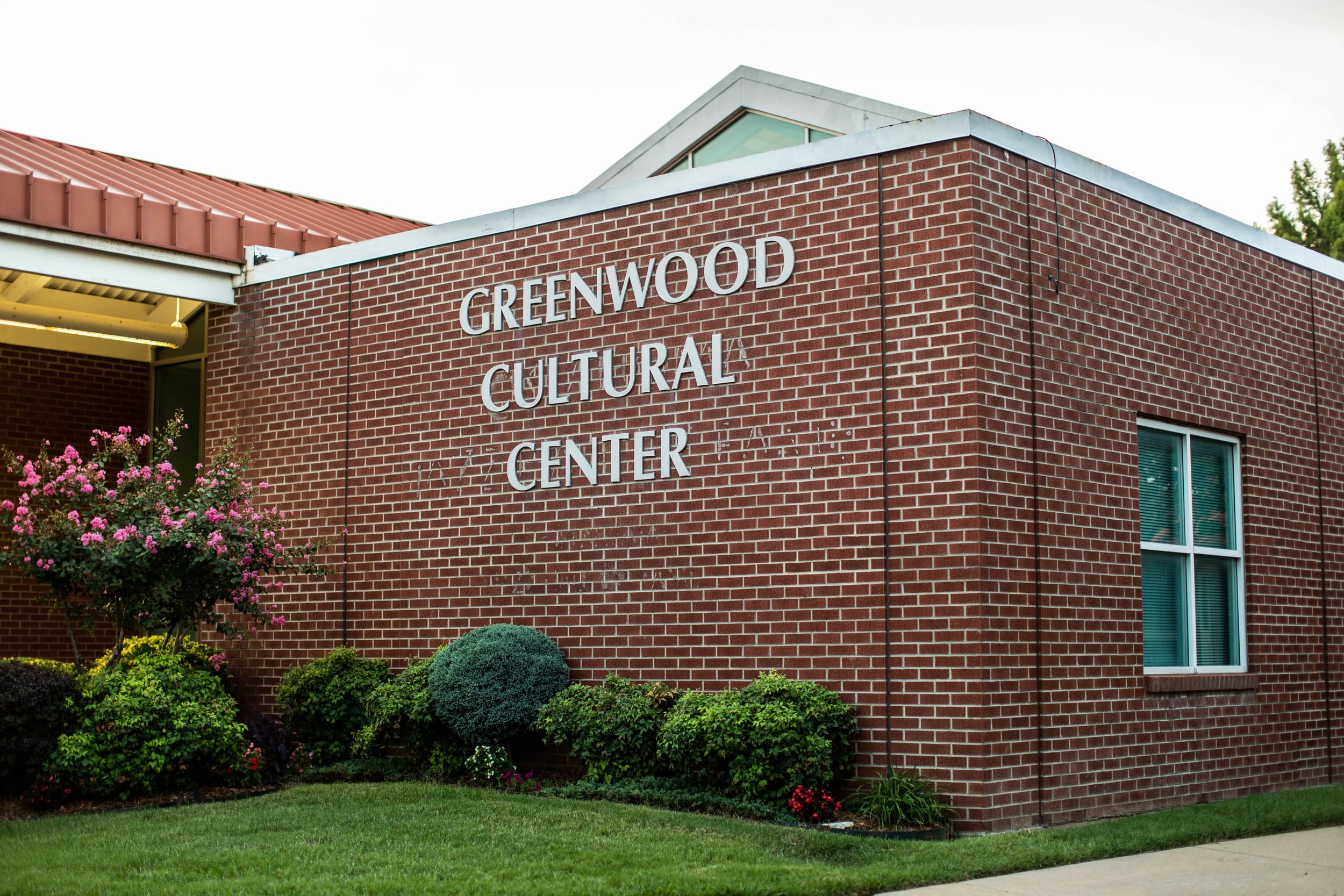
Last Sunday I went to the Greenwood Cultural Center because I didn’t know what the mayor was going to say.
I’d snooped around a bit beforehand, texting a few people who’d know what he might say, and got nothing. Ever since February when Mayor Nichols publicly indicated support for Project Greenwood, I’d wondered what shape that support would take.
So I joined a few hundred other people in the big room at the cultural center on the 104th anniversary of the Tulsa Race Massacre; they mostly seemed as curious as I was. This was a mix of residents, activists, business owners, politicos and other community leaders. Some had come from across the country, others from down the street. Many were descendants of Massacre survivors.
Special guests were recognized, in particular Lessie Benningfield Randle, one of the last two known survivors of the Massacre. She was resplendent in her Sunday best, wearing red and black with a feather in her derby hat as she sat close to the stage.
The event was something of a summit on the state of Greenwood, with programming led by a who’s who of North Tulsa. There was Pastor Jamaal Dyer of Friendship Church, State Sen. Regina Goodwin who recognized students benefiting from a $1.5 million state scholarship fund, State Rep. Ronald Stewart, and City Councilor Vanessa Hall-Harper, who provided an overview of the results of the Beyond Apology Commission, noting that “justice is elusive.” Hall-Harper reminded the room of the dozens of other U.S. cities where white residents destroyed the lives, property and livelihoods of their black neighbors.
Then Mayor Nichols began to speak. His analysis of the massacre’s long-term fallout was sympathetic and just. “There is not one Tulsan, regardless of their skin color, who wouldn't be better off today had the Massacre not happened or if generations before had done the work to restore what was lost,” he said.
He then announced the creation of a private charitable trust charged with raising, overseeing and distributing millions of dollars to put toward economic growth in Greenwood, north Tulsa and surrounding neighborhoods, with a focus on addressing the disparities caused by the Tulsa Race Massacre. From the Tulsa World:
The Greenwood Trust’s initial fundraising goal is to have $105 million in assets secured or committed by the time the city commemorates the 105th anniversary of the massacre on June 1, 2026.
Possible funding sources include philanthropic donations, property transferred to the trust, and public funding, if so authorized by the mayor and City Council.