


Editor's note: Originally published in This Land's November 1st, 2010 issue, Joshua Kline examines the plucky high-school literary magazine that helped launch the careers of some of Tulsa's most influential artists of the 20th century, with a little help from Kerouac and Ginsberg along the way.
“You can leave your contraband at the door,” the woman tells me.
I’ve filled out and signed several forms and waited while my name, driver’s license number, and other personal information were filed away on a computer system. I’ve agreed that my camera, brought for personal reference, will not be used with a flash and will not at any time rest on a tripod. I’ve signed my life away in order to spend a single hour with a rare book, and now I’m emptying my pockets. I’m at the University of Tulsa, in the Special Collections department of McFarlin Library, and I’m here to view one of their most recent acquisitions.
I dig into my jeans and comb through change, keys, cigarettes, lighter, cell phone, loose ibuprofen tablets, a black Pilot ball-point. The woman—a friendly, if harried, librarian named Alison—motions to the table next to me. I toss the contraband onto the surface and follow her past the entrance.
We emerge into a magnificent reading room. The ceiling is high with an opulent crystal chandelier hanging from the center of it, and each wall is completely occupied by glass-encased floor-to-ceiling bookshelves filled with collections from greats like Robert Frost and Walt Whitman, plus the fourth largest James Joyce library in the world. Six very large desks lie before me in perfect symmetry. Each is identically furnished with a small lamp and a black, monolithic book rest. The light is perfectly dim, creating a glowing, otherworldly warmth.
She tells me to sit where I like. I slip into a seat at the nearest desk and wait. Earlier, I was told that a staff member would remain in the reading room to monitor my activity with the book, and, sure enough, an awkward student receptionist has taken a seat at the head of the room. I will not be alone with the White Dove Review for a moment.
“It’s kind of hard to express what Special Collections does,” department head Marc Carlson explained to me a few days earlier. A scholarly, bookish fellow, Carlson has run Special Collections for six years now, but even for him, the mystique of his department has not worn thin. As he struggles for the words to best explain the essence of that department, I realize that Carlson is really a gatekeeper to the significant puzzle pieces (historical artifacts, manuscripts, parchments) that compose the lost history of Tulsa—the parts that seem to be intentionally hidden by museums like Philbrook and Gilcrease.
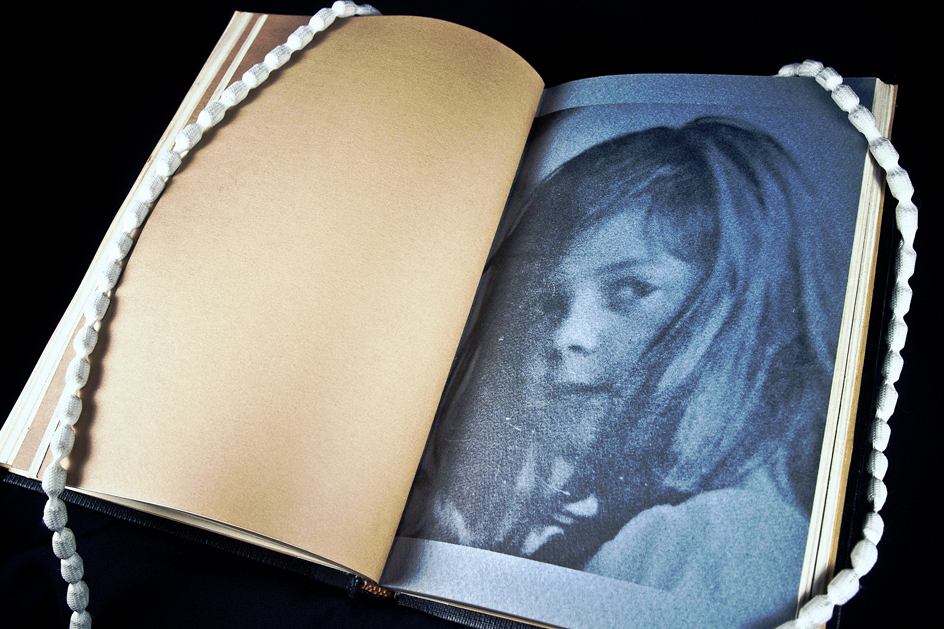
Now, sitting in the reading room, I’m finally handed the aging black-bound text. The covers are unmarked; the spine reads “White Dove Review 1-5” in gold-embossed letters. The ripened paper is a deep yellow bordering on brown, but the ink seems fresh and vibrant, as if put to paper just moments before I arrived. I cautiously pull open the cover to the first page and my eyes widen: it contains wild, loose signatures and illustrations. The markings come from many of America’s most renowned poets and painters.