


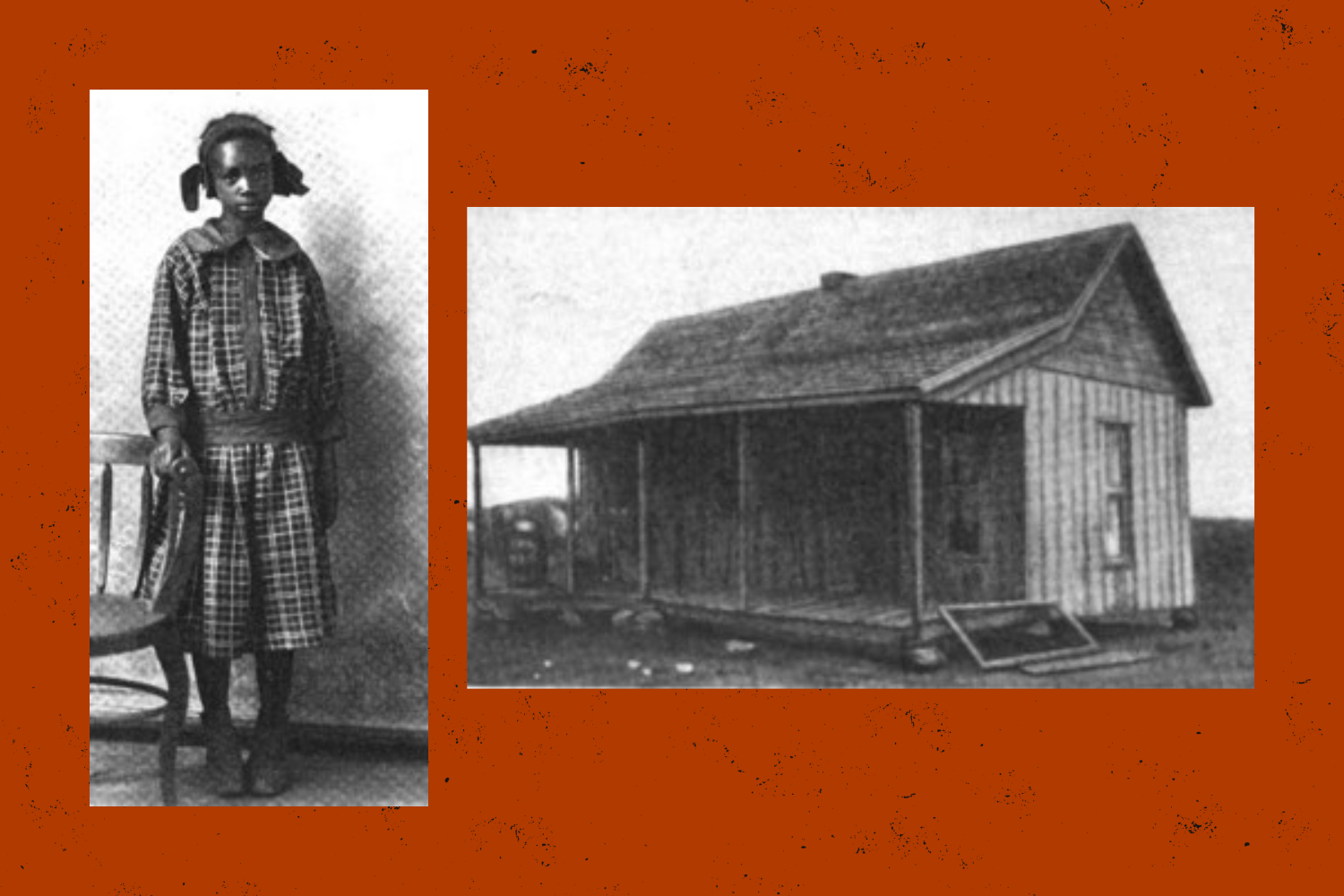
Editor's note: The Oklahoma oil boom created new wealth in fits and spurts. First published in This Land's March 1, 2015 issue, Steve Gerkin tells the sordid, tragic, but ultimately hopeful tale of Sarah Rector, once believed to be the country's youngest black millionaire.
The young black girl poses in a common, patterned dress by an ordinary side chair. Her shadow creates a ghostly presence on the light -colored wall behind her. The pigtails of the 10-year-old Sarah Rector sprout opposite her ears, like antennas on a Flash Gordon space helmet.
Historical records conflict over the issue of the first black female millionaire, though Sarah was the first black adolescent to achieve millionaire status, hands down. Her road to riches involved mandated endowment, racial triumph, and good fortune.
Long before the births of Sarah and her three siblings, the Creek Nation agreed with the federal government to emancipate their 16,000 slaves, giving them citizenship in their nation and entitling them to equal interest in soil and national funds. They became known as Freedmen.
The efforts to totally assimilate the Five Tribes of Oklahoma Territory into white America continued with the passage of the Dawes Allotment Act of 1887. This legislation forced the tribes to disband their centuries-old communal lifestyle and assigned roll members individually owned lots of land.
The Creek Nation was sliced up into 160-acre squares, “more or less,” and doled out to the Natives and former slaves; each received 120 acres for agriculture and 40 acres for homesteading. In an attempt to maintain a semblance of community, the Freedmen collectively chose allotments in an area known as Black Jack, 10 miles west of the county seat of Muskogee (eastern present-day Oklahoma), and formed the settlement Twine, honoring the newspaperman and resident William Henry Twine, who was nicknamed “Black Tiger” for his print-battle to ensure racial justice.
Born March 3, 1904, into a former Creek slave family of Joseph and Rosa Rector of Twine, Sarah and her clan moved down the dirt road to the newly created town of Taft, one of two-dozen black towns in the Indian Territory. Joseph farmed corn and cotton on Rosa’s acres, while the kids watched the trains come and go from the Midland Valley Railroad station. Sarah lived poorly in the pre-statehood territory. Yet, she had her allotment.
The landmark Dawes decision provided nearly 600 black children, or Creek Freedmen minors, with an inheritance of land, which was, generally, not fit for farming. The bulk of Sarah’s allotment was on rocky banks either side of a horseshoe bend in the Cimarron River, in another county near Tulsa, 50 miles from her home.