


Skip to Content
Culture

The Poetic Justice Project You Didn’t Know Was in Tijuana

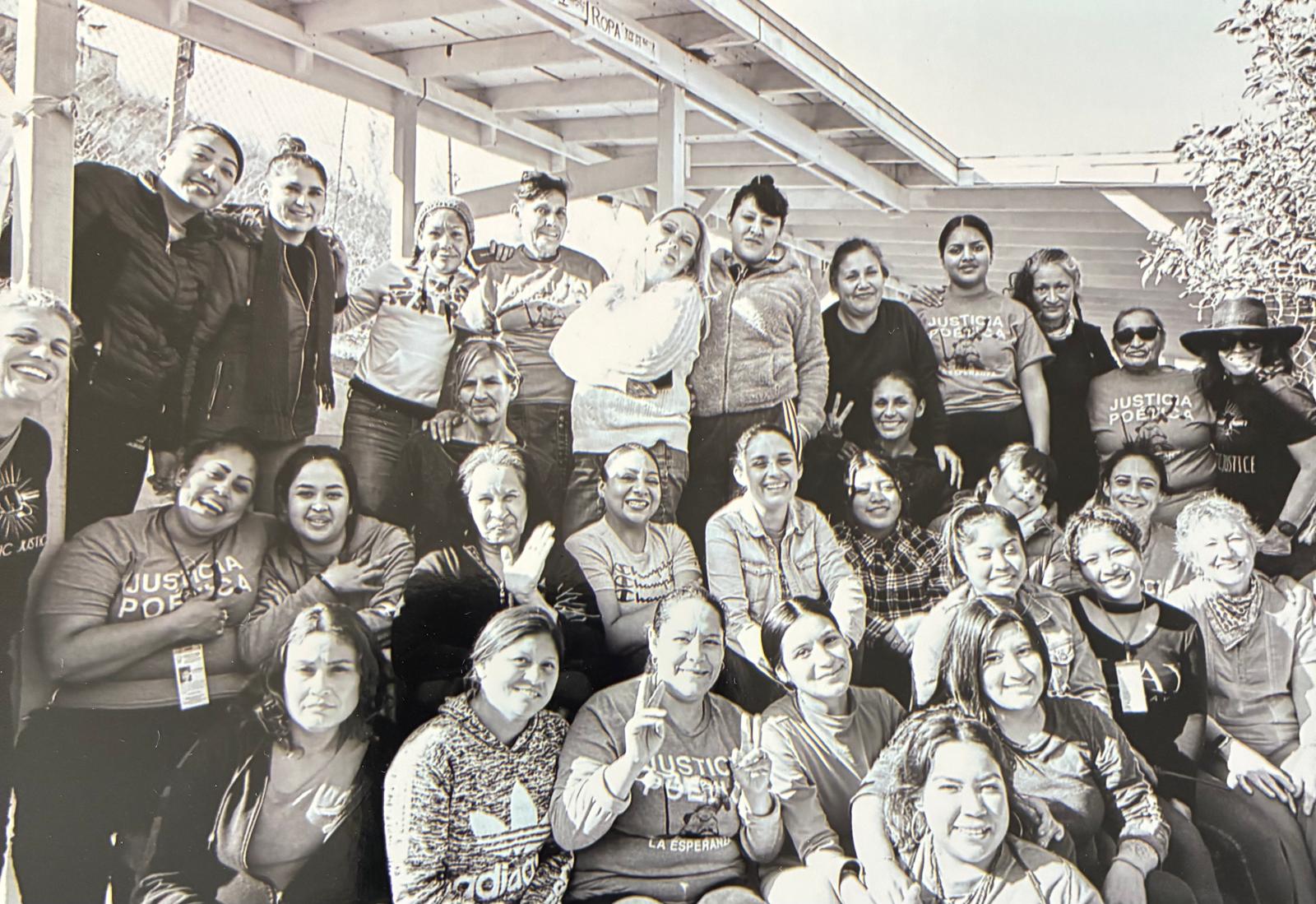
For nearly eight years, a little-known Poetic Justice project in Tijuana has used poetry, painting, and creative expression to help women reclaim their identities.

The women of La Esperanza

|photo courtesy of Poetic Justice

The Pickup's Culture coverage is brought to you by Tulsa Artists' Coalition Gallery, 40 Years of Empowering Tulsa Artists. Visit TAC Gallery to see American Highway Revisited by VC Torneden and Melinda Harvey Green, June 5 – 27, 2026.


In a rehabilitation center tucked inside Tijuana, Mexico, women recovering from addiction sit surrounded by watercolor palettes, magazines cut into fragments, scraps of handwritten poetry, and canvases layered with paint. Some are mothers separated from their children, some are survivors of abuse or trafficking. Some are only beginning to confront the weight of years spent in addiction. And for many of them, this is the first time they have been asked not who they were at their worst moment, but who they are underneath it all.

Most people familiar with Poetic Justice know the nonprofit organization through its work in the United States, where workshops centered on creative writing and artistic expression are used in prisons, jails, and youth facilities with groups in California, Oregon, Massachusetts, and Oklahoma (where it was founded in 2014). But the organization's impact doesn't end there.

For nearly eight years, Claudia Ramírez has operated a Poetic Justice project inside La Esperanza, a women’s rehabilitation center in Tijuana that focuses on intervening prior to incarceration. Ramírez, a drug and family counselor who lives in Mexico, became involved after Poetic Justice Executive Director Ellen Stackable visited the facility years ago at the invitation of Stackable's brother, Victor Miller, a longtime volunteer there.

During the visit, with the help of Ramírez, Stackable led a multi-day creative writing workshop centered on poetry and self-reflection. The women at La Esperanza responded immediately to the experience, and when the workshop ended, it was clear that someone would be needed to continue the program. That's when Ramírez volunteered.

“I’m only one person,” she said with a laugh during an interview, explaining why she now focuses primarily on one facility despite previously traveling among several. As one of the only English speakers involved in the Tijuana project, Ramírez serves as both counselor and bridge between the Mexican rehabilitation center and the broader Poetic Justice network in the United States.

Art by women at La Esperanza | photo courtesy of Poetic Justice

Despite the distance that separates it from its sister sites, the work being created in Tijuana has become a striking example of how art can function not only as therapy, but as a form of reclamation. Inside the workshops, women write poems about abandonment, fear, healing, identity, and survival. They paint with acrylics and watercolors, creating collages layered with photographs, journal entries, and memories.

The emphasis is never on technical perfection. “It doesn’t have to be good,” Ramírez explained. “We’re not going to a museum.” The point is expression.

For women emerging from addiction, that expression becomes critical. Ramírez described how many participants arrive overwhelmed by anxiety once sobriety begins to return clarity to their lives. During active addiction, survival often eclipses introspection; in recovery, buried emotions can surface all at once.

“They tend to worry when they’re in rehab,” she said. “Other problems come back.”

The workshops create a rare pause inside that emotional chaos. Through painting and poetry, women can begin articulating feelings many are too frightened or shamed to verbally articulate.

Art by women at La Esperanza | photo courtesy of Poetic Justice

The poems themselves move through recurring themes of selfhood and concealment. Many of the women write about smiles masking pain, childhood trauma lingering into adulthood, and the slow process of rebuilding identities fractured by addiction, violence, and loss. Several reflect on learning to love themselves after years of self-destruction, while others describe emotional walls built for survival, something that they are only now able to dismantle. Emerging across the collection is not just a narrative of redemption, but a theme of women actively reconstructing identity in real time.

Across the poems, the women return repeatedly to questions of essence: who they are beneath addiction, trauma, violence, and public judgement. Some describe themselves through cosmic and natural imagery, others through resilience, softness, or strength. Many of the works carry an unresolved tension between suffering and hope, revealing healing not as a clean transformation but as an ongoing and deeply personal process.

Tijuana faces severe addiction crises alongside limited rehabilitation resources, particularly for women. According to Ramírez, many of the women entering the program come from abusive relationships or trafficking situations, while others are dangerously close to incarceration or death by the time they arrive.

“What we try to do is keep them out of prison,” Ramírez said. “Giving them that space where they can recognize who they are again.”

Though geographically separated from Poetic Justice’s U.S. branches and operating with minimal infrastructure, the work unfolding inside La Esperanza captures the organization’s mission in perhaps its rawest form, creating spaces where people are no longer defined by punishment or trauma, enabling them to rebuild their identities.

Inside a rehabilitation center operating with few resources and far from public attention, art becomes something larger than creative practice or therapy alone. It becomes a way to process grief, confront violence, reclaim memory, and imagine a future beyond addiction and incarceration.

For Ramírez, that work begins with something deceptively simple: giving women the space to discover themselves again. In the pages of these poems and artworks, that recognition becomes visible—fragile at times, often unfinished, but undeniably present. 

If you liked this story, please share it! Your referrals help The Pickup reach new readers, and they'll be able to read a few articles for free before they encounter our paywall.

Stay in touch

Sign up for our free newsletter

More from The Pickup

Habit Mural Festival Turns 6th Street Into One Big Brick-And-Mortar Canvas 

From western and kitschy to spooky and gothic, this year’s murals are doing placemaking work in a place that’s still in the making

“Cat On A Hot Tin Roof” Didn’t Quite Reach A Fever Pitch

American Theatre Company’s production of the Tennessee Williams classic was full of strong scenes but lacked some urgency

June 17, 2026

Kevin Nealon Healed My Live Comedy Trauma

The SNL legend played it straight in a perfect stand-up set at Tulsa's Loony Bin

June 17, 2026

The Best Tulsa Events: June 17-23

The Silkroad Ensemble, Tulsa Juneteenth, Graveyard Shift Slumber Party and more!

June 16, 2026

Riding The Intergenerational Sludge Wave With Chat Pile And Acid Bath

A night of crust, death, doom, and camaraderie at The Criterion

June 12, 2026
See all posts