


Editor's note: Driving underneath the highway and past the Salvation Army building north of of Cain's Ballroom, a series of empty lots stand as a reminder of an urban density long past in Tulsa. But what exactly was there before, and why is such ostensibly prime real estate sitting idle? In this article from the Vol. 5, Issue 10, May 15, 2014 issue of This Land, Michael D. Bates uncovers the history behind one of North Tulsa's most misunderstood areas.
Just north of downtown Tulsa there is a vast empty area, about a half-mile long by a third of a mile wide. This wasteland is punctuated only by the Salvation Army’s compound on the south end and a 1970s-vintage elementary school at the north end. The Oklahoma State University-Tulsa campus borders it on the east.
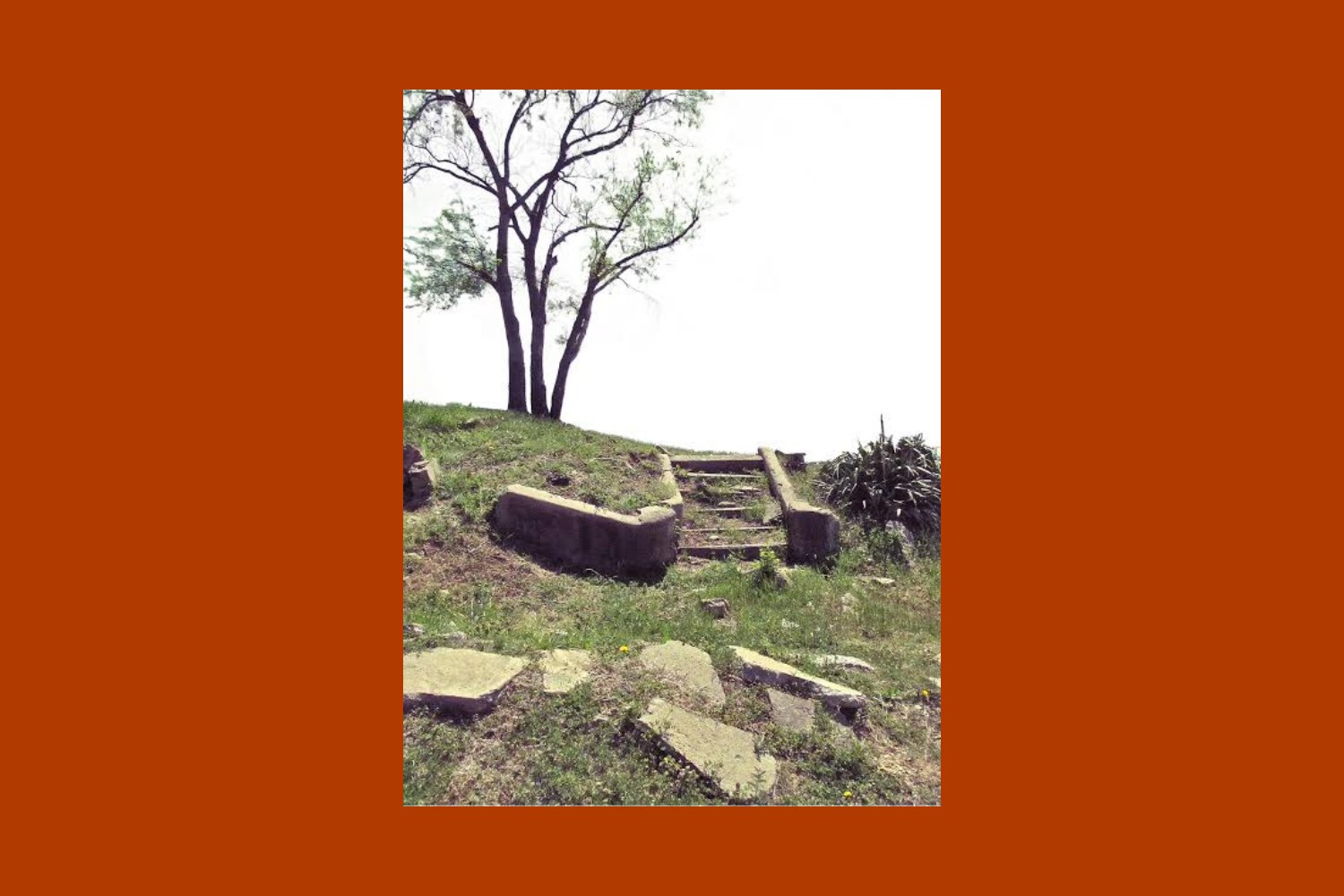
Superimposed on the empty, green space is a grid of seldom-used streets, each one paralleled by a pair of buckled or overgrown sidewalks, interrupted periodically by the stub of a driveway. Where there is a steep enough incline from the sidewalk to the middle of the block, there are sets of stone or concrete steps, leading up the rise to bare ground. At the steepest inclines, tilting, buckling walls try to keep the hill from spilling out onto the street.
Mistaken identity
The observer notes that this place is north of downtown and remembers that it was north of downtown in 1921 that a white mob invaded, looted, and burned an African-American neighborhood to the ground.
Ethiopian artist Eyakem Gulilat photographed this empty land and the concrete steps to nowhere, intending his installation to be a record of the physical legacy of the 1921 Race Massacre. “Using photography as a constant witness, I observe the changes that took place in this location through the last 100 years and how the place holds memory of this great tragedy. The land is an unbiased witness to the lives and events from the past...”
The land is an unbiased witness, but the steps and sidewalks tell us only that once there were homes here — not when they were built, what they looked like, when they went away, or why they went away.
The regularity of the boundary and the thorough cleansing that took place within does not suggest the chaotic destruction of an inflamed mob. The land bears the mark of an officially planned and methodically executed purge — more Kelo v. New London than Kristallnacht.