


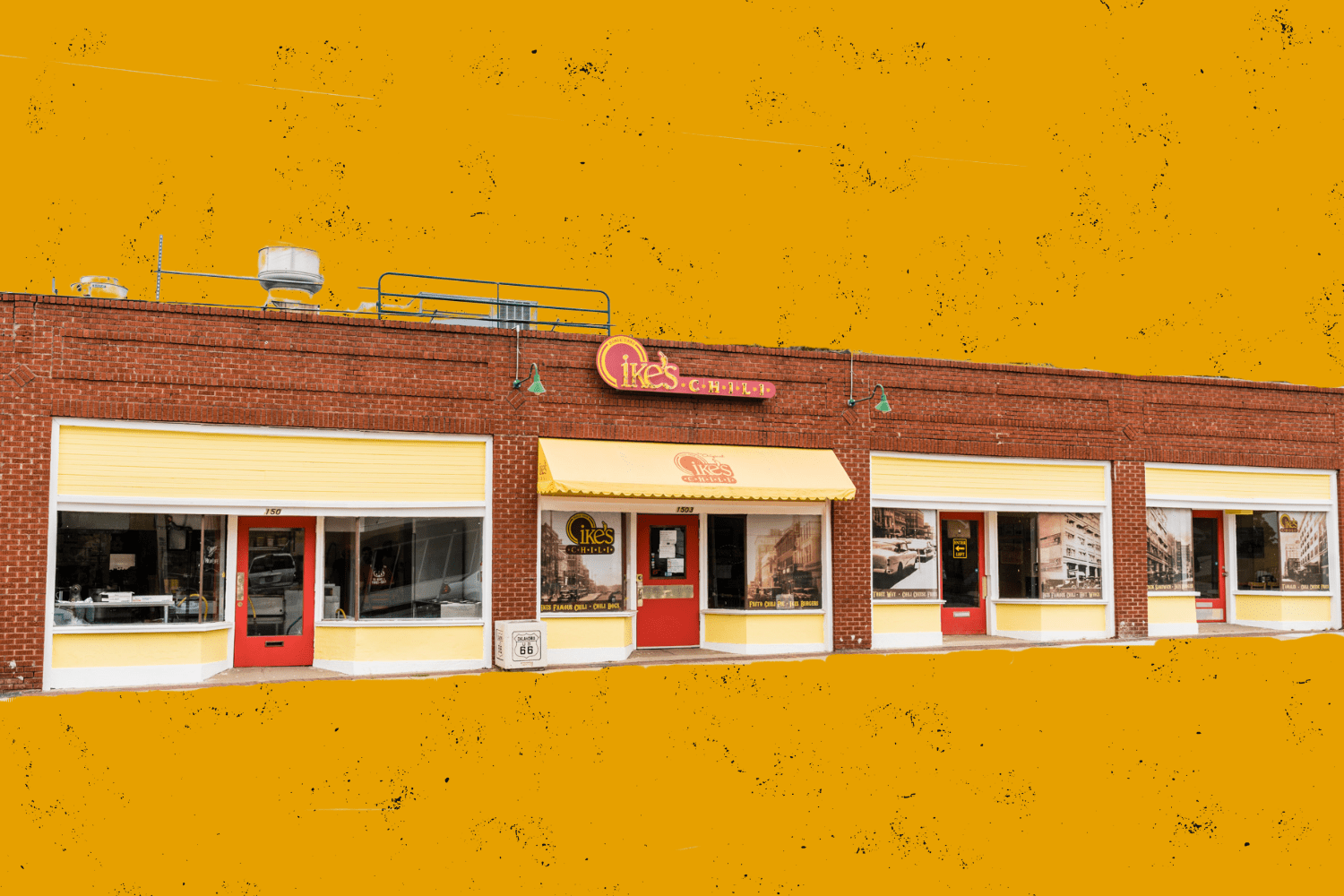
Editor's note: In Tulsa, chili and oil once ran together. The men who turned cranks on rigs needed cheap fuel and businessmen realized they could strike greater fortunes cooking it by the bowl instead of drilling for black gold. Naturally, there was competition in chili — over recipes, storefronts, branding. Here, Mark Brown chronicles that history, from Tulsa's "Chili King" Ike Johnson to all the deal-making, squabbling and back-stabbing that followed. Of Spice & Men was first published in This Land's April 2011 issue.
Like a newspaper, a bowl of chili is a stew of unsavory, raw, ragged elements that boil down into a somewhat digestible, often delicious, whole. Like a paper, people seem to take less of it than they once did. A reading of the history of Ike Johnson’s chili legacy must be made through the ink-blurred window of the daily news.
Or perhaps I just can’t see it any other way.
IKE JOHNSON, CHILI PARLOR OWNER, ILL.
REPORTED IN CRITICAL CONDITION AFTER STROKE OF PARALYSIS.
They reported his demise in the Tulsa Daily World on 10 November 1928.
(Editor’s note: Associated Press style would dictate the 10 follow the November, with a comma before the year, but I have always preferred Strunk and White’s suggestion. The key, as any good copy editor will tell you, is consistency.)
Ike, more proprietor than legend in ’28, did not merit front-page news. Front page news that day: the explosion of Etna. “Second Village Falls Prey to Devouring Lava.” In fact, Ike’s stroke made bigger headlines than his death. Over his one-column and portrait are set the words, “Paralysis Victim,” as if Ike were its poster child.