


Tulsa LitFest: Reginald Dwayne Betts and Red Dirt Poetry
OSU-Tulsa
April 25, 2025
It would have been a tall order to attend all or even most of the events during the 2025 Tulsa LitFest. Over four days and nearly a dozen locations, readers and writers converged for poetry readings, workshops, film screenings, a book fair, literary trivia (disclosure: this one was sponsored by The Pickup), and much more. The two events I did get to—both on Friday night—showed the range and appeal of the festival’s literary offerings, which feel more important than ever in a time when expression is being challenged and political support for the arts is again on the chopping block.
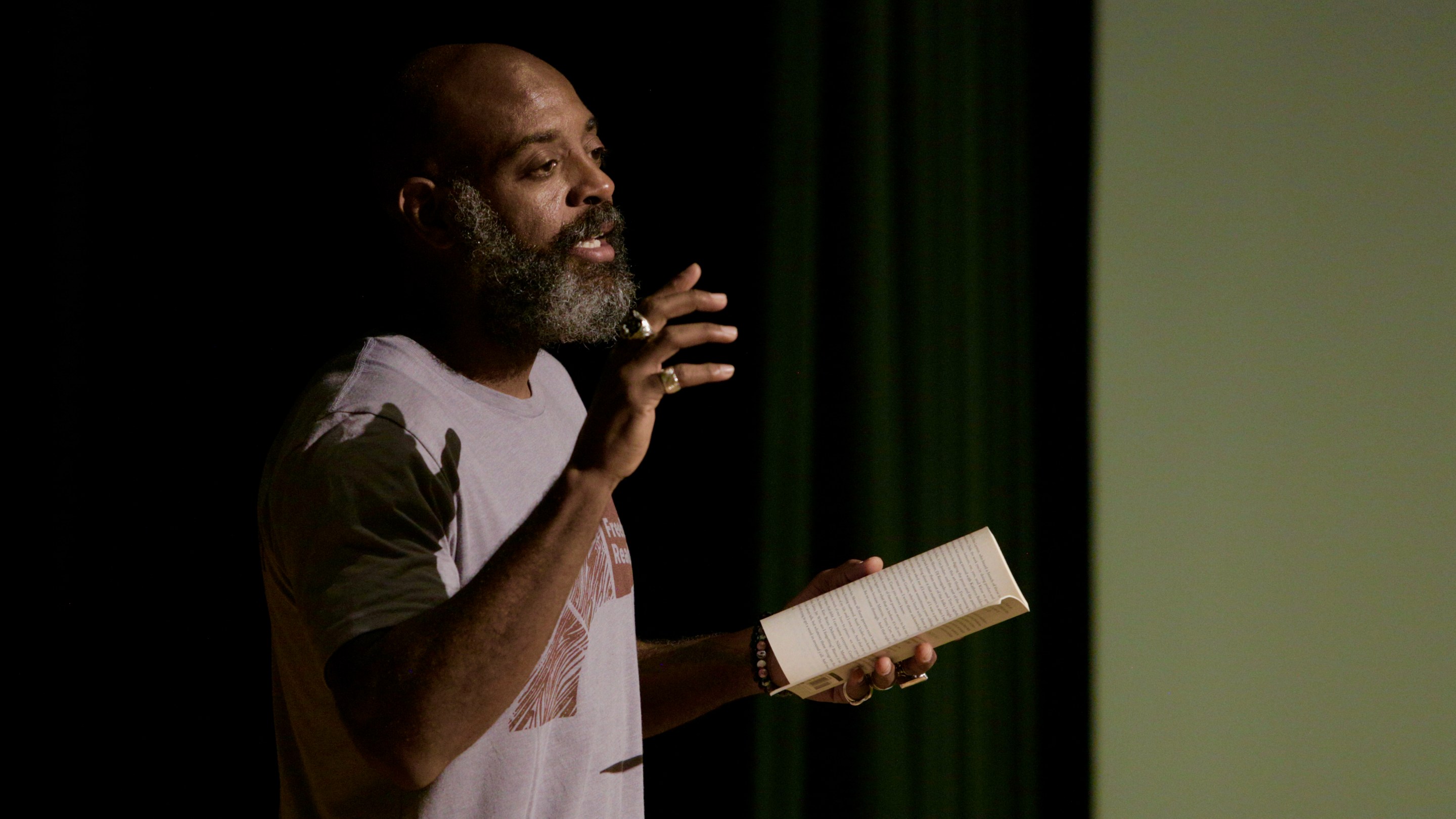
LitFest’s keynote event, a performance by poet Reginald Dwayne Betts, narrowed in on themes of freedom and justice that were threaded through the festival. Betts has an impressive resume—J.D. from Yale Law, MacArthur Fellow, Guggenheim Fellow, National Magazine Award winner, Harvard Radcliffe Fellow—and started the organization Freedom Reads, which has put more than 400 open libraries in prisons across 12 states.
It was a special hour and a half, as Betts essentially workshopped what he said will become a Broadway production: “March Forth,” a piece derived from his award-winning poetry collection, Felon. We got to watch him perform this work solo, allowing each concept, story, and word to stand on its own.
Felon stems from Betts’ real-life experience: at 16, he was sentenced to nine years in prison after an armed carjacking. He told the crowd that, in solitary confinement, if he called out for a book, someone would slide one down the hall to his cell, which is how he first encountered the Black Poets anthology. That book, featuring poets like Robert Hayden, Gwendolyn Brooks, and Lucille Clifton, inspired him to become a poet himself.
In “March Forth,” Betts shares about the characters he met in prison, like a man who, adamant about his innocence, wouldn’t take a plea for a lighter sentence, saying, “Why would I say I killed somebody that I ain’t never seen, especially in front of my mother?” He ended up getting sentenced to 53 years.
Betts describes his time after prison trying to find a job, studying writing, building student loan debt, and going to law school in a meandering narrative that weaves in humor and sincerity, highlighting how the challenges he’s faced have positioned him to serve others, including helping several people walk free.