


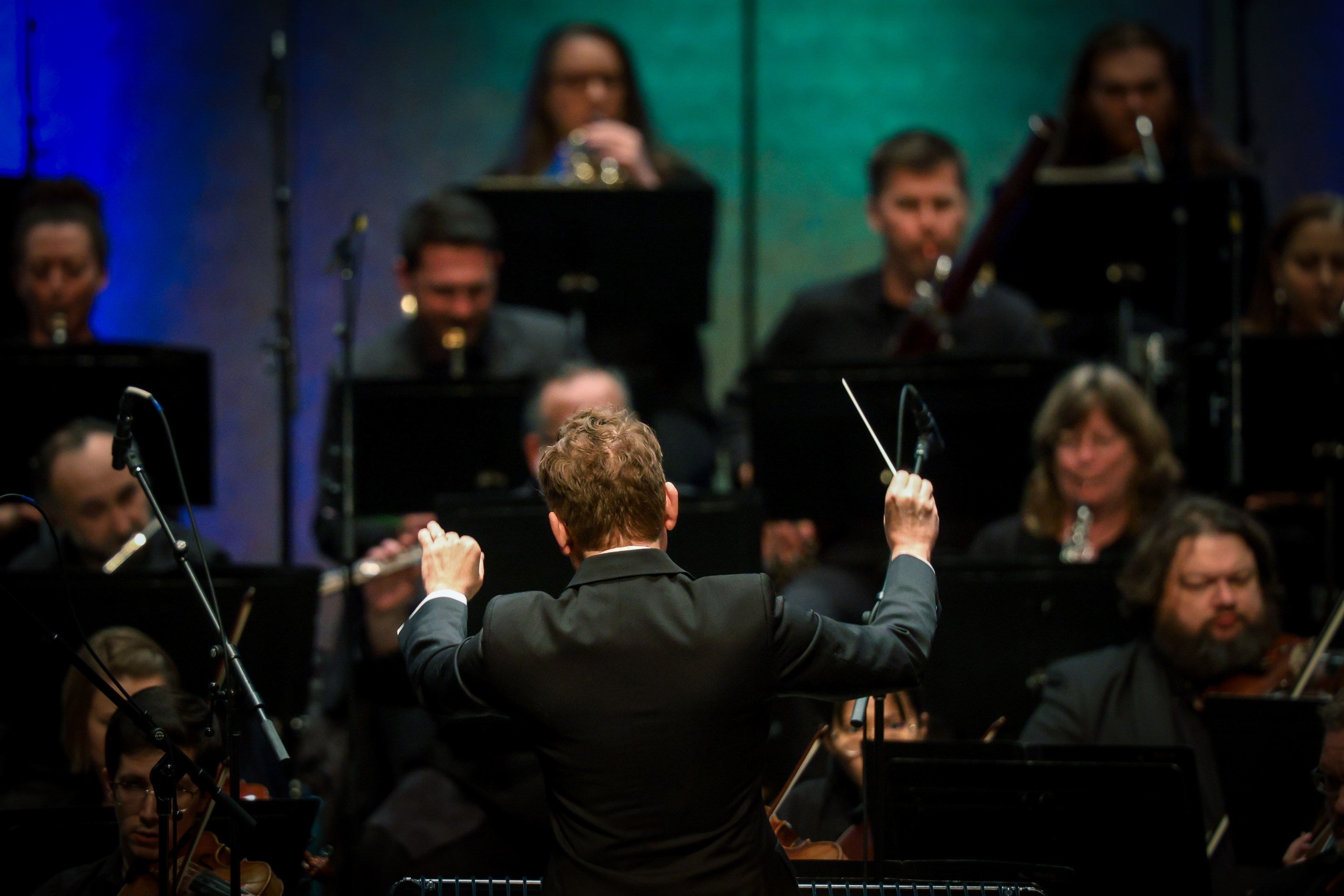
Tulsa Symphony Orchestra’s “Wagner’s Tristan & Isolde”
Tulsa Performing Arts Center
January 11, 2025
It’s hard to announce “our performance tonight is a testament to the tenacity of the human spirit” without being annoying, but the Tulsa Symphony managed to do it last weekend. Billed as such, with James Bagwell as guest conductor, the concert was subtle, until it was exciting, until it was hard as hell, in a good way. Best of all, it featured prominently the triangle.
The first piece, Czech composer Bedřich Smetana’s The Moldau, was first performed in Prague in 1875, and is one of his six symphonic poems that make up the cycle called “My Fatherland,” his ode to Bohemia (the region of the Czech Republic that includes Prague). The 13-minute piece meandered pleasantly—it was, after all, written to resemble a river—until it erupted with staccato trumpet calls piercing through a wave of pulsating, exact strings.
And God bless triangle players! The crescendoes of The Moldau were solidified with the jangliest of jangly triangle parts. As a dumb percussionist myself, I am of the belief that no classical crescendo is complete without a triangle being beaten to absolute shit. Though the lilting, pleasant sections made me a little sleepy and bored, the sweeping crashes provided my nerves with plenty to hold onto.
The billed main event, Richard Wagner’s Tristan and Isolde, similarly balanced near-total silence with a cantankerous din. The piece we actually heard was Prelude und Liebestod (Liebe = Love, Tod = Death, a German literary term referring to the consummation of love after or during death), an orchestral excerpt from Wagner’s opera about forbidden love that’s often called one of the best pieces of music ever made. The Symphony hammered the whole thing out with the requisite energy needed to make it feel like the cinema it would one day influence (Hitchcock and Lars Von Trier, among others).