


Skip to Content
Explain It To Me Like I'm From Tulsa

Renters, Artists & Low-Income Households Are Bearing The Brunt Of Tulsa’s Housing Crisis

We’ve got unaffordable housing stock, skyrocketing rent and exclusionary zoning straight out of the 1950s. How did it come to this?

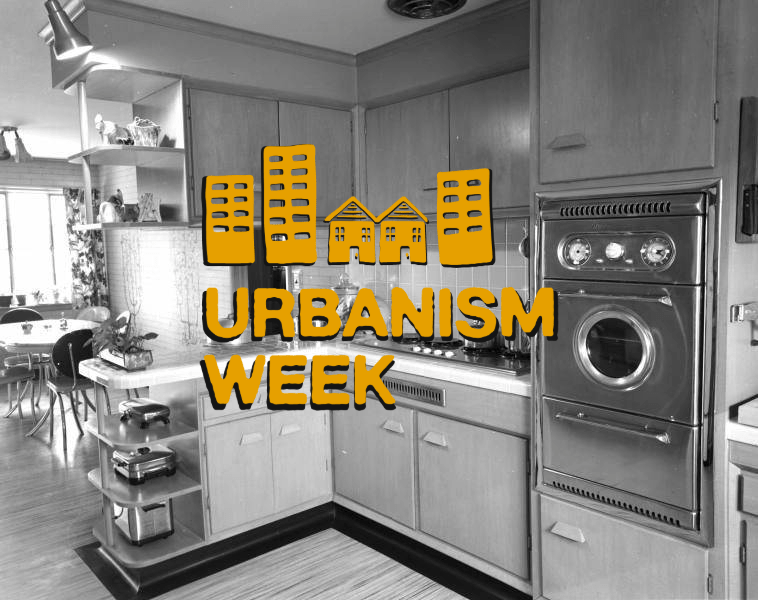
A home show kitchen display in 1955.

|Beryl Ford Collection, Tulsa City-County Library

The Pickup is an independent media company doing culture journalism for curious Oklahomans. We write stories for real people, not AI scrapers or search engines. Become a paying subscriber today to read all of our articles, get bonus newsletters and more.

The way I remember it 2007 was the worst summer ever. Newly back in town from a fun and liberating freshman year, I found myself in the doldrums. My newfound collegiate qualifications for white collar work landed me the Kafkaesque job of “Accounting Intern” for a rental car company in Owasso. The hands of Tulsa Time rotated slowly, and I counted down the days until September.

Even in this melancholy, I sought to make something of that summer. Perhaps, with a more positive attitude, untold wonders of Tulsa would reveal themselves. It was the pursuit of such secrets that led me to Miss Belvedere. 

Miss Belvedere, back in her (and Tulsa’s) glory days. Wikimedia Commons

She was a vehicle, bottled up in a time capsule and buried in 1957 as part of the grand “Tulsarama” jubilee festivities that year, to be unearthed in 2007 for Oklahoma’s centennial. With great gusto, event organizers called the car “an advanced product of American industrial ingenuity” and she was sealed shut, ostensibly for the next half-century.1 A can of fuel oil was even included among the time capsule’s artifacts, perhaps with the hope that Miss Belvedere would roll through the streets of Tulsa again upon her resurrection. This would come to pass, but not in the way that city leaders in the 1950s probably expected. 

This sense of assured optimism was not unique to Tulsa in 1957. World War II was in the rearview mirror of our shiny automobiles, which were newly affordable to most Americans. New federal housing policy and the G.I. Bill caused homeownership to blossom nationwide. Tulsa’s economy, still riding the wave of the early-century oil bloom, teemed with blue-collar, middle-class jobs. Housing was inexpensive and available. 

This is a far cry from the Tulsa of today, which is trapped in the grip of a nationwide housing crisis. 49% of today’s renters spend more than a third of their income on housing and one in ten spends over half. We’re not just broke, either. Household sizes have shrunk dramatically. Almost 70% of homes in Tulsa consist of one or two people, and more than a third of Tulsans live alone. 74% of Tulsa households are child-free, which means three-quarters of Tulsans don’t live with their nuclear family. 

Even young renters ready with a down payment often remain in their rentals because there aren’t reasonable homes worth buying.2 Meanwhile, boomer homeowners are staying put in oversized empty nests because there aren’t many great options for downsizing, or because a higher-interest loan would far exceed their vintage fixed-rate mortgage.

Put another way, the Tulsan who saw Miss Belvedere buried in 1957 spent far less on housing than the Tulsan who saw Miss Belvedere unearthed 50 years later. How did we get here?

Generational Trauma 

The automobile changed not only how Tulsans got around but also where we could live. Greenfield suburbs sprouted around Tulsa’s formerly-rural fringe in the 1950s, increasing real estate value away from downtown. 

This map from the Tulsa Planning Office neatly shows where Tulsa grew and when, in relation to the attainability of an automobile:

Tulsa's growth trajectory is as much about transportation as it is housing. Tulsa Planning Office

With cars, came lawns. Cue The Wonder Years theme song; growing families in Tulsa mowing yards, grilling, living the cul-de-sac life. Subdivision lots would also expand in turn and allow for driveways and garages to dwarf the scale of older neighborhoods like The Heights and Kendall-Whittier, built more densely so residents could stroll to a nearby streetcar to get to work. 

True to their name, baby boom families were larger. In 1960, American households averaged 3.33 people per home. This figure would fall to 2.76 in 1980 and 2.53 today. In Tulsa today, the average household size is 2.46.

Still, this era of growth was not simply a product of lifestyle preference or automobile access. Zoning and city planning decisions also directly suburbanized Tulsa. 1957 saw the adoption of a new comprehensive plan, a state-mandated document that became Tulsa’s literal roadmap to building suburbia.

61st & Lewis, as seen in 1953. Just a few years later, houses would start cropping up everywhere. Photo via Beryl Ford Collection, Tulsa City-County Library

Among its many recommendations included the Inner-Dispersal Loop, the tangle of highways that now strangle downtown. A death knell for downtown vitality, this infrastructure explicitly encouraged vehicles to enter and exit downtown as swiftly as speed limits would permit. On a good day, those in the know can cruise down Cincinnati to the BA without ever stopping at a light—we made it that easy.

Changes to the city’s zoning code and subdivision standards would soon follow in tandem, codifying these preferences in official ordinance. New development of once-plentiful housing typologies, such as the duplexes, triplexes, and quadplexes flanking Cherry Street, was effectively obliterated with the advent of this exclusionary, single-family zoning by limiting one house per lot.

Dense housing off Cherry Street, modern day. Photo by Ryan McGahan

Lots grew larger too, mandating sprawl through minimum square footage requirements. The density of our older neighborhoods dissipated to make way for a modernized—and atomized—Tulsa. The legacy of these policy choices continues to shape what builders can build and buyers can afford today. On land where housing can be built, only 20% allows multiple units, while the other 80% exclusively allows detached, single-family homes by right, regardless of property owners’ preferences.

Back to Miss Belvedere. Her resurrection in 2007 was highly anticipated—a civic effort to revive the long-lost optimism of the 1950s. Wage and job growth both slowed severely in the ‘80s and ‘90s as oil reserves declined. By 2000, only 25,000 oil and gas workers remained in the state, or about 20% of the industry’s peak employment in 1982. Tulsa’s median household income, meanwhile, badly lagged the national average.

Miss Belvedere was supposed to remind us of the city’s era of excellence, to restore civic pride by romanticizing what was. And it was this symbolic significance that rendered her retrieval such a heart-wrenching disappointment. A nearby water main break had infiltrated the car’s concrete casket, and the seepage transformed her sheen to an alarming shade of rusted pollen. This event, meant to evoke pride, instantly took on a different meaning.

The Miss Belvedere reveal in 2007 that didn’t go so hot. Photo by Ellen Ray

Much like a state funeral, Miss Belvedere was displayed in the Expo Center for Tulsans to pay tribute, or to gawk at. I remember going with my dad, snapping photographs with a disposable camera as I tried to figure out what the lesson was. Nearly two decades later, I’m still not sure. Perhaps I’m overthinking it, but what I felt was a clear sense of my hometown’s decline radiating from that vehicle’s rust.

Why Do We Have To Choose Between Walkability And Affordability?

In retrospect, the car not only accelerated Tulsa’s suburbanization, but also rarified our walkable, affordable housing stock. Early in the automobile era, most new subdivisions were built entirely without sidewalks. City regulations didn’t require them until later, sealing our fate as a city hostile to walkers. 

Today, Tulsa’s few walkable patches are cherished, a stark contrast to the majority of our neighborhoods. They’re also unaffordable for most. Occasionally, I’ll splurge on an almond croissant at Maple Ridge Grocer, but live within walking distance? That’s another indulgence entirely.

What is the link then between walkability and affordability? Are walkable areas intrinsically unaffordable? Not intrinsically but increasingly. If the same four or so walkable blocks around Cherry Street featured Maple Ridge-scale lots, imagine how much more expensive the properties would become. When zoning allows the division of those same blocks into smaller-scale lots, the premium placed on walkable real estate is absorbed by 12 or 16 households instead of just four or five. The result is, or could be, less expensive housing.

Land costs as a factor of zoning (Source: Kronberg Urbanists + Architects)

Hardly an outlier, Tulsa’s experience is universal among Sunbelt cities with similar growth patterns and histories. Last fall, I toured Atlanta’s Beltline with 30 other Oklahomans, terrifyingly on Lime bikes (we were the terror). The tour told the tale of how Atlanta converted a vacated rail corridor into a vibrant, walkable enclave. This newfound walkable infrastructure was a hit with pedestrians and cyclists, but the true victor was the rising property values in the surrounding real estate.3

“Oceanfront” property along the Atlanta Beltline, 2020. AdobeStock

Tulsa ain’t Atlanta, but the premium placed on walkable development is no different. Even without a Beltline-scale investment, much of our housing stock from the streetcar and early automobile eras is declining in quality, though not necessarily in cost. Even neighborhoods like Kendall-Whittier (which saw white flight with the construction of I-244) are increasingly prized for their relative walkability.

Our Affordable Housing Stock Today: Very New or Nearing Its End

One thing about Tulsa few consider is that we’re really, really landlocked. Aside from the last remaining pastures in east Tulsa or northwest Tulsa’s rolling hills (which are more challenging to develop), Tulsa is built out. 

For Tulsa’s population and economy to grow we need more housing, here, within city limits. We must build up, not out. Yet, our exclusionary zoning code prevents the development of anything but single-family homes, which are still important but insufficient. 

Recent census data makes it clear: the growth in this region is happening in our suburbs, not in Tulsa proper. This chart shows just how few people Tulsa has added between 2023 and 2024, especially in comparison to orbiting municipalities in our metropolitan galaxy.

City2023 populationPercentage change 2023-2024
Collinsville9,7574.5%
Owasso42,8213.5%
Bixby31,7282.9%
Broken Arrow122,7562.5%
Skiatook8,8791.5%
Sperry1,2441.2%
Glenpool14,5671%
Jenks27,8690.6%
Sand Springs20,3300.5%
Tulsa415,1540.3%
Data source: 2024 U.S. Census Bureau

Looking at this list, it’s clear that our region writ large is growing, though slowly. That growth means there is demand for new housing. Our suburbs are absorbing nearly all of this growth, in houses and apartment complexes alike. Again, this is nothing new. Old real estate adages like “Drive ‘till you qualify,” remain as true today as they did in our early automobile era. 

Still, that leaves the question of what is happening with the city’s housing ecosystem. With little land for new neighborhoods, most of our homes are aging, and most are not aging well. This can be a good thing! Urbanism godhead Jane Jacobs argues for the need for aged buildings in chapter 10 of The Death And Life Of Great American Cities, fortune-cookie style: “Time makes the high building costs of one generation the bargains of a following generation.”      

Older apartment complexes and homes are what affordable housing wonks call “NOAH,” or Naturally Occurring Affordable Housing. These properties are not subsidized and tend to rent for less simply because tenants know they’ll require more upkeep, to say nothing of rodents or absentee out-of-state landlords.  

Stay in touch

Sign up for our free newsletter, The Talegate

Does this mean Tulsa has a shot at maintaining some of our affordable housing? Maybe so, if we invest in its preservation. The reality is that housing markets are regional. If an artist can’t afford a loft in the Arts District, a two-bedroom apartment in Bixby or Broken Arrow—with their newer builds and fewer roaches—isn’t a bad alternative. The commute isn’t totally punishing either. 

Bottom line: our suburbs have more land—and sometimes better zoning—to add homes, and therefore, humans. Tulsa’s affordable housing is mostly just our aging housing, which also went up in cost after the COVID-19 pandemic. If you can’t afford to buy from that aging housing stock now, it’s probably the suburbs for you. Service industry workers, teachers, anybody living paycheck to paycheck or lacking in generational wealth will continue to get priced out unless we can build affordable housing options within city limits.

So Why Can’t We Build More Affordable Housing?

Tulsa isn’t unique among American cities in its inability to fend off a worsening housing crisis. This struggle is partly due to intentional policy choices that restrain the federal government’s role in public housing. The classic brutalist towers that epitomized post-war public housing are now a relic. We simply don’t build public housing that way anymore at scale, nor do we believe that would solve our affordability problem. Some of those historic properties remain operational, preserved through funding from the Department of Housing and Urban Development, but many others were imploded before even reaching the end of their intended life cycle.

When St. Louis’ Pruett-Igoe towers went down, so did the dream of large-scale public housing. Wikimedia Commons

St. Louis’ Pruett-Igoe towers represent the most remarkable example of a failed public housing investment in the post-war era. Designed by Minoru Yamasaki, the same architect behind Tulsa’s Performing Arts Center and BOK Tower, the complex consisted of 33 11-story towers and was completed in 1954. What was intended as a mixed-income community opened to great fanfare as a solution for housing the city’s so-called urban poor alongside its middle class. 

Just two decades later, Pruett-Igoe had instead become the poster child for urban decay. Lacking sufficient funds for maintenance and operations, the modernist towers became monuments of concentrated poverty, neglect, crime, and segregation, occupied by residents—almost exclusively Black—with no other choice. By 1976, local officials had decided to abandon the nightmare and demolished the entire complex, leaving little evidence that the dream of scaled public housing ever existed, much less any hope of its eventual realization.4

In contrast, today’s publicly-supported affordable housing is constructed through tax credits sold through private syndication. Absent a dry explanation of that process, the important thing to know is that the federal government’s role has shifted from construction, ownership, and operations to shepherding private investment to perform those services instead. 

This shift in responsibility has also affected how affordable units are priced. While vestigial Section 8 properties charge tenants based on a set percentage of their incomes (usually fixed), today’s system calculates a fair-market rental rate based on average regional incomes. As a result, today’s affordable housing costs more than what an income-based calculus would dictate. There are some exceptions, but those depend even more on resources to explicitly serve extremely low-income populations, such as chronically homeless individuals.

New Condos Aren’t Why You Can’t Afford Rent, Nor Can We Keep Blaming Tulsa Remote

With limited support to boost affordable housing supply, cities are left with only a few tools to address these challenges. Progressive cities and states may issue housing bonds to construct or preserve affordable housing. Others offer grants and loans for the same purpose, a strategy Tulsa is embarking upon after dedicating $75 million to affordable housing in a 2023 voter-approved funding package. Despite the significance of this investment, such funding is insufficient to keep up with demand for affordable housing or to prevent displacement of vulnerable Tulsans who can no longer afford their current homes.

Tulsa is currently raising capital through its Tulsa Housing Impact Fund to grow the $75 million in funding to $120 million. Even then, ever-rising construction costs, alongside the challenge of sustaining affordable properties at lower rental rates, will remain a barrier to building enough housing attainable for those who bear the brunt of our housing crisis: low-income households, renters, artists, and people of color. 

Despite public dollars and the generosity of local philanthropy, direct financial support to build and preserve affordable housing is only one part of the equation. While building and operating subsidized housing will remain challenging, building more housing, period, is another key way Tulsa can keep our “naturally occurring” low-rent apartments and homes affordable. Based on the City of Tulsa’s 2024 housing strategy plans, we’ll need to build 12,900 units by 2034 to keep up with demand overall.

The optics of this strategy may not look great. A popular refrain among denizens of Tulsa’s subreddit is to decry new development as gentrification, an obvious culprit for our affordability crisis. Yet any new housing, even the shiniest of condominiums, provides relief to the pressure cooker that is our local housing market. If housing is too expensive because we don’t have enough of it, the aforementioned critics could stand to revisit lessons from introductory economics. We can only meet the demand (for low-cost housing) by increasing supply (of all types of housing). 

Sure, it’s easy to jab at the Davenport Lofts’ adjacency to Soundpony; its residents are obviously not the demographic for PBR whiskey shot specials. Yet, that immediate adjacency doesn’t really matter. Right now, Tulsa has a limited and shrinking number of apartments and homes that are affordable to low- and middle-income earners.

Remember NOAH? The way to ensure those properties stay affordable is to have enough other choices in our housing market, so that higher-income earners can purchase a condominium (like the Davenport) instead of one of the remaining sub-$200K homes in Kendall-Whittier, yet-to-be-flipped. 

Our housing ecosystem is healthiest when all types of housing are being built everywhere, so that any Tulsan can find a home to meet their needs. That may mean a starter home, a garage apartment, a young professional’s condo, or a downtown loft for seniors to downsize, depending on one’s current phase of life. An expanded diversity of housing types and pricetags would boost supply to meet demand for Tulsans of all incomes.

Another common villain in our local housing discourse (which again, I base largely on my own unscientific lurking of the Tulsa subreddit) is our dear Tulsa Remote initiative. Yes, this program actively encourages its participants to rent or purchase property in Tulsa, and investment properties are no doubt purchased by some of the program’s more than 4,000 participants. Absent a study of Tulsa Remoters’ housing preferences, I assume that many of these upwardly mobile and entrepreneurial go-getters would prefer to live at the new NOMA apartments at 11th and Lewis, instead of in a deteriorating home a few blocks north. When higher-income earners have more choice in housing stock, pressure is alleviated on Tulsa’s naturally occurring housing stock. It’s not a perfect solution and doesn’t stop bad actors from flipping houses and displacing their existing residents. Still, the best chance we have to fight increasing rent is to build more housing overall, while still supporting the development of subsidized affordable housing as funding and financing allows.

Austin’s housing boom offers a playbook Tulsa can follow. Its early 2000s tech boom created a real estate market defined by lack, such that rents rose citywide by 93% between 2010 and 2019. In what former mayor Steve Adler called a “battle for the soul of our city,” Austinites would approve a $250 million bond measure for affordable housing. Not only that, the city reformed its zoning regulations to encourage development of new housing, especially by allowing larger apartment buildings in more parts of the city. It worked. Austin increased its housing stock by 30% from 2015 to 2024, and rents fell. In December 2021, Austin’s median rent was 15% higher than national averages, and by January 2026, rents had fallen to 4% below. Rents even dropped by 11% in low-rent, Class C buildings (Austin’s own NOAH).

All Eyes On Tulsa

Mayor Nichols’ bold goal of building 6,000 units of affordable housing before his term expires is noble, if naïve in its extraordinary aspiration. Still, the bravery to aim high may be our best bet. And if we pull it off, we would be known for more than our Route 66 fiberglass sculptures or legacies of racial violence and spatial segregation. We would remain accountable to our most important audience—not tourists or newcomers, but people born, raised, stuck, or otherwise choosing to live life in America’s 47th largest city.

Even as major cities like Austin and Atlanta make progress toward their own affordability goals, they will remain expensive. For Tulsa’s future prospects, relative affordability remains our competitive advantage, and we need to stay that way. With the Tulsa Housing Investment Fund setting up shop, we are well-positioned to meet this challenge head-on. Still, immediate relief will not be felt by those bearing the brunt of our affordability crisis right now, whether that means restaurant employees or middle-class households that can’t afford homes where they’d like to live. 

Funding is only one part of or how we confront the housing crisis. We also desperately need reforms to our zoning, which is still built for the age of Miss Belvedere. Expanding affordability in our urban core will require changes to our code that many of our leaders and more reactionary homeowners are not ready to make. 

However, these changes are necessary to unlock the types and extent of housing we need, for those that need it most, whether that means more duplexes, or large-scale multifamily apartments. Until popular and political will prioritizes these changes, we’ll still be restricted by the same regulations and outlooks that created this crisis in the first place.

Unlike other prohibitively expensive cities like San Francisco or New York, Tulsa still has its shot to shoot. Housing costs more than we want, but the land underneath it remains developable for lower-cost housing. Even if we may not completely solve the crisis, the ingredients are on the table to develop better homes for folks that have and will continue to live their lives here. Heavy lifting (and policy changes) may be required, but we are capable of shifting our narrative to a city bold enough to build housing for all.

Footnotes

  1. The impeccably domained buriedcar.com has more here.Return to content at reference 1
  2. The median age of the first-time homebuyer rose to an all-time high of 40 in America in 2025.Return to content at reference 2
  3. A local developer on our bike tour would refer to the Beltline as the city’s “beachfront property” for the rare alternative it offered to Atlanta’s dominant development pattern (i.e. sprawling unto kingdom come). For example, a Beltline-adjacent grocery store, once infamous as “Murder Kroger” for its ‘90s parking lot homicides, would become a mixed-use residential and commercial complex after the Beltline was completed. The grocer fortunately remained to sell far higher-quality produce. A nearby shuttered Sears facility, formerly flooded due to poor stormwater drainage, now houses luxury stores and a small rooftop amusement park. New condominiums naturally cropped up too, immediately at occupancy. Amidst all this new investment, any older housing walkable to the Beltline was becoming untenable for existing renters and even homeowners, many of whom are being booted further towards the city’s margins.Return to content at reference 3
  4. In America, anyway. Enlightened European city counterparts like Vienna house 60% of its population in subsidized housing so prominent and proud it’s simply called “social housing,” sans stigma.Return to content at reference 4

If you liked this story, please share it! Your referrals help The Pickup reach new readers, and they'll be able to read a few articles for free before they encounter our paywall.

Stay in touch

Sign up for our free newsletter

More Stories

Welcome To Urbanism Week

We’re talking all things housing, transit and the power to remake a space.

June 29, 2026

Where Did Tulsa’s Neighborhood Pools Go?

A modern history of disinvestment goes hand in hand with the era of declining social cohesion.

June 29, 2026

Tulsa Is A Recreational Cycling Destination. Why Doesn’t Anybody Bike To Work?

How to make bike transit a thing in America’s 48th largest city.

June 29, 2026

Mark Singer Thought Something Was Profoundly Wrong With Tulsa

The late New Yorker contributor coined the phrase “Okiesmo” to describe the charisma and hubris of our state’s oilmen.

June 26, 2026

When Liberty And Justice Aren’t For All

World Stage Theatre Company's "To Kill A Mockingbird" brings moral bravery to the front

June 25, 2026