



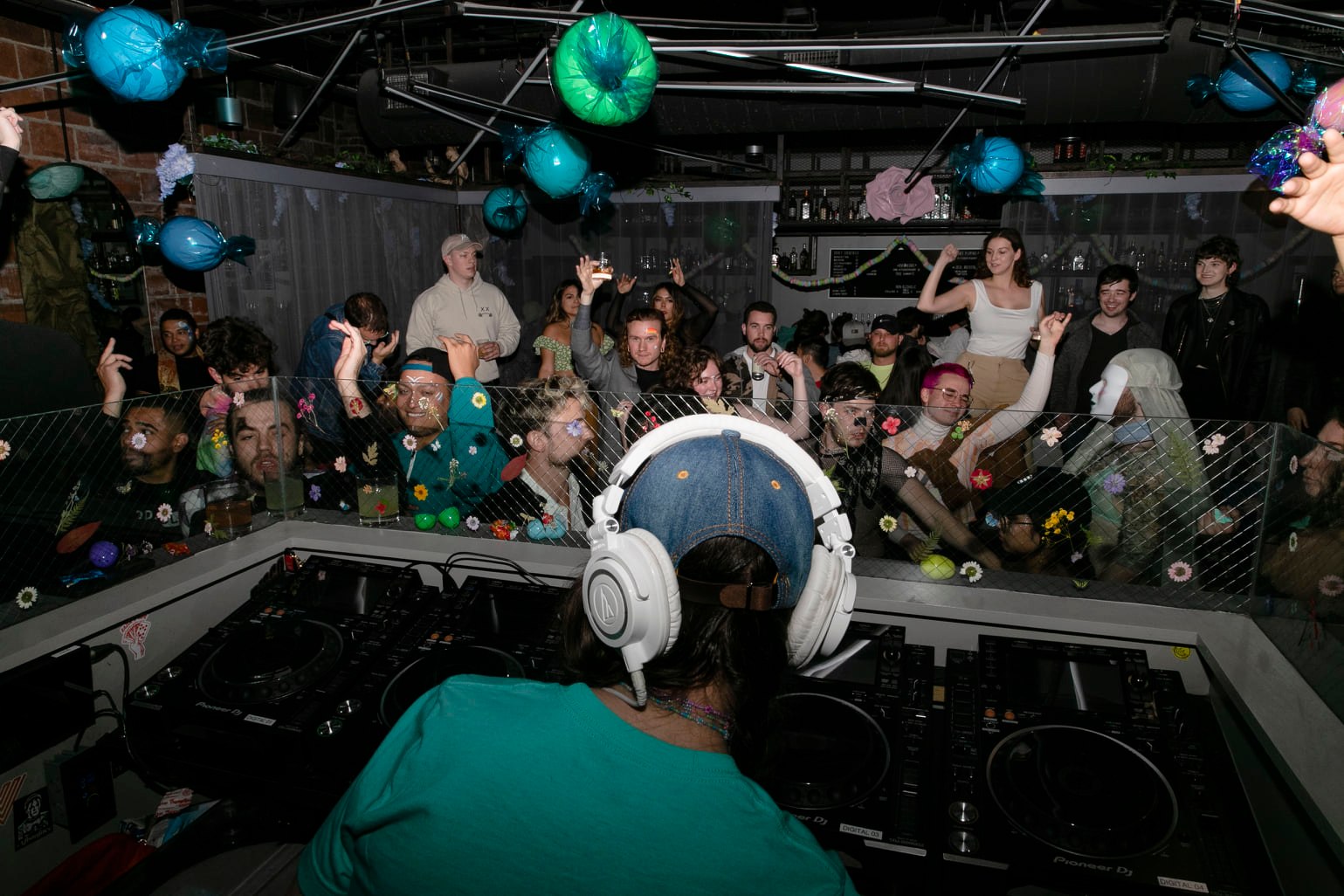
Tulsa’s known nationwide for its live music scene. Every night of the week, bands of all stripes take the stage and create a sonic undercurrent (a little tonk, a little rap, a little metal, and a whole lot else) that’s its own kind of 21st century Tulsa signature sound. But there’s another music scene here that’s just as vibrant. It’s led by people who—without drumsticks, guitars, or microphones—can get you moving like no one else.
Meet your local house and techno DJs. From Soundpony to St. Vitus, dance music is seeing a renaissance around here lately, as DJs return to their decks post-pandemic and continue building on a deep history of dance club masters who’ve kept this city sweating for decades. As more and more DJ nights flood into our listings, we thought we’d introduce you to a few of these wizards and find out more about what they do, how they do it and why they’re, frankly, essential to the vibe of the city.
Far be it from us to define what makes a great DJ. You know it when you feel it. How the energy of a room builds and shifts without you realizing how it’s happening. How just when you think you can’t dance anymore, you’re still out there for just one … more … song. How when it’s working, it’s seamless—seemingly effortless.
Just like anything that looks easy, DJing is a craft mastered by countless hours of practice and experience, driven by a passion for the music. Tulsa DJs like Sweet Baby Jaysus, Darku J, Moody, Kylie, Dr. View, Afistaface, Doc Free, Ject, Xylo Sesame, Robbo, and many more have spoiled us rotten through their years of work in all sorts of venues, with all sorts of musical flavors, for all sorts of crowds. (Honestly, we do not deserve them.)
For Darku, who DJs under the name HeartWerk (“moody house music from someone who cares”), it’s a craft he’s been practicing since he was a teenager. “I bought some turntables and just broke a bunch of record needles, messing around,” he said. “YouTube wasn't even around. I would go to Soundpony, underage, and literally just stand in the window and watch DJ Moody, and five hours would go by and I didn't even realize it. I was 21 before I knew where the toilets were in Soundpony. I would just stay right there watching him. That's all I cared about. If I could find any videos on the internet of people playing, they were usually terrible quality, but I would just really study what it was that they were doing and then try and mimic it at home.”
Darku’s been paying his bills by DJing since he was 16. He’s worked nonstop in Tulsa, as well as in cities like New York and Austin, and also produces music (his own and others’—don’t miss his remix of this track by Branjae). DJ Foxy’s been at it nearly as long, coming to the decks from gaming, playing in marching band drumlines and studying music technology. (His day job is in communications.) House and techno music may be the heartbeat of a dance club, he said, but disco is its soul and foundation. “If you want to understand house, techno, any of the dance music, learn disco. It’s the blueprint,” he said.
Darku and Foxy have seen plenty of changes to the local scene over the years. Tulsa may not be as well known for dance music as it is for other genres, but according to Darku, that hasn’t always been the case. “A lot of people don't realize Tulsa actually had a thriving electronic music scene up until about the early 2000s,” he said. “That's when police crackdowns on raves and things like that started really going into effect.” The federal RAVE Act of 2003 was widely seen as targeting dance clubs in particular, and had a chilling effect on the scene.