
Skip to Content
Arts & Culture

Where Does Tulsa Comedy Go From Here?

Looking ahead to Blue Whale Comedy Festival, we talked with Evan Hughes about his decade in the local comedy scene

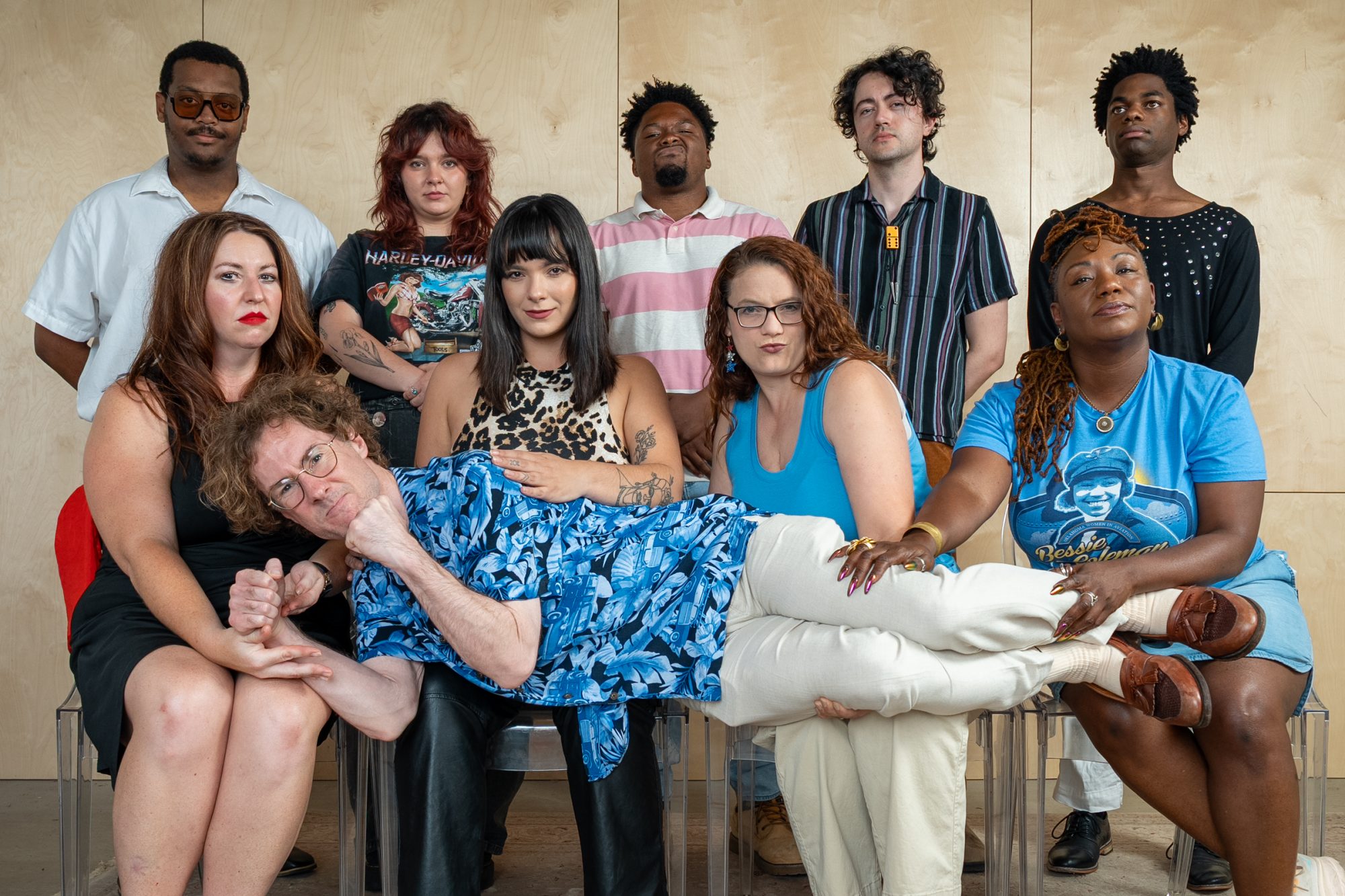
Back row (from left): ThunderWof, Haley Parker, Cepeda Cheeks, Arthur Dixon, Josiah Parks. Middle row (from left): Shawna Blake, Bailey Gilmore, Nicole Miller, Sondra Slade. Front row: Evan Hughes | photo by Pickup staff

The Pickup is an independent media company doing culture journalism for curious Tulsans. We write stories for real people, not AI scrapers or search engines. Become a paying subscriber today to read all of our articles, get bonus newsletters and more.

Blue Whale Comedy Festival turns 10 this year. The impressive events you'll see on the lineup next weekend—national headliners, improv showcases, afterparties—come with a ton of hard work on the back end: booking acts, doing publicity, coordinating talent, working with venues. The comics might make it look easy up on stage, but comedy, as an industry, is anything but.  

Evan Hughes would know. Since 2017 he’s been booking shows for comics in Tulsa with an ungodly work ethic and admirable professional zeal. To mark this Blue Whale milestone, we invited him to gather some of the local comics he works with often—all of whom will be onstage throughout Blue Whale weekend, along with many others in the loose “Comedy Night Hosted By Evan Hughes” network—and bring them in to have their pictures taken, high school yearbook style. (We asked them to write their own yearbook quote or superlative, too.)

Evan Hughes: Most likely to like this post | photo by Pickup staff

The love in the room was effervescent as they riffed on each other’s yearbook jokes, boosted each other’s confidence before the camera clicked, and generally checked in like supportive human beings. When I remarked on this beautiful camaraderie to Hughes the next day, he said, “That was a great moment. We are all like family, but we don’t take enough time to really let it all sink in.” During shows, he said, it’s all business, with everyone a little antsy before their sets, and Hughes backstage doing what he calls a “live mixtape”: determining who in the lineup is going on next depending on the mood of the crowd, the vibe of the night, and a dozen other factors you only pick up on when you’ve been doing this as long as he has. 

For this bunch of what Hughes calls “friends, coworkers, neighbors, misfits”—some newer to comedy, some with years of experience—the pursuit of hilarity means relentless hard work. Every week, Hughes has these comics and many others booked for sets all over town: secret shows via Don’t Tell Comedy, regular gigs at Whittier and The Colony and Heirloom Rustic Ales and Vanguard, showcases at places like the Oklahoma Aquarium, and collaborations with spots like Misfit Kitchen that reach out to them. “Blue Whale is just a weekend to highlight what goes on here all year,” Hughes said. 

What’s changed for local comics in the last decade? What hasn’t? What does it take to make it in comedy? And what’s it like trying to do stand-up in such an unfunny time? We sat down with Hughes to get the view from his comedy neck of the woods. 

Back row: ThunderWof, Evan Hughes, Haley Parker, Cepeda Cheeks, Arthur Dixon, Josiah Parks. Front row: Shawna Blake, Bailey Gilmore, Nicole Miller, Sondra Slade | photo by Pickup staff

How are things in local comedy compared to 10 years ago?

Evan Hughes: We're much better off now than we were 10 years ago. We have a lot more access to venues than we did when I started. Back then, you could walk into a bunch of places—even cool places like The Colony—and go, “Hey, is there comedy in this town?” And a bunch of people would be like, “I don't know.” There's pretty much nobody in the downtown scene now that would say, “I don't know if there is comedy in Tulsa.” Everybody knows there's comedy in Tulsa. That was goal number one for us and we succeeded in that with flying colors. 

I think goal number two is just continuing to build. Blue Whale Comedy Festival is a wonderful gift to Tulsa comedy, and we should all be thankful for that. A lot of the things that we want to do here—like recording albums and comedy specials—what do we do with them? What's the next level of all this? How do we build further than what we've built?

We can talk about how great Tulsa is doing, but does that mean we opened 30 new restaurants, or is our art scene growing? What's making Tulsa a really amazing place? I want there to be a focus on the art scene here, and I want comedy to be a big part of that.

Sondra Slade: Most likely to marry 3 men at once | photo by Pickup staff

What are the challenges for comedy in Tulsa right now? 

EH: I think we could do a lot with more funding, but I haven't been good about applying for grants and stuff like that because it hasn't really been part of our culture. When I started, it was like, you make a flyer, you go to Soundpony, and you perform. I went to this Create Tulsa event, and almost every other question or [comment] was about grant money. I just thought, you know, “we just got to get funnier.” 

Stand-up is perplexing in so many ways. But even the music economy is all screwed up. However screwed up music is, comedy's always more screwed up than music. 

Shawna Blake: Mr. Worldwide | photo by Pickup staff

We haven't had that many people from Tulsa comedy that we can point to and say, that person became famous. It's not zero, but it's like, it's difficult. I’m always looking at the music scene; I want to follow that as a blueprint. I think people have seen, like, Johnny Mullenax can do this. Cliffdiver can do this. They're getting more access, more opportunities, getting management, getting agents, getting Cain’s Ballroom and stuff like that. And not that they wouldn't have done it [anyway], but it's giving them another thing to make them feel inspired and wake up every day to be like, “We're closer.”

I think the comics all kind of want something like that. I'm like, how can we get y'all closer? What more can we do? Money and connections are the two things that we always hit as a little bit of a roadblock.

ThunderWof: Most likely to become a rapper | photo by Pickup staff

There's a lot of people that I work really hard to try to promote here because I believe in them. I put them on a lot of shows and I want to produce something bigger for them: a full-scale album, help them create a tour, and things like that. To be a successful comic, you have to be great on stage. You have to be great and personable to hang out with and a fun, nice, interesting person with no drama. You have to be great at posting across platforms. You have to know how to book your own tour, your own record. You need to know camera people, you need to know people that run venues. I'm trying to fill in the blanks for a lot of people, but sometimes I'm overwhelmed and I'm not someone that readily goes and asks for help from anyone. I've just kind of put my head down and worked. Even this interview is not me asking for help. It's just telling you about some of the problems that we encounter.

Haley Parker: “Who here thinks I have a crazy bush?” -Gandhi | photo by Pickup staff

We do a lot of shows in weird places. We did a show at the Cherry & Bark ice cream shop that's next to Tina's in the back room where the owner makes the ice cream, where the stage was like a pallet and she's got fluorescent lights in there and stuff. The room was full, but it's a really small room. And it's like, I wish so many more people could see this show. This show is a banger. We do some at the Core Skateboard shop on 11th St. We've had three or four there. Every single one's been a banger. The ones we do at The Racks on 15th Street—you wouldn't think that this [spot] would have a great comedy show. We've probably done 12 shows there and we have had some that were like, holy crap. That was a show.

I'm really proud of what we've done. What more could we do, or how much further could we go? Maybe there's only so much we can do through this era. We're also dealing with a Trump presidency and a recession and all that stuff.

Cepeda Cheeks: Most likely to wear a turtleneck in the summer. “If it’s not funny, you’re just complaining” | photo by Pickup staff

Right—so is this a good time or a bad time to be in comedy?

EH: I think for certain people, it's an opportunity. Comedy, like music, is sort of about your style. Certain artists that my girlfriend likes might not be a trending style right now, but they would have been Simon and Garfunkel [in another] era when the time was right. Comedy's like that too. If you hit in the right era for your style, you would have been massive. Sometimes it's just the wrong style for the moment. 

But people don't necessarily change who they are. I wouldn't want to tell this [comic] she needs to start being more political because that's what's going to help her take off right now. One thing I don't do hardly ever is try to guide or change people's voices. I love people to have their own brand and their own style and their own cadence. You wouldn't take Primus and be like, you need to watch a Blue October music video so you can learn how to play the guitar. You need to let everybody be who they are and just celebrate that.

Hugo Willie: Most likely to have 10 kids | photo by Pickup staff

You have the Josh Johnson comics where it's like, if you're political right now, this is the right time for political comedy. There's a hunger for it. And that's what will probably launch you. Either that or be like, you know, a white guy in Texas doing white guy Texas comedy. A lot of men want to hear “men that are for men” do comedy. So that's in vogue right now, too, with the Trump presidency and aligned with that. There's a couple things that are trending right now in comedy, but we're not trying to guide people into trends.

I started stand-up in March of 2015. The first Trump presidency, obviously, was November of the next year. With what the economy's been like, too—my friends that are working restaurant jobs are saying people are hardly coming in, they're hardly tipping—comedy shows deal with that same kind of shit. Because even if we do no cover, people know they're gonna buy four drinks if they come out and tip. Everything has a cost involved, even when you're offering the show for free. 

Bailey Gilmore: Most likely to get caught vaping | photo by Pickup staff

We're just kind of riding the wave: if the country's up or the country's down, we're riding that with the country. A lot of times people come out and they're like, man, I really needed to laugh. And it's great. But I think if you just depress a whole city of people like that, people could be too depressed to go out and laugh. I think people underestimate depression sometimes. People think a recession or depression could be good because it could get people to come out and laugh. It doesn't really work like that. 

What’s changed for local comics in the last decade, and where do you see comedy in Tulsa going from here?

EH: Ten years is a long time to have been in stand-up in Tulsa. I have seen a lot of changes, a lot of personality types. I've seen a lot of cyclical behaviors or circumstances: everything's hot, then everything feels cold. People leave, people come. 

It's been great. Right now doesn't feel like the highest of highs, but our access is still really good, and the trust the community has for us is high. There’s a level of respect that definitely wasn’t there in 2015, because we were such an unknown. And I think now people feel like you can have comics come in and you can trust them. They're not going to break a window. They're not going to steal your money. They're not going to make your business look bad. They're not going to say a bunch of transphobic, racist stuff that you have to apologize for on a post. 

Nicole Miller: Most likely to get abducted by aliens | photo by Pickup staff

We can have great shows throughout the year and we could do it for more and more years, but I think at some point people are going to say, okay, well, what else can we do? Because we've proven that we can do this. I've been booking shows since 2017. That's eight years of a lot of shows, a lot of flyers. I looked at how many shows I did last year and it was something like 160.  

I feel like through part of this maybe I've sounded a little bit negative, but I think there's genuinely so much good to be excited about. I do feel thankful for everything. I think when you spend a lot of time focusing on that next part—"how can we make the car better?"—that's when you get kind of hyper-focused on the things that haven't happened yet.

Josiah Parks: Most likely to jest | photo by Pickup staff

I did a show in Arkansas about a year and a half ago with a comic from New York, and he was really, really good. He was talking to me about how hard it is to get stage time in New York, because you can't walk into a place and just be like, I'm so-and-so and I want to do XYZ. Because it's like, you don't have a hundred thousand followers. You're not a name. There's so many more, bigger people there, and they just have less access to their own city. 

In Tulsa, we can make a list of the venues that we don't really have access to. I can't get you onstage at the BOK Center. We can't really do anything at Tulsa Theater. But from a certain point—like the Spotlight Theater and Vanguard—all the way down to our restaurants, to our bars, to our breweries, to our offices, we could probably take our speakers, go set up, and do a show because the community trusts us and they know us. 

Arthur Dixon: Most likely to tax without representation | photo by Pickup staff

We have a connectivity here within Tulsa that I think we should take advantage of while we have it, because as great as that is, there may come a point where they don't need us anymore. Nashville doesn't really need to give itself to local artists because they have people buying beer and pizza anyway. So it's like, well, we don't need your little show here because we're already packed to the gills selling what we're selling. But here, you just walk in a place and go, what's your slow night? And they go, oh, can't get anybody here on Tuesday. Well, we can. We can bring you people on Tuesday. And then they say, okay, you're here on Tuesday.

And that's a great thing about Tulsa. I think I'll kind of regret the day when that ever goes away. I mean, I'm sure that'll be great for Tulsa commerce or whatever. I'm sure Tulsa will be that popping someday where they just don't need content anywhere, where it's just a place to go and be seen, but right now, we still feel like we're needed here. That’s a good feeling. 

Absolutely. 

EH: Yeah. Yeah. Thank you. Sorry. 

No need to apologize. 

EH: I feel like my brand is just to apologize after everything I do.

That’s okay. 

EH: I’m sorry. 


If you liked this story, please share it! Your referrals help The Pickup reach new readers, and they'll be able to read a few articles for free before they encounter our paywall.

Stay in touch

Sign up for our free newsletter

More from The Pickup

Samantha Fulnecky and Christian DEI

On college campuses and American victimhood

In ‘Monument Eternal,’ The Mountain Isn’t The Whole Story

Le’Andra LeSeur’s show at the TAF Flagship considers the weight of history, embodied resistance, and the texture of being present

December 4, 2025

Crawl To The Year’s Finish Line With These December Art Shows

What even is reality?? Ask a Tulsa artist this holiday season

December 3, 2025

Tulsa Picks: The Week’s Best Tulsa Events, December 3-December 9

First Friday, The Nutcracker, a concert at Tyler Thrasher's Materia shop, and insane amounts of Yuletide cheer

December 2, 2025
See all posts