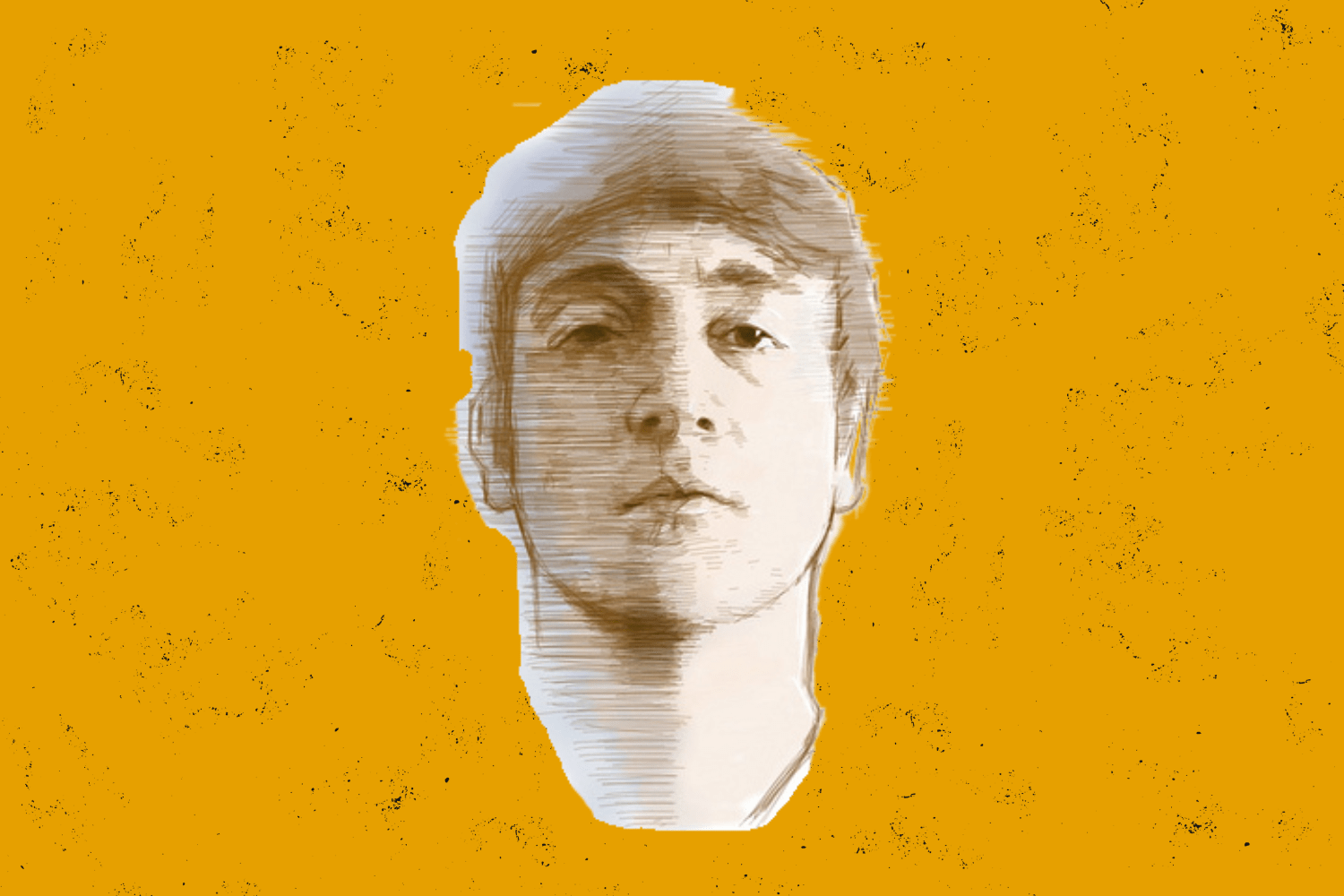
Editor's note: Did John Lennon ever correspond with Oral Roberts? Lindsey Neal investigates one of Tulsa lore's great evangelical mysteries, first published in the March 15, 2011 issue of This Land.
In the early 1970s, Oral Roberts’ evangelical TV program was at a peak, with an estimated 37 million viewers. After each show, the ministry commonly received upwards of 500,000 letters. One of those letters in particular has since caught the world’s attention.
On Friday, January 26, 1973, Roberts stood behind the podium at the Mabee Center and held up a sheet of paper to an audience comprised of his university students and faculty. Nobody could have expected the claim Roberts was about to make.
“I hold in my hand probably one of the most unique letters or documents that I’ve ever shared with anybody in the world,” Roberts said. “It happens to be from one of the Beatles, John Lennon, who was probably the most gifted song writer of the group. And he wrote it by hand.”
Sitting in the audience that day was Scott Aycock, who remembers the chapel service vividly. “The majority of students at that time were converted hippies. We called ourselves Jesus Freaks,” recalls Aycock. “When John Lennon writes to Oral Roberts, you can believe it had a huge impact. There was hardly a dry eye in the place.”
The most commonly cited source for the letter is David Edwin Harrell’s 1985 biography Oral Roberts: An American Life. It appears to offer the full text of Lennon’s letter and cites an audiotaped transcript as its source. The actual transcript, however, is different. Harrell Jr.’s book contains some telling omissions—omissions that add new intrigue and dimension to one of the most trying phases in Lennon’s life.
In the version below, Lennon admits to his disenchantment with being a Beatle. Although he claims to be under the influence of pills while writing the letter, Lennon openly discloses his police record involving drug use and check forgery, and he confesses to prompting the break-up of The Beatles. Additionally, we learn that Lennon’s marriage to Yoko Ono created a major barrier in his relationship with his son Julian, and that Ono is “going crazy” over the disappearance of her daughter.
In this reprinted transcript of the audiotaped sermon, Oral Roberts’ asides appear in italics and any bold text indicates phrases that were omitted from Harrell Jr.’s biography.