


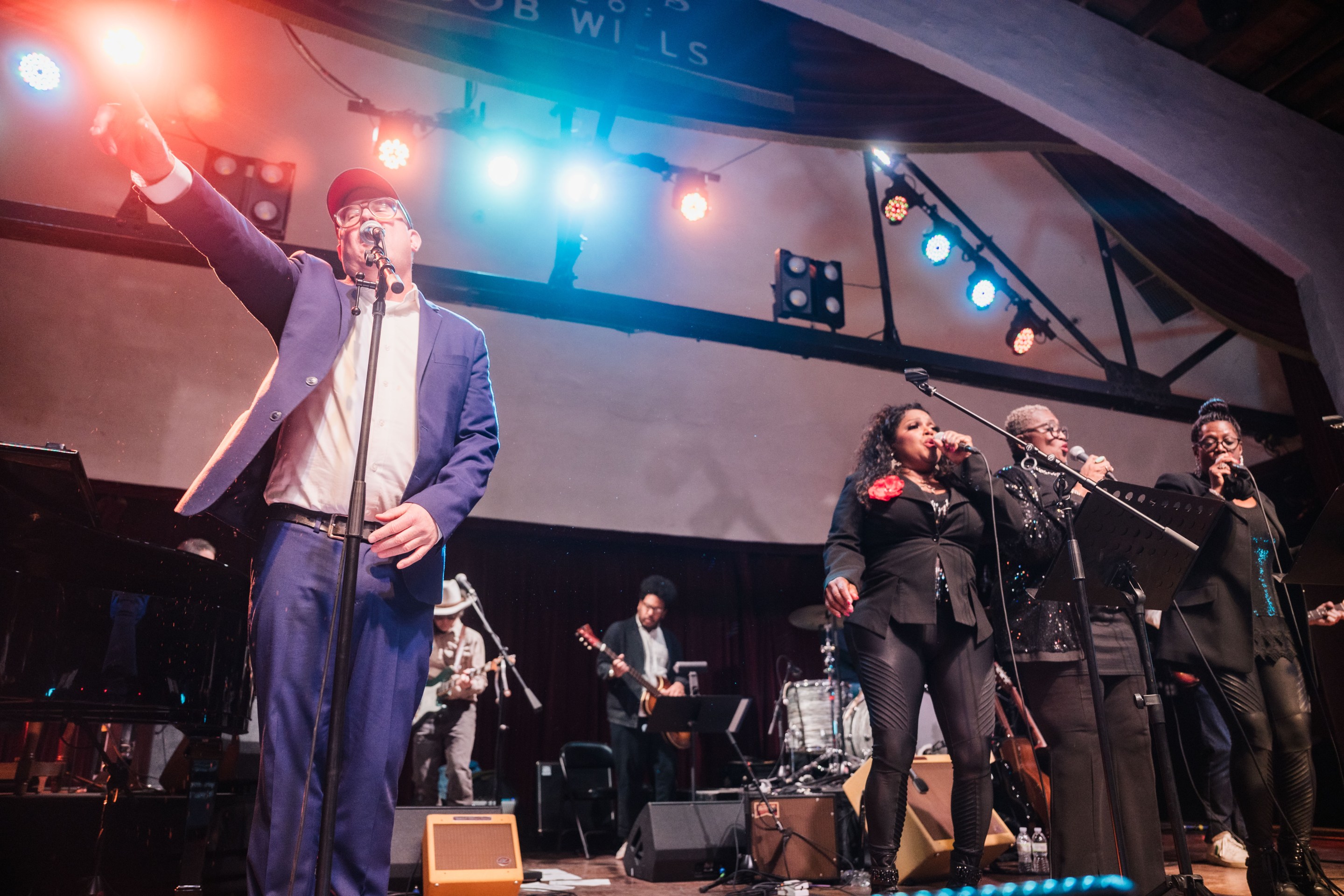
Not to get all old-guy rock critic on you, but even within Bob Dylan’s massive and lauded discography, Blonde on Blonde stands apart.
The last release in his monumental three-album mid-1960s run, Blonde marries a modernist literary sensibility with “that thin, wild mercury” sound Dylan achieved by retreating from New York City to record in a confined space in Nashville with a fresh crew of musicians recruited by the album’s producer, Bob Johnston. Dylan’s then-manager was hostile to the choice, which didn’t exactly follow the conventional wisdom of the time.
But that is part of the mystique of Dylan. He’s always been unafraid to zig where others zag. Whether or not you buy into the Dylan mythology—which The Daily Show host Jordan Klepper was keen to remind us of Friday night in his role as emcee at “Sooner Or Later: Celebrating the 60th Anniversary of Blonde on Blonde”—the zigging is what his fans love about him.
I’ve always found Blonde on Blonde exhilarating. In my life listening to Dylan, it’s been my favorite record of his for the longest. Even as I age, I come back to it pleased to find new footholds, new ways to appreciate it. On this round of listens, for whatever reason, I’ve found myself enjoying the urban landscape and Dylan’s class resentment in these profoundly sad songs: the “warehouse eyes” of the narrator of “Sad-Eyed Lady of the Lowlands.” The spurned lover in “Temporary Like Achilles” who is “helpless like a rich man’s child.” The mysterious empty lot near the “D” train in “Visions of Johanna.” Shakespeare and Achilles, by turns, hanging out in the alley. Even now, 60 years after its release, it’s tough to say whether the lyricism or the musicianship is the best part of the record, or even to what extent the two are separable.
These concerts the Bob Dylan Center started putting on at Cain’s last year with its 50th anniversary celebration of Blood on the Tracks are what these discussions are all about. I hope they keep putting them on, and potentially find ways to open them up to wider audiences than just members of the Center. (Both the Blonde on Blonde and Blood on the Tracks concerts sold out before the Center could open up sales to the general public.)
But the format of the show may make additional productions impossible. These concerts are, I have to stress, fantastic and singular. Each performance has a one-time-only exclusivity to it. Every song on the record is performed by the same house band, accompanied by a unique lead singer, for which the Center is able to recruit A-list talent. Once the record’s concluded, they take a set break and come back with a full second set of Dylan covers that range across his catalogue.