


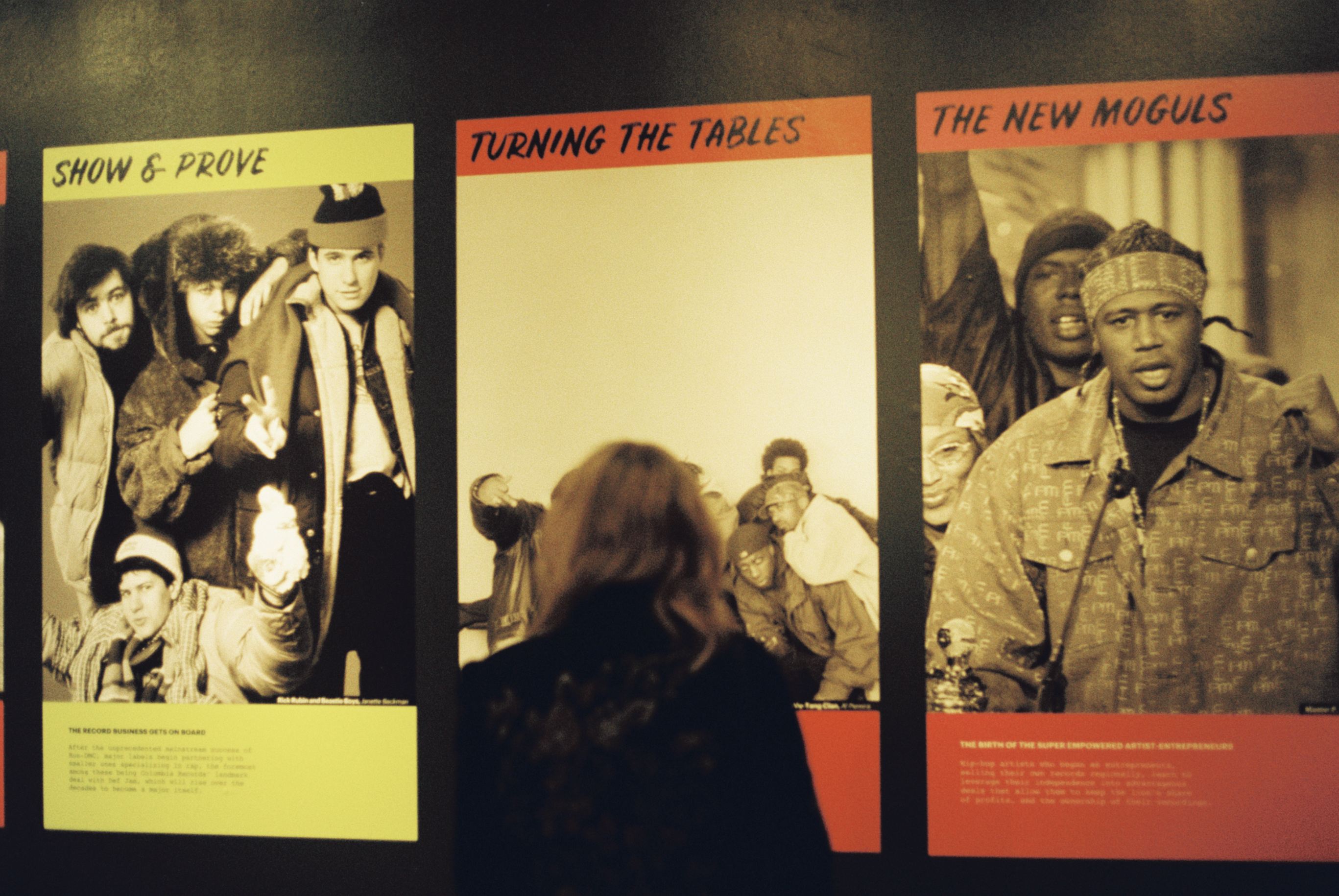
Hip-Hop America: The Mixtape Exhibit
Woody Guthrie Center
March 28, 2025
Digable Planets
Cain’s Ballroom
March 30, 2025
Life imitates hip-hop. The music that was birthed out of creative expression in the 1970s has become the art of the modern day and transformed the way we live, from fashion to technology to marketing. That influence is exactly what the Woody Guthrie Center showcases with the GRAMMY Museum’s traveling exhibit, “Hip-Hop America: The Mixtape Exhibit,” whose opening celebration—culminating in a show by Digable Planets, one of the most hip-hop groups ever to touch a mic—made for one of the most hip-hop weekends ever in Tulsa.
“Hip-Hop America” is a powerful exhibit that points to how massive and wide-ranging hip-hop really is. In the words of the Woody Guthrie Center’s director, Cady Shaw, the exhibit is “not just hip-hop—it’s the business, it’s the fashion, it’s the start, it's the origins, it’s all these different stories. It’s not just hip-hop as a monolith. It’s hip-hop from the West Coast, from the East Coast, from Chicago, from Memphis, from Texas, it’s all of these different styles that come to create hip-hop. And I think that’s what most people will be surprised about.”
In the iconic words of the late 2Pac, “we all came from a woman.” Hip-hop did too: it was a woman who started this movement that would take the world by storm. One summer in 1973, high schooler Cindy Campbell needed school clothes, so she came up with a plan for a back-to-school party-slash-clothing drive: rent out a rec room in her Bronx, New York, apartment complex and bring in her brother, the legendary Kool Herc, to DJ. That date—August 11, 1973—would become the birthdate of hip-hop.
One of the strongest elements of "Hip-Hop America" is how it highlights the ways that women have been part of the heart and soul of the genre. From the beginning, women have helped push the art form as graffiti artists, as break dancers or “b-girls,” and in many other pivotal roles. Hip-hop wouldn’t have gone mainstream if record executive Sylvia Robinson hadn’t taken a chance on the group The Sugarhill Gang, a chance that paid off with their 1979 hit single "Rapper's Delight." (Everyone still enjoys this record, except for probably Grandmaster Caz, whose lyrics were stolen word for word by TSG. They didn’t even take out the part where Caz spells out his name.) And let's not forget about women’s influence on hip-hop fashion, such as the big hoop earrings or the Kangol hats, as well as the hairstyles that are still worn to this day.