



Theatre Tulsa x Margaret Stall: Witch
Theatre Tulsa Studios
September 25, 2026
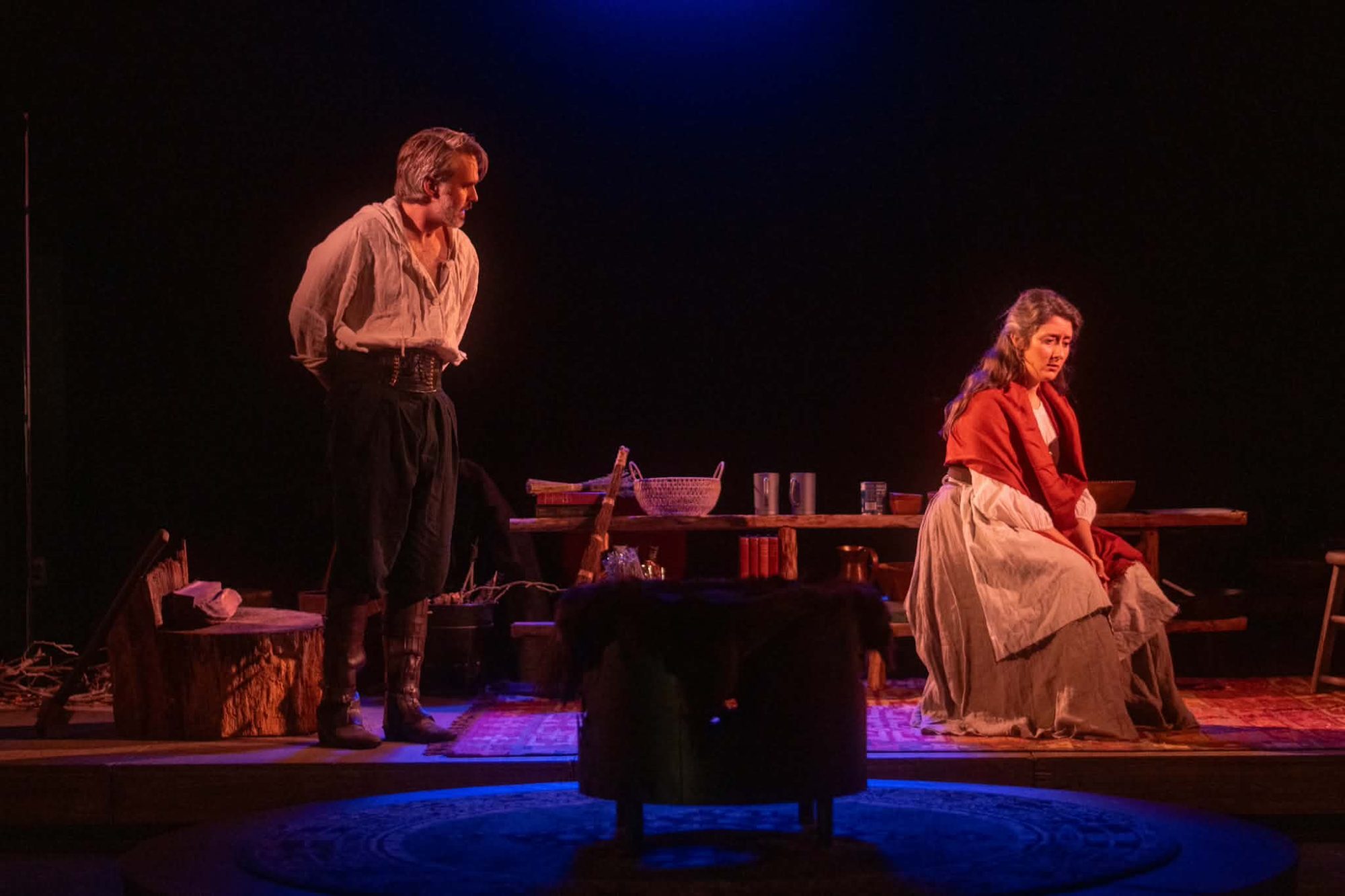
This past weekend, local artist Margaret Stall kicked off a new season of self-produced works in Theatre Tulsa’s Collaboration Series with Witch by Jen Silverman. Even with opening night serendipitously tucked between the autumn equinox and the weekend’s Harvest Moon, this play—a loose reimagining of the English Jacobean 1621 play The Witch of Edmonton—doesn’t deal with witchcraft in the way you would expect.
In Silverman’s version, a sweet-talking salesman of a devil named Scratch visits the small town of Edmonton and tempts the residents by granting their deepest desires in exchange for their souls. Scratch finds quick success with his initial targets. Cuddy, Sir Arthur’s artistic son, harbors suppressed lust for castle resident Frank, a condition that punctuates his gentle nature with violent urges. Frank, a peasant to whom Sir Arthur has taken a liking, has his desires set higher, wanting to persuade Sir Arthur into giving him his title. Even Winnifred, Frank’s secret wife who works as a servant in Sir Arthur’s castle, ends up striking a bargain with Scratch in her moment of despair.
The one person he can’t convince, a societal outcast named Elizabeth, is the one the town calls a witch, a title she decries. What’s advertised as a play about desires becomes a poetic examination of power and the avenues we take to grasp it, even if the world deems we cannot have it.
While the characters and their arcs felt familiar, these actors crafted genuine performances that made the twists and turns, the betrayals, and the reveals strike an emotional chord, particularly in the conflict triangle between Cuddy (Charles Davis), Frank (Aaron Seale), and Winnifred (Nicole Billups). In particular, Davis and Seale handled the swelling tension between Cuddy and Frank quite well, making for some true “holding your breath in anticipation” moments and culminating in a joyful yet devastating resolution set to Florence + the Machine’s “Shake It Out.”
In an inspired casting decision, Kathleen Hope brought out the comedy as well as the deep humanity within Sir Arthur. Hope said as much in her bumbles and grumbles as she did in the clearly delivered monologue in which Sir Arthur relays his fears and struggles concerning his son Cuddy. She had me hanging onto every word. The audience was into it as well: her first exit received applause well before the scene even ended.