

Let's go back in history to 2013. Three years before Donald Trump's ride down the gold-rimmed escalator changed Republican politics forever, the national party was bobbing about, directionless. Mitt Romney had failed to win the presidency campaigning as a social conservative, but the Romney template—a handsome, wealthy, religious guy who talked about balancing budgets and opposed gay marriage—was well represented in red states like Oklahoma.
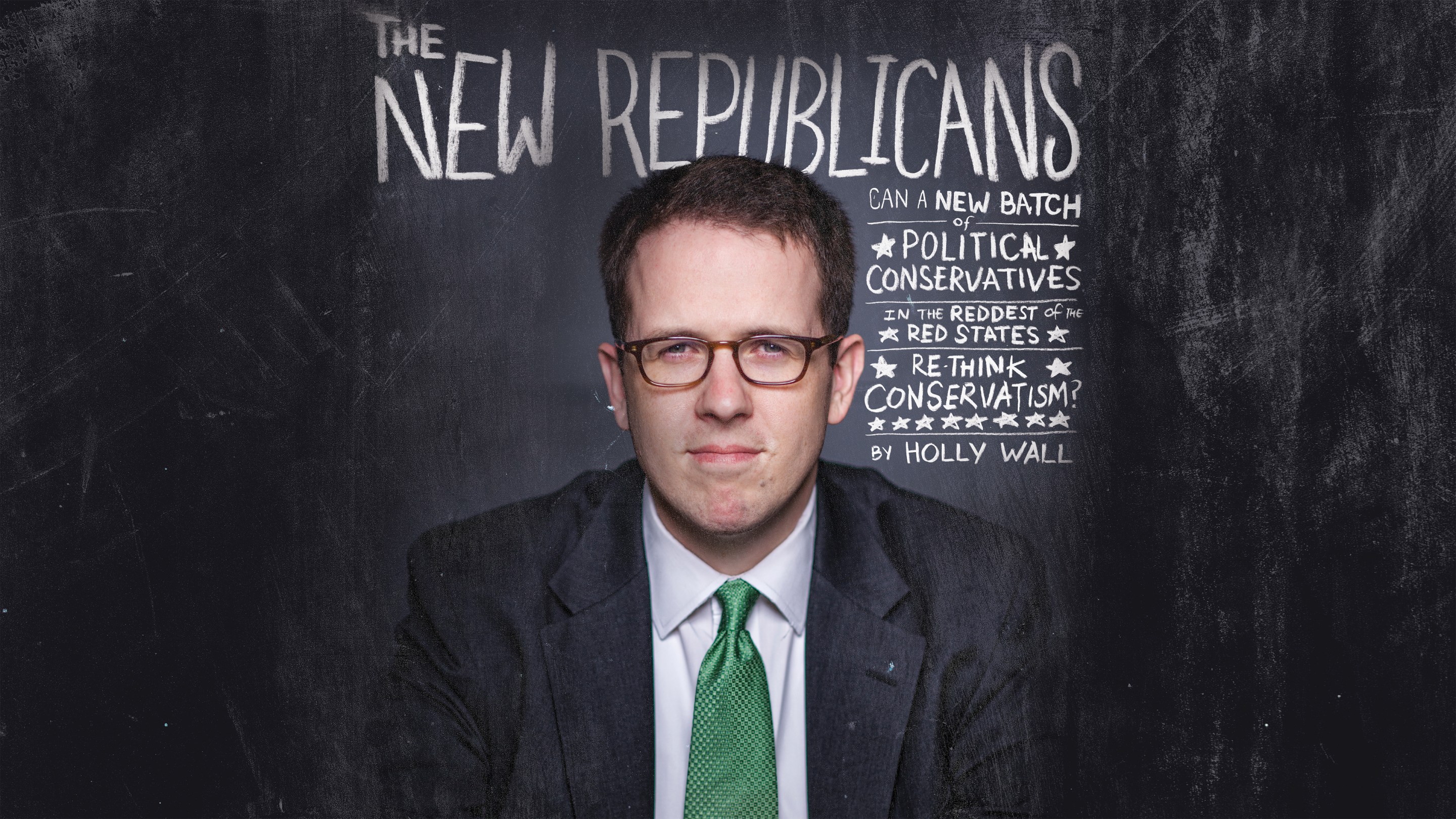
This was the state of play when Holly Wall wrote this sharp analysis of the next generation of Oklahoma's conservative leaders for This Land's February 2013 issue. Viewed now, in the waning days of MAGA—with Republicans expected to take a thorough national drubbing in next month's midterms—Holly's story offers much more than a trip back to a time of relative civility in politics. It shows which Republicans didn't fit within the MAGA paradigm, and which ones did. —Matt Carney
Conservative Oklahomans wear it as a badge of honor. Their state is the “reddest of the red,” a moniker earned after Barack Obama failed to win a single county in the 2008 presidential election. Though he ultimately lost the race, John McCain beat Obama by 31 percentage points in the Sooner State. The event set a political precedent, and the nickname stuck.
Last February, while campaigning in Oklahoma City during the Republican presidential primary (which he won in the state), Rick Santorum called Oklahoma “ground zero” for the conservative movement. “In Oklahoma you do it the right way,” he said. “You believe in liberty, you believe in private enterprise and free economy. You believe in limited government. You believe in a foundation of our society based on faith and family. You understand that without strong families, you can’t have a strong economy.”
Some in the national media—The New York Times, The Daily Beast, and The Washington Post, for example—chose Mitt Romney’s failure to clench the presidency on behalf of the Republican party—combined with Democratic gains in the U.S. Senate—as evidence of a weakening Republican party, the beginning of the end of the Tea Party, and a need for an overhaul of the whole party apparatus.
If, in fact, America did swing to the left, Oklahoma swung decidedly right.
Just last year, Republican Governor Mary Fallin signed an open-carry bill into law and rejected the Patient Protection and Affordable Care Act, refusing to expand Medicaid in the state or set up a health insurance exchange. Oklahoma City Senator Ralph Shortey received considerable national media attention for a introducing a bill that would ban the use of aborted fetuses in food, and lobbying hard for legislation that would give live fetuses “personhood” status. Both measures failed, but the state House of Representatives did pass a resolution—a non-binding statement of opinion, basically—affirming its belief that life begins at the point of conception. The legislature, following statements by President Barack Obama that he supports the rights of gay couples to wed, also passed a resolution reaffirming its opposition to gay marriage—which is already against Oklahoma law.
As the country was re-electing its liberal leader, a conservative U.S. congressmen, John Sullivan, serving Oklahoma’s 1st Congressional District, was being unseated by even more conservative Tea Party candidate Jim Bridenstine. Then plumber-turned-first-time-politician Markwayne Mullin took the seat in the 2nd Congressional District, turning the state’s entire Washington delegation red. Not a single county turned out for Obama, while both state houses increased their Republican numbers. The party boasts about 898,000 registered voters, and 2012 was a landmark year in terms of new voter registration.