


The Pickup's Culture coverage is brought to you by Tulsa Artists' Coalition Gallery, 40 Years of Empowering Tulsa Artists. Visit TAC Gallery to see American Highway Revisited by VC Torneden and Melinda Harvey Green, June 5 – 27, 2026.
When the first graffiti tag appeared on the back fence of Trueson Daugherty’s Florence Park home, he wasn’t stoked. The vandalism didn’t bother him, but rather the quality of the artwork. “I just didn’t like it,” he said.
Still, instead of reacting like a Karen—involving the neighborhood association, contacting law enforcement, or painting over it himself—he responded like a Trueson. “As somebody who loves conceptual art, I was like, well, this is street art,” he said. “Even if it's bad, it's still street art, and that was kind of interesting to me.”
Daugherty posted a video to his modest following on Facebook and Instagram, not explicitly inviting someone to cover the initial tag (in that case it would be a mural, not graffiti), but sending out a tacit signal. While the code of graffiti artists generally frowns upon covering up one another’s work, it’s not unheard of, especially if artists are beefing.
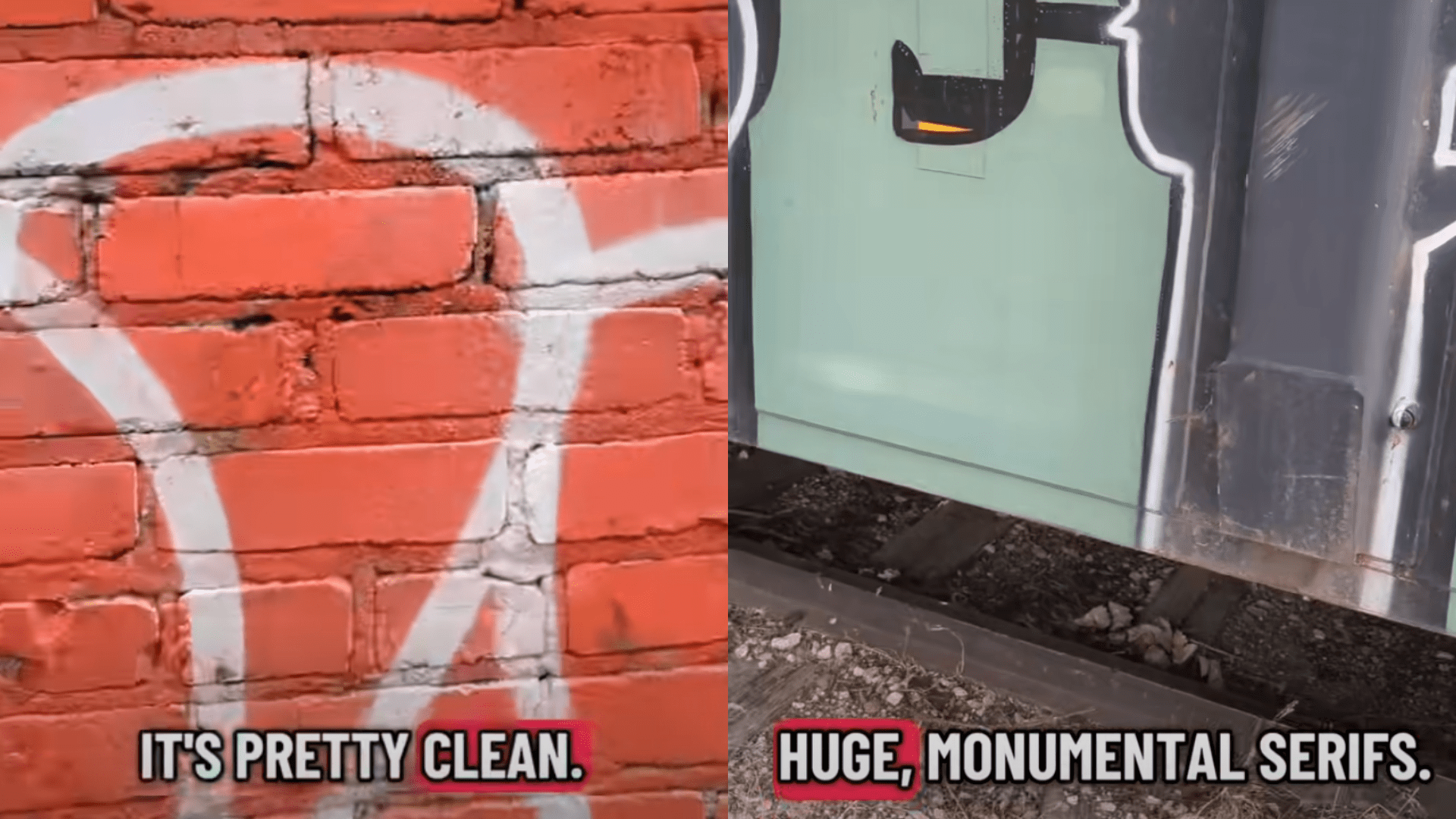
Sure enough, some weeks later a new tag appeared on Daugherty’s fence. Another video followed, then another tag, and soon enough the wall became an evolving battleground for local practitioners identified only by their signatures: Steve, Lover, Minecraft Chicken Jockey.
Daugherty wears many hats—performance artist, social sculptor, salon host—but as the backyard paint wars escalated he donned another: graffiti critic. He began rating new tags on the “Trueson Scale” from zero to five stars. I pressed for more details on the aesthetic criteria of the scale, but he’s keeping it close to the vest: “It’s just my taste. It’s ‘What do I like’? It’s the least credible graffiti scale,” he said.
Yet the reviews got the attention of not only local artists, but big players in the online graffiti community. One post documented the back and forth between artists Dog Seven and Boost, culminating in Boost’s Mickey Mouse avatar using physical discipline against Seven’s mischievous, deuce-dropping dog.
Daugherty’s exuberance about the top-notch tags and heated contretemps was contagious. That post now has nearly 2 million views, and his Instagram following has ballooned from less than 5,000 to more than 35,000.
I asked Daugherty if virality cuts against the ethos of graffiti culture, which prides itself on anonymity and nonconformity. While sensitive to this tension—“I don’t know any of these guys, and, like, none of them would respect me”—he also understands his role as a conduit between the taggers and the general public.
“A lot of the arts going on in Tulsa, there are grants and money and all this energy to prop it up and make it happen,” he said. “This is the complete opposite of that. And so it’s, well, it’s real. I don’t think anybody in the graffiti world is taking Tulsa seriously. Now we have some eyeballs.”
City authorities are also taking notice. Last year, Tulsa received a $250,000 federal grant to clean up downtown graffiti, in addition to the $166,000 of taxpayer money budgeted annually toward removal. Business owners say vandalism costs them customers and maintenance expenses, while some residents object to the visual impact on highways and brick facades.
Daugherty sees it quite differently: “Egregious waste and big government oversight. That's what it is, right? I didn't vote for that. I didn't have any say where that money went. Put that toward education. You want to stop graffiti, educate your kids,” he said.
While the tags started on Daugherty’s fence, the art in the viral video is on the nearby wall of an electrical service building leased by AT&T. If the owners try to paint over it, he is prepared to defend the sanctity of the Michael Mouse doghouse mural, and the saga could take an even more dramatic turn.
And what’s next for the creator of the Trueson Scale? “I’m working on a graffiti tournament,” he said. Imagine spectators, qualifying brackets, and a grand prize pool attracting international talent to go up against the city’s finest spray painters. It’s all part of his effort to improve public awareness. “I’m not asking you to like it,” he said. “Just take a moment to understand what you’re looking at. Then there’s a chance your life will improve, because now you’re like, oh, this sparks joy.”
And for any prospective taggers, he has a message and a wink: “You do not have permission to hit my fence. But, I’m usually gone at my studio all day.” In Daugherty’s world, the only crime is bad art.


