


Four Mothers Collective: Ripple In Traditions
Positive Space Tulsa
Through November 23, 2024
We sometimes think of traditions as static things—unchanging customs or rituals passed down from generation to generation, usually tied to a rite of passage or a notable date. These actions hold familiarity and comfort for some and stress for others (let’s not discuss my family’s response one Christmas when I changed that vintage green bean casserole recipe). Often we just do them by rote, by passive repetition, with little memory of how they started, what they’re supposed to represent, or how they actually connect people across the years.
But what if we thought about traditions as active, living things—less like ossified forms and more like natural organisms? What if, as the curators of the current exhibit at Positive Space suggest, they ripple?
For “Ripple in Traditions,” the Indigenous-led Four Mothers Collective brought together works by 20 multigenerational BIPOC women and 2-Spirit artists that meditate on tradition as a process of live transmission. “With the concept of the ripple effect, traditions echo through time,” reads the Collective’s statement about the show. “Their impact evolves, while their origins remain the same. Each piece of art is a narrative carrying ancestral wisdom, customs and heritage forward to the next generation.” Like DNA itself, the creative act bears its own lineage forward, even as that lineage shifts within its new incarnation.
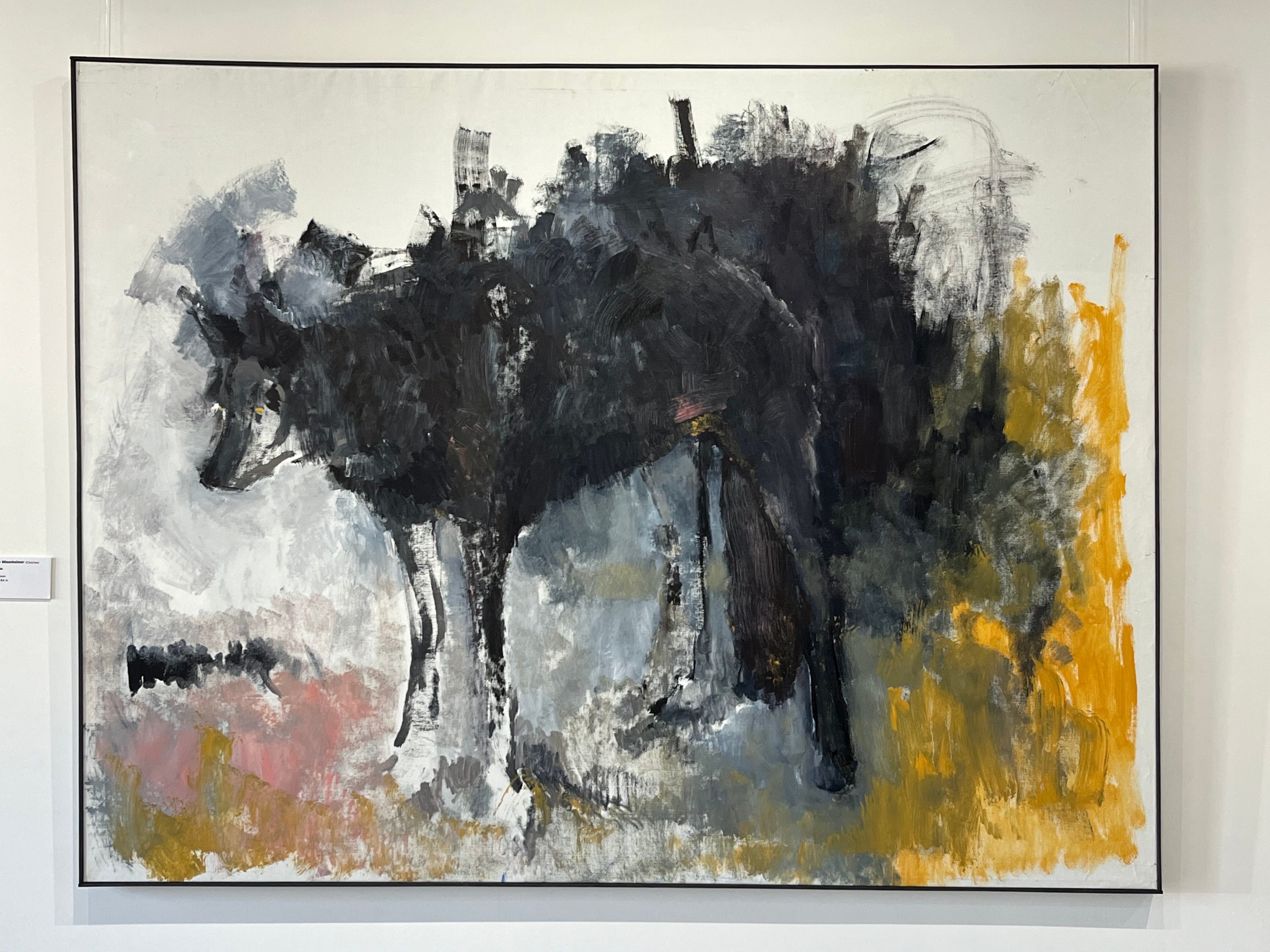
Curated by Carly Treece, Rae Riggs and Brittany Bendabout, the pieces in this exhibit allow the dimensions of “what gets passed down” to become more mobile, more expansive. On one wall, a necklace by Bradley Dry—made from pearls, turtle shell, metal and glass—feels like a gift from the depths of the sea. Next to it hangs a paper weaving by Kalyn Barnoski, created during an artist residency a few years ago and brought to new life here: a strong form that sizzles inside with texture and pattern. Anchoring that wall with soft, urgent brushstrokes is the giant yet gentle wolf in Jaime Misenheimer’s Nashoba (the word means “wolf” in Choctaw). The black shadow it half-stands in is neither the beginning nor the end of its story. A swath of deep yellow behind the darkness comes through in the color of its eyes, as it looks forward into a patch of ground that links the black and the yellow with a new shade: a soft bloom of rose.