


108|Contemporary rarely fails me. Their shows are better than most downtown, with more thoughtfulness put into the art, and a focus on craft which bucks the painting trend of the typical art gallery. “Doug Cannell: Backstories,” their current show, is a perfect instance of everything this place is getting right.
Cannell is a sculptor and graphic designer based in Detroit who creates modern abstract forms out of scrapyard materials like steel, lumber, rivets, and screws. He’s also very funny. Large works of wood and steel dominate the space in confounding and delightful ways. In “Errata,” a steel sculpture covers portions of an asteroid safety statement from NASA. The steel is suggestive of a spaceship’s hull; are we looking at a piece of spaceship, destroyed by said asteroids?
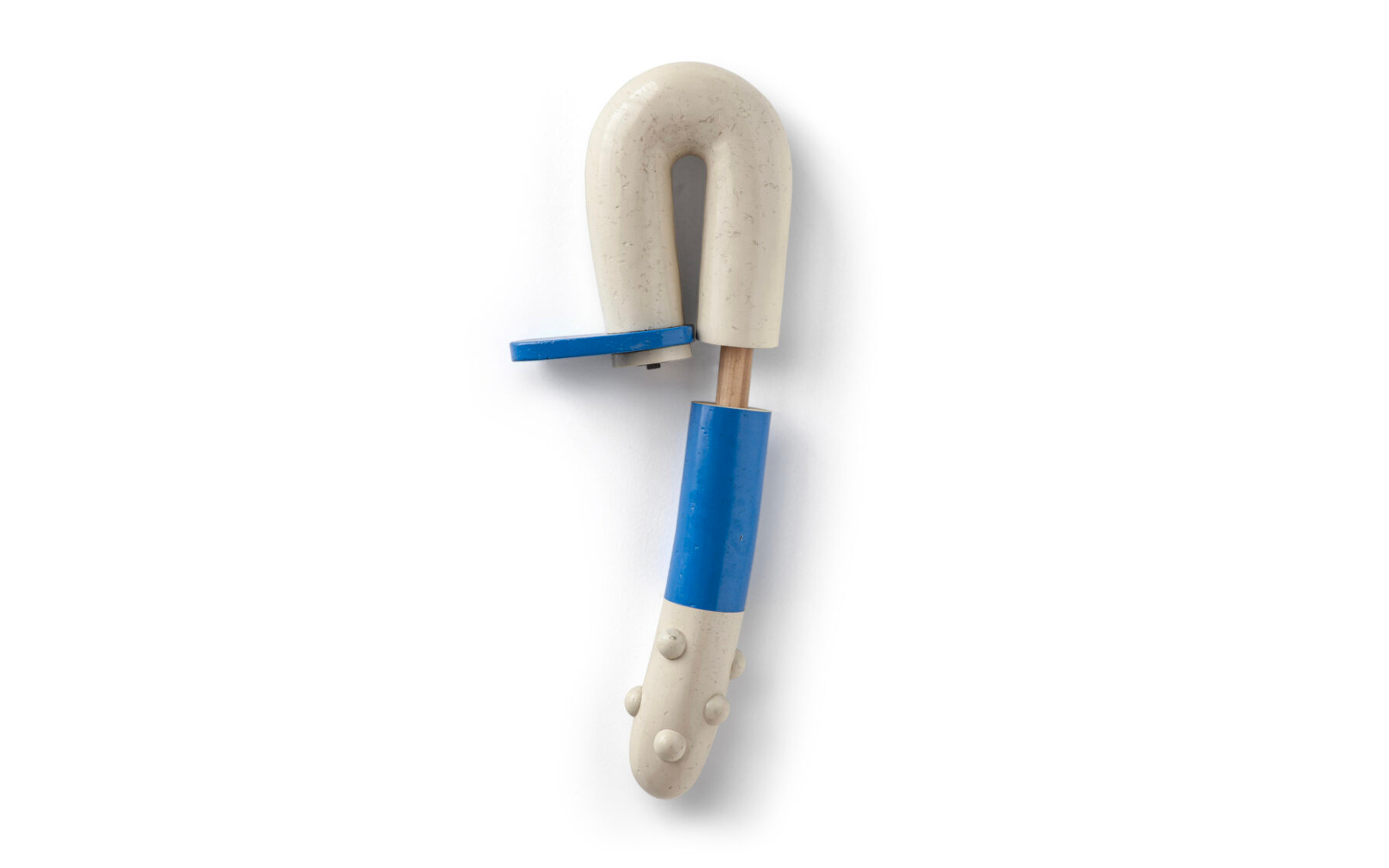
These are the sorts of questions that Cannell both brings up and deftly refuses to answer. Context here—or, perhaps I should say, backstory—is everything. Cannell blends myth and reality in the presentation of the sculptures, as in “Fever Plug,” a red, yellow and silver piece of wood and chain. It’s not uninteresting to look at, a little abstract, maybe, but beautifully colored and presented. Next to the piece is a poster presenting some “information”: this Fever Plug, it tells us, is one of a model that “meets all mid-size international standards” and is a “genuine artisanal Fever Plug,” an item which, the poster suggests, almost every home now boasts.
The unreality, the blatant abstraction from the truth, is very much part of the point. A URL on the poster, FeverPlug.com, links to Cannell’s website, where the piece is displayed in a variety of trendy and attractive positions, with slogans like “THIS PLUG SATISFIES” or “PLUG AND PLAY NIGHT AND DAY” or “FEVER PLUG: FIND JOY NOW.” These uncanny pieces of advertising would make more sense for, say, a personal massager or a mass-market recliner than for an abstract piece of gallery sculpture. That’s what makes them so funny, and so good.
Extended work like this—which intentionally diverts attention away from the piece itself and onto secondary and tertiary material (from the Fever Plug to the "information" poster to the website, for example)—has its limitations, and its caveats. I found myself wanting more and more of the extraneous material with every successive sculpture. While the diversion can take away from the work itself, it can also make for a genuinely pleasurable experience.