



Please Touch The Art
TCC McKeon Center for Creativity
Through October 31
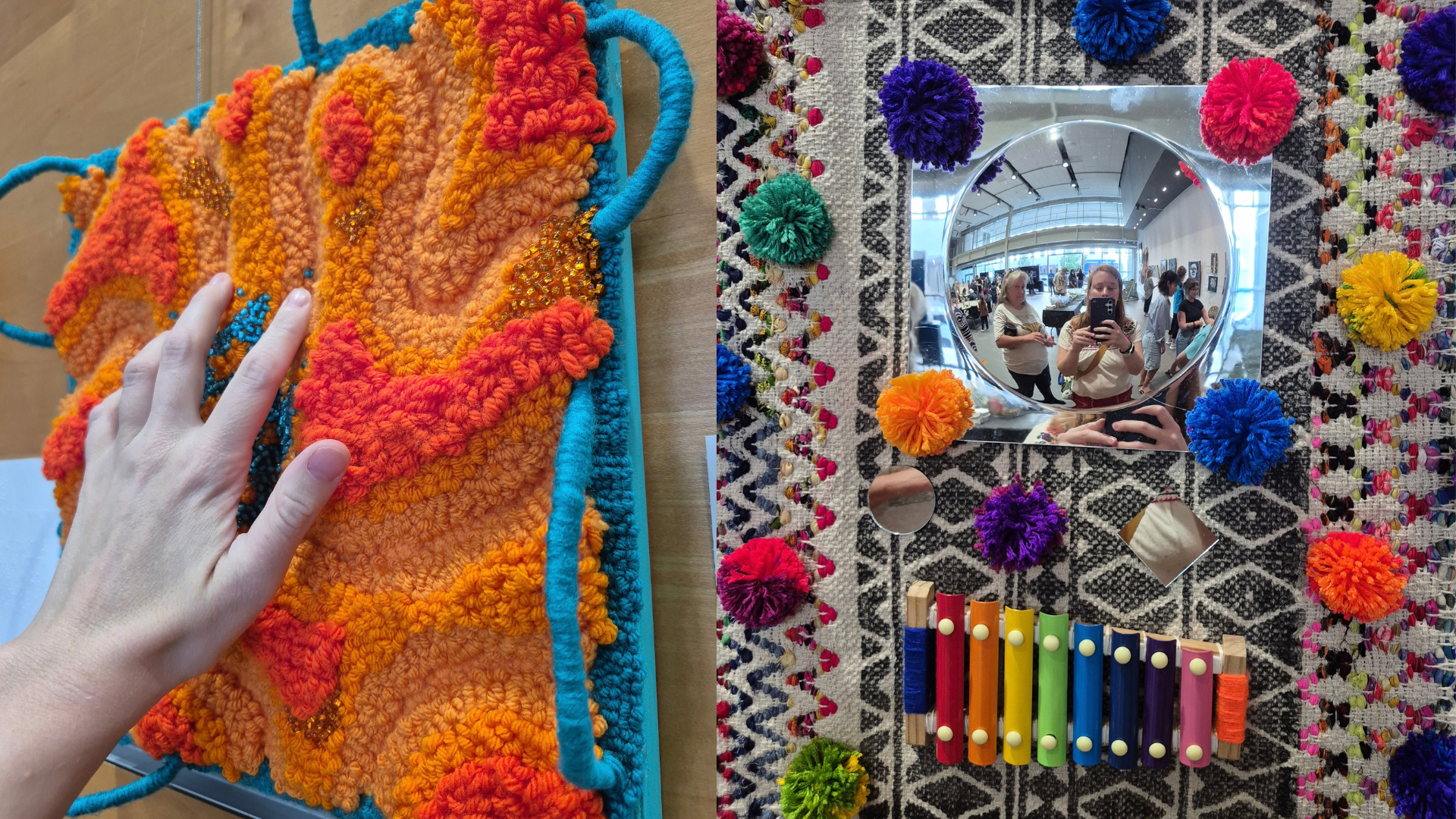
As a highly tactile and impulsive person, whenever I visit a museum or art gallery, I’m often seized by the desire to reach out and grab things and am only restrained by social pressure and the presence of security guards. Thus, I’ve rarely been so eager to attend an art show as I was to step through the doors of Please Touch The Art, TCC Center for Creativity’s group exhibition featuring dozens of artworks that you can—yes, at last!—lay your hands on.
This annual show, in its biggest year ever with 45 artists from nine states exhibiting their work, is geared toward celebrating artists with disabilities, especially visual impairments. More than 30% of the artists in the exhibition identify as blind, and every piece in the exhibit has a braille caption plate beside it, inviting the visually impaired to read each piece’s provenance. But the Center for Creativity is clear that this exhibit is for everyone who’s ever yearned to caress a knobbly surface or feel how cold a bronze statue is.
Right at the gallery’s entrance during the crowded, enthusiastic opening, I was immediately diverted by Marissa Henry’s The Cozy Garden Hideout, a sensuous little den consisting of a knitted tent flanked by friendly possum and cat pillows and jauntily askew mushrooms. I was prepared to crawl in posthaste but had to cede the territory to a heavily represented touch-enthusiastic population I couldn’t believe I hadn’t considered: children.
Girl Scouts swarmed every corner, batting at giant fabric hands and frantically twisting knobs. "Let me see let me see let me SEE!" I heard one Brownie say as she jostled a troopmate aside to open the tiny hinged door of Sergeant Scraps’ chest, revealing a heart amid his circuitry. Many of the pieces shared this playfulness, incorporating familiar items like beads and yarn or inviting viewers to interact by making noise, fiddling, or probing.