


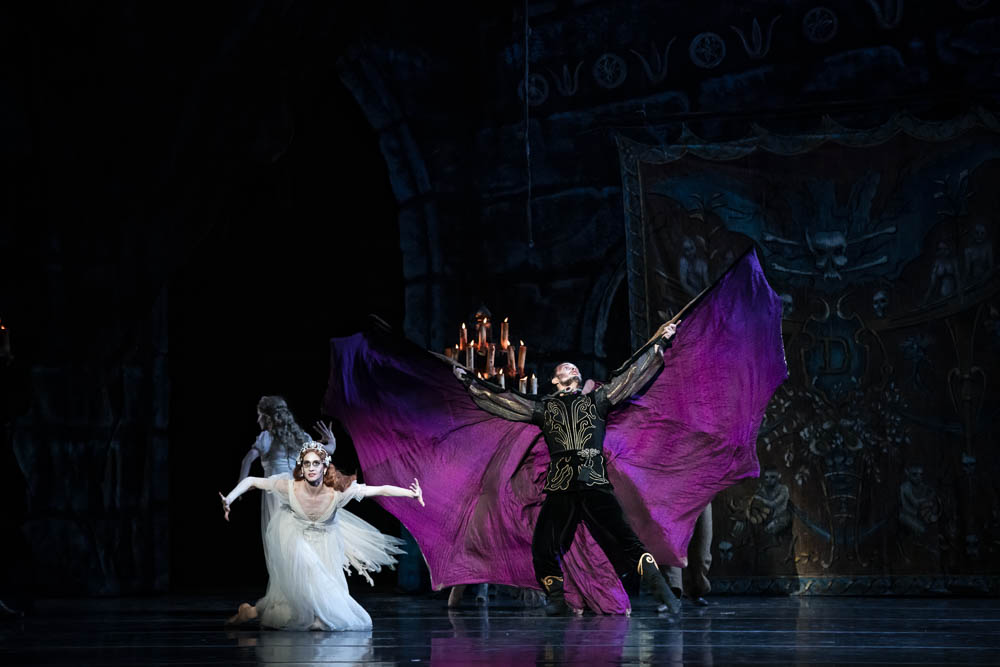
Tulsa Ballet: Dracula
Tulsa Performing Arts Center
November 3, 2024
It’s not principal dancer Aubin Le Marchand’s fault that I couldn’t stop seeing Nandor the Relentless when he came onstage as Tulsa Ballet’s Dracula. It hadn’t occurred to me, rewatching What We Do In The Shadows a few days before, that the FX vampire mockumentary would run parallel to what I was about to see at the Tulsa Performing Arts Center. Sitting in the dark on my Vampiric Council-worthy burgundy velvet seat, it took some effort to remember that what I was witnessing wasn’t meant to be a comedy.
It's right on the edge, though. Tulsa Ballet has presented Ben Stevenson’s Dracula multiple times through the years, and every time I’ve seen it, part of me has wished the choreographer would have let some of his seriousness unravel and go over that edge into full vamp-camp mode. But the entertainment value of any and all vampire business whatsoever—and the excellence of the leading dancers in this production—made Tulsa’s Transylvania a satisfying Halloween weekend haunt.
Created for Houston Ballet in 1997 to mark the 100th anniversary of Bram Stoker’s gothic novel, Dracula copies nearly every convention of 19th century ballet: a peasant village scene, a freshly-betrothed young couple torn apart by a well-dressed interloper, a high-jumping jester, and a flock of ghostly women who’ve either been enchanted by men or are forming vengeful ranks to send them to their doom (or both).
In one move that does run contrary to ballet convention, it starts not in the innocent peace of the everyday world but in Dracula’s gothic, candelabra-decked crypt. It’s an opening that deprives us of some narrative suspense but makes up for it by immediately delivering the undead goods the audience really came to see. In kabuki-adjacent makeup and a massive violet-lined cape (more moth-inspired than batlike), Le Marchand flexed his long fingers, seethed and slumped across a staircase in pre-feed moodiness, then devoured the space with a decisively musical attack. This Dracula doesn’t have a lot to do choreographically—a few repeated movement motifs, a lot of standing and cape-swirling—so stage presence is everything, and Le Marchand went for it full-out. (His blood-smeared face through my binoculars? Intense and legitimately terrifying.)