



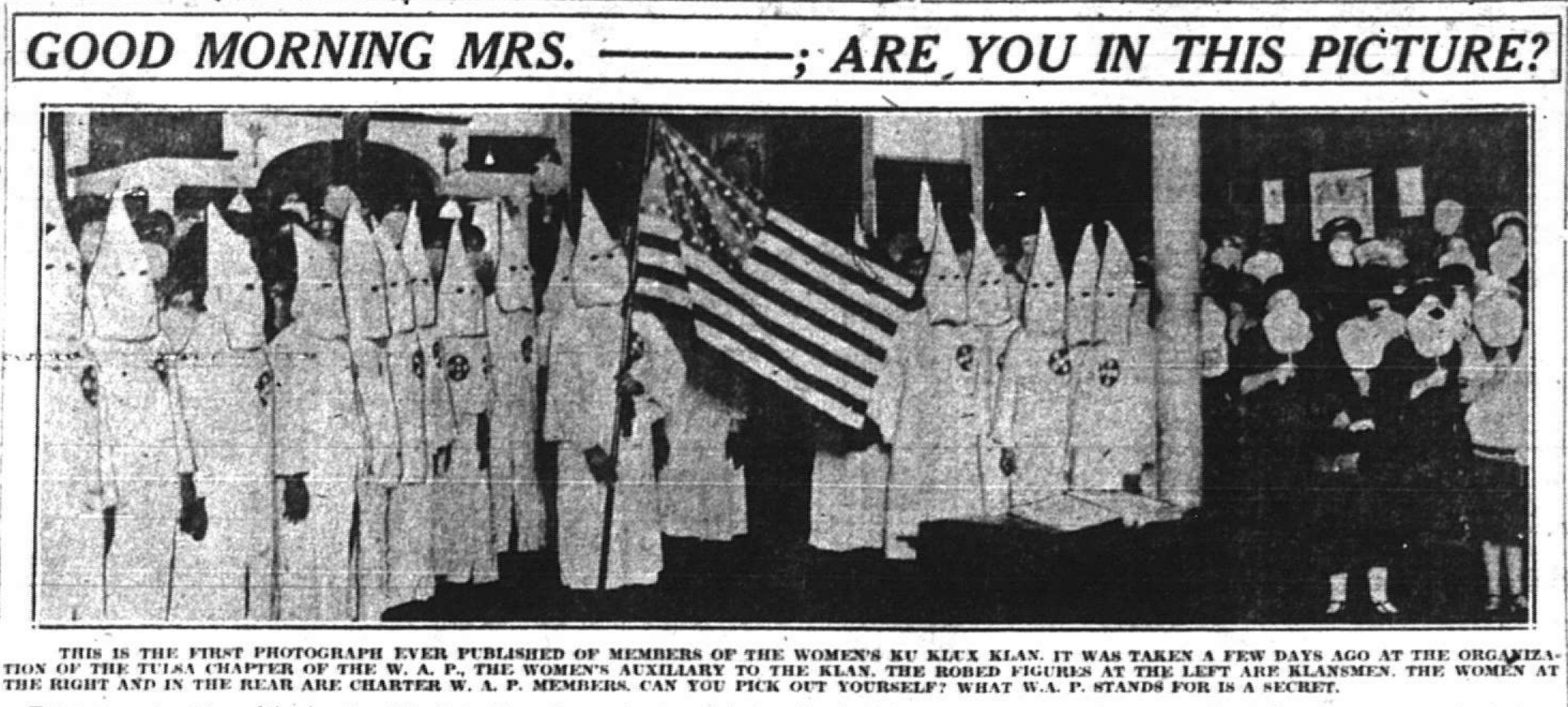
On the evening of April 20, 1923, tens of thousands of Tulsans braved heavy rain to watch a parade unlike most the city had seen. Downtown streets filled with spectators, office buildings and parking lots became viewing stands, with the procession drawing enough attention to bring traffic to a standstill.
The crowds had gathered for a spectacle that had been building for days. Women arrived by train from Kansas, Missouri and all over Oklahoma for a three-day convention, filling train cars and prompting Tulsa hoteliers to remark on the unusual number of female guests.
On Friday evening, as the convention came to a close, the procession set off from a downtown convention hall, traveling east along Brady Street—now, famously, known as Reconciliation Way—to Main Street, south around the courthouse to Boulder Avenue, and north again before returning to its starting point. The Tulsa World estimated that between 30,000 and 40,000 people had gathered downtown to watch, with hundreds more peering from office buildings and parking lots along the route for glimpses of the 500 or so women in the parade.
The women marched in silence, their faces hidden beneath hoods and robes, vivid red Ks emblazoned on their left shoulders. Banners proclaimed the “Protection of Women” and warned spectators to “Kiss the Flag or Cross the Pond.”
At the center of this unsettling spectacle of women was, ironically, one man, whose face had appeared on the front page of the morning paper, above the fold: William Joseph Simmons, former Imperial Wizard of the Ku Klux Klan.
***