


Editor's Note: This story originally appeared in This Land in March 2012.
I want you to pay a lot more attention to all my words longer and deeper and quieter and louder than I ever could. You’ll get more out of them than I did around here. —Woody Guthrie, 1954
What we have here is a whole lotta fuss about some stuff. Stuff, just like your stuff. Notebooks, journals, pictures, records—it’s witty stuff, poignant stuff, moving stuff. But it’s still stuff.
Look around you, look at your stuff. Let’s say one day you get famous, maybe even infamous. All that stuff—the papers on your desk, the books on your shelves, the bric-a-brac on your knick-knack table—that stuff’ll be worth something. Collectors will want to horde it. Academics will want to examine it. Fans will seek to draw inspiration from the glory of your scribbles and doodles and incidental jottings. Stranger things have happened, or been suggested. Read Walter Miller Jr.’s great sci-fi novel A Canticle for Leibowitz; people build a whole religion founded on a scrap of someone’s shopping list.
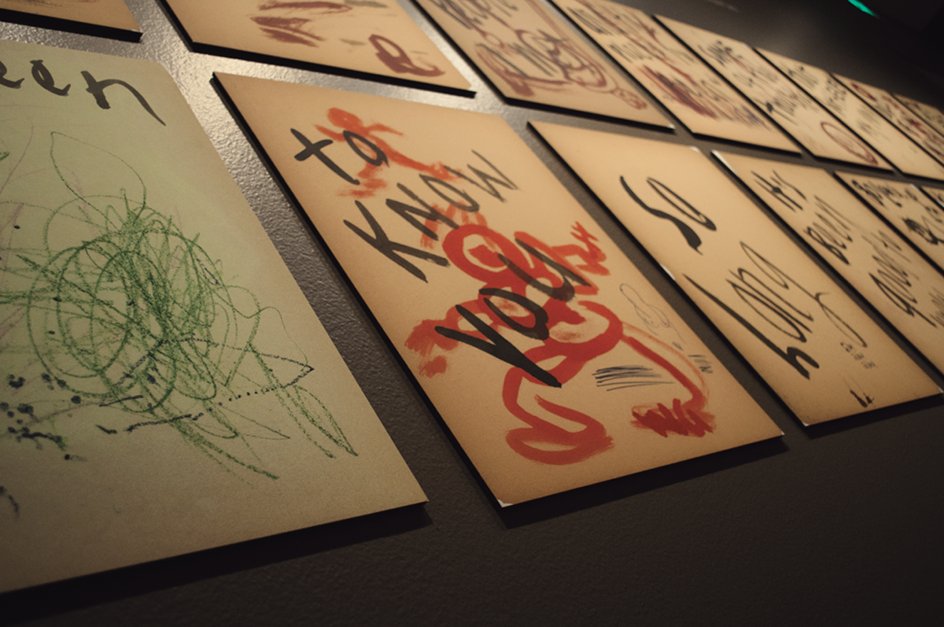
Two months ago, the Woody Guthrie Archives, the New York-based repository of the Oklahoma-born folksinger’s stuff, announced the sale of its collection to the Tulsa-based George Kaiser Family Foundation. They paid $3 million for this stuff, and the foundation is building a center in downtown Tulsa to house and display it. We’re talking about more than 10,000 artifacts from Guthrie’s life and creative output—lyrics and poems, scrapbooks, photographs, artwork, home movies, albums, tapes, letters, and effects. The first draft of “This Land Is Your Land,” newspaper columns suggesting ways to help working Americans, essays about the power of music, cartoons about the evils of Hitler, endless jottings, and quotable quips, like this one: “A phonograph record is a funny thing. You talk at it only once and it talks back at you for several years.”
But long before it was protected and enshrined—and before and after the ideas contained within it circled the globe, made Guthrie a household name, and arguably changed at least a few pockets of the world—this was just stuff.
“It was stuff around our house,” says Nora Guthrie, Woody’s daughter and the creator of the Woody Guthrie Archives. She’s remembering growing up in the 1950s, just as Woody was hospitalized with Huntington’s disease.
“It’s the stuff I knew from our house in Howard Beach [in Queens, New York City]. It was on bookshelves and in drawers. My mom had put his writings into cardboard boxes and stored them in a little room in the house, a little office there. But for the most part it was still lying around the house. The records were on the record shelf with the others we listened to. It wasn’t like it was separated. I remember playing as a kid with the metal plates they used to print Bound for Glory. I used to roll paint on them and make stamps. All his pens he did his illustrations with, they were on the desk and we all used them and broke them. His clothes—I wore his pea jacket that you see in pictures, then I lost it. I left it on the IRT.” She chuckles. “We’ve destroyed as much stuff as we’ve saved.”