


They say don’t meet your heroes, but, like, why not?
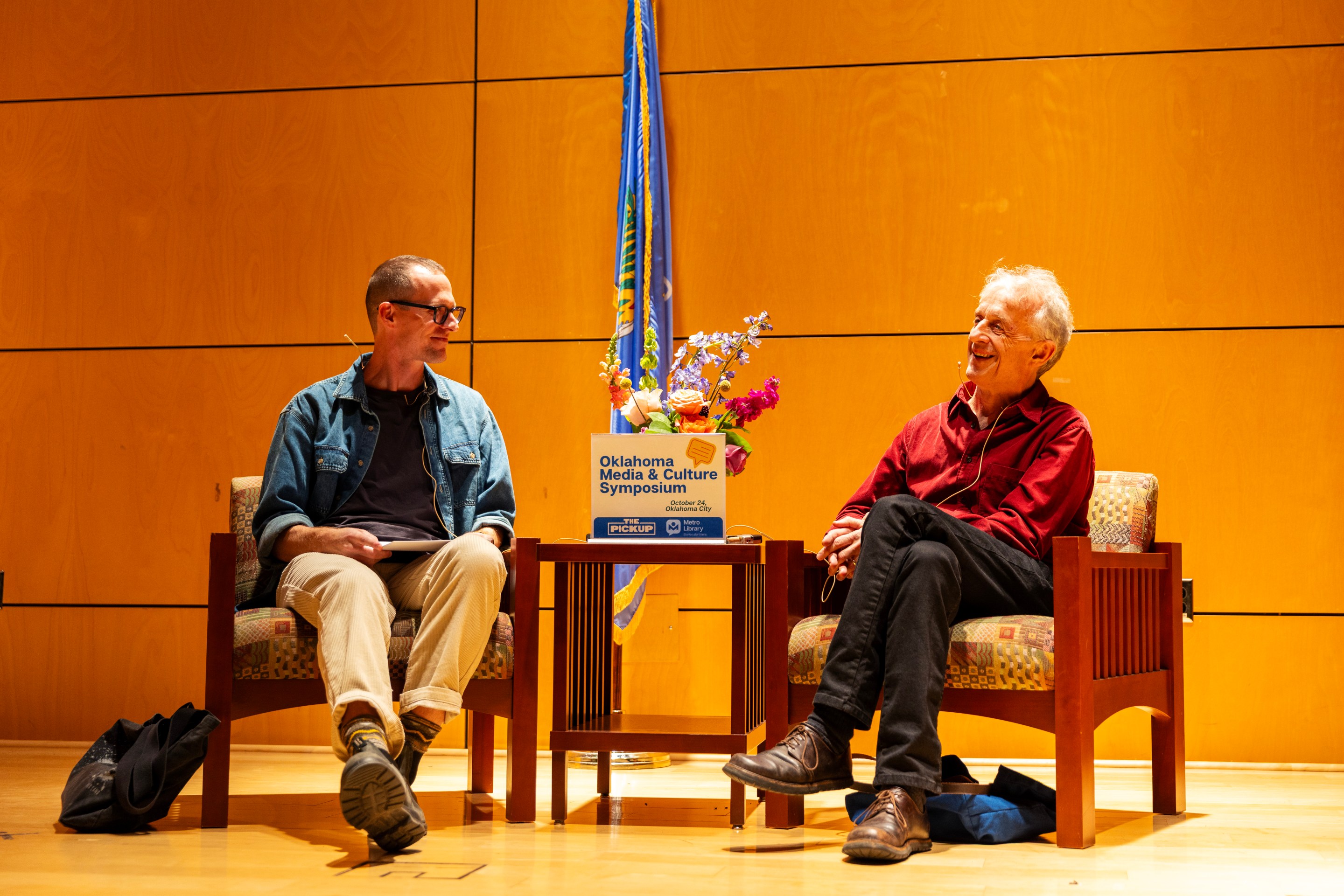
That’s what I was thinking when I got invited to interview Burkhard Bilger, the veteran The New Yorker staff writer who’s covered everything from racoon hunters in the Kiamichi mountains to a cheese-making nun in Connecticut. Last Saturday, Burk (as he goes by) joined me for a discussion about his career and his approach to the craft of narrative nonfiction as part of the Oklahoma Media & Culture Symposium, which The Pickup hosted in partnership with Oklahoma City’s Metro Library System. We touched on a lot of subjects, from how The New Yorker’s editorial process has changed over the last 20 years to what it feels like to hike in the Alps wearing prehistoric-style shoes tanned with bear brains.
What follows is a transcript of Burk and my conversation from the symposium, which I’ve condensed and edited for clarity. Enjoy!
***
Matt Carney: Well, I just want to say thank you all for coming. This is a real joy for me to get to interview Burk, who's someone whose work I've read quite a lot over the years, both his books and his contributions to The New Yorker.
I want to start there. So you've been working with editors at national magazines for decades. You grew up here in Oklahoma. How do the editors of these publications think about Oklahoma and Oklahomans on the occasion that they do?
Burkhard Bilger: I mean, I think one of the reasons I even got to be a staff writer there was that they didn't think about Oklahoma. Or they didn't think about a huge swath of America in the middle. And I think part of—I mean, the way I got the job, I mean, I'd been writing, I'd been editing science magazines for years. I'd written pieces for Harper's and The Atlantic. But I remember I had a good friend from college who was an editor at The New Yorker. And I thought, well, okay, I have this track record. I'm going to pitch a piece to him.
And it was a good piece.It ended up running in a different magazine. And he said, “You know what, we just don't take writers on very often. This is kind of a weird place to get a job.” He gave me the typical runaround. And so I forgot about it. And when my book, Noodling for Flatheads came out, the manuscript got sent to The New Yorker, and it went into some slush pile with a million other manuscripts. And some sub-sub-sub-editor found it and liked it and passed it on up the wire, and it eventually got to David Remnick, the editor-in-chief, who loved it and wanted to excerpt two stories from it.
Matt Carney: Oh, wow.