



Editor's note: This story originally appeared in the December 1, 2011 edition of This Land.
J.M. Hall, the often-called Father of Tulsa who partnered with his brother H.C. in the early 1880s to build Tulsa’s first wood-frame mercantile on the northwest corner of First and Main Streets, talked in a Christmas Eve, 1933 Tulsa Daily World article about Tulsa’s first Christmas. There was just one Christmas tree in the whole town, Hall said, cut from Cedar Island up the Arkansas River. The reporter waxed poetic about how the cowboys, the Indians, and the white children huddled in the little Creek village against the icy stubble of the prairie. The atmosphere was festive, though, and the ranch hands fired their pistols into the air to celebrate the arrival of Christmas. Santa Claus was there, too—it was Hall in a red suit—but the reporter didn’t mention that any of the children were wise to that fact.
“Ours was a real get-together,” Hall told the World. “Each of us knew everyone else. There were no strangers.... Today there are so many Tulsans, with so wide a variety of interests, that that would be impossible now.”
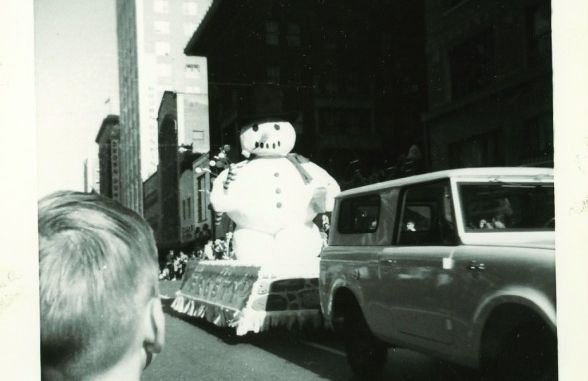
Planning for the next Tulsa Holiday Parade of Lights begins right after New Year’s. Larry Fox, the parade’s organizer, meets with a handful of volunteers to plot the timeline for the event—who contacts sponsors, who figures out which roads should be closed, where does the TV crew go? The date, always circled in red, is the second Saturday of December.
The first time Fox helped to organize the parade was nearly 25 years ago. Young and eager, he’d signed on as a board intern at Downtown Tulsa Unlimited, which organized, produced, and staffed the parade. When DTU was dissolved in late summer 2009, Fox tried to work a deal with the Tulsa Chamber of Commerce to organize the parade, but the group had no appetite for the parade business. But Fox didn’t want the parade to die. He had less than five months to reverse engineer a metropolitan parade of lights, with the help of just a few volunteers.
Fox liked being the parade board’s chairman. He presided over meetings, gave interviews on TV, hung out with Miss America before the parade. It wasn’t that much work until a few years ago, he said. Lining up sponsors is what keeps him busy for most of the year. Parades are expensive—just to close the streets along the parade route costs $14,000, 30 percent of the total cost of the event.
Work begins on floats and arrangements for the Godzilla-like helium balloons in late summer, in spite of the risk to cost—city permits sometimes aren’t passed until just before an event, sometimes even after they’re over. On the eve of the parade, Fox hosts a competition and awards ceremony for the float builders; on the other side of downtown, the TV crew fires up a couple of grills. They cook out as they unload their trucks and set up the stage where local news anchors will sit the following night, bundled up in coats and scarves as they emcee the televised version of the parade.