



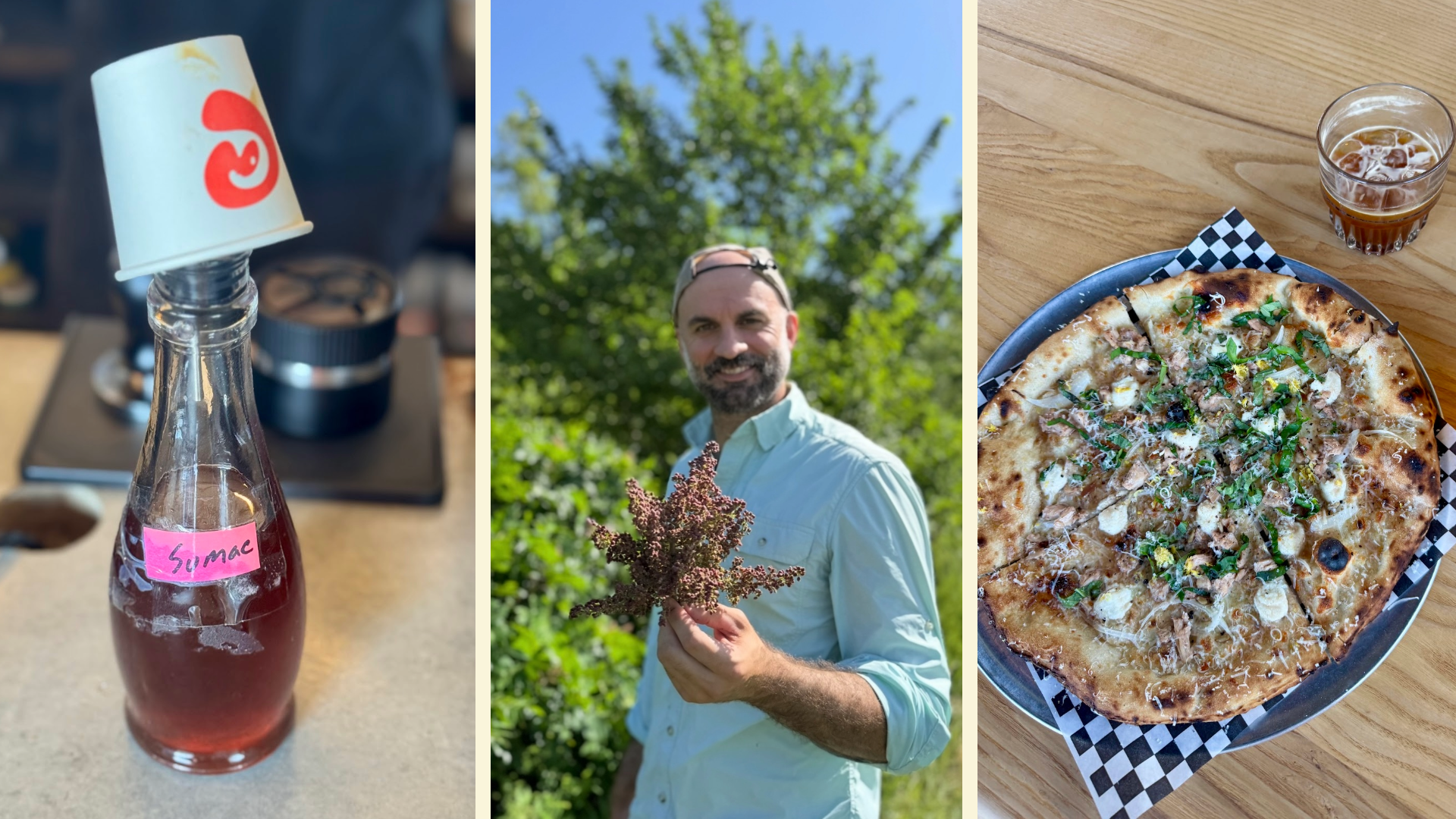
It's officially sumac season in Tulsa, where you can't travel more than a mile down Highway 51 without seeing hundreds of wild sumac shrubs dotting the landscape. Thanks to heavy rains at the start of the summer, Winged Sumac in particular has been prolific this year, and ecologist and Heirloom Rustic Ales brew-master Jake Miller knew just what to do with it.
In previous years, the answer was simple: brew beer. Every summer over the past six, Miller and his Heirloom crew have trekked to the local grasslands to harvest a haul of Winged Sumac for their annual sumac beer release. This year, they came back from the hillsides with fingers stained cherry-red from the plant’s oils, a few chigger bites, and a 125-pound harvest of both Winged and Smooth sumac. With mother nature providing so much native bounty this year, Miller wanted to go big: why not cook with it, too?
This question informed the brief for Sumac Day, held last Friday at Heirloom, where Sumac received center stage billing across food and drink. Miller presented a challenge to his colleagues at Coffee at Heirloom, Dante’s Woodfire Pizza, and Old Dog: create something featuring sumac that can introduce Tulsans to this native treasure, and help them appreciate the zingy, citrusy flavor of the resource in all its glory.
Stay in touch
Sign up for our free newsletter, The Talegate
Sumac is a staple spice in Mediterranean and Middle Eastern cooking, where cooks often reach for the brightness of its lemon-forward flavors to balance the smoke and richness of grilled meats, creamy sauces, and hummus. Sumac was used for years as a tang agent before lemons were widely available, and has long been used by Indigenous communities to make teas, medicinal beverages, and even sumac lemonade. Yet despite sumac’s ubiquity as a native Oklahoma plant, it’s fairly under-utilized in local cooking, perhaps suffering by association with poison sumac. (Notably, poison sumac isn’t even native to Oklahoma.)
Miller—a lifelong forager who’s become a little obsessed with sumac over the years—thinks the overlook is a shame, and wanted to help Tulsans get better acquainted with the bounty in our own backyard. “It’s weird how a plant can take over your entire perspective,” he admits.
On Sumac Day, Tulsans who came out to the bustling Heirloom taproom were subject to a Miller-style perspective shift, and an exploration of questions like What happens to well-understood flavors when we introduce a new one? What could happen if more of us did so more often? What gifts are within our reach, and how might we use them differently? The result, it seems, is surprising flavors, new possibilities, and a chance to enjoy both in community.