



Published in 2013 by This Land Press, edited by Jeff Martin, and lauded by The Paris Review as “the literary equivalent of a high-wire act,” Imaginary Oklahoma is a collection of flash fiction stories about Oklahoma by writers who may or may not have ever been here. In 46 stories to commemorate the 46th state, some of today's most important writers, each paired with an artist, provide their take on "the Oklahoma of the imagination."
We're proud to bring some of these stories to The Pickup—some with This Land Press’ accompanying podcast episodes—to help you dream your own Oklahoma dreams.
The woman was angry when she got to Ray’s register, and Ray was already thinking of all the things that weren’t his fault: the food, the traffic, how the McDonald’s sat in the turnpike service island like a pimple, flat-faced Oklahoma stretching clear-skinned around it. She held her daughter’s hand, the girl so small and uncurious she didn’t bother to look up at Ray, just held her eyes smack ahead into the edge of the counter.
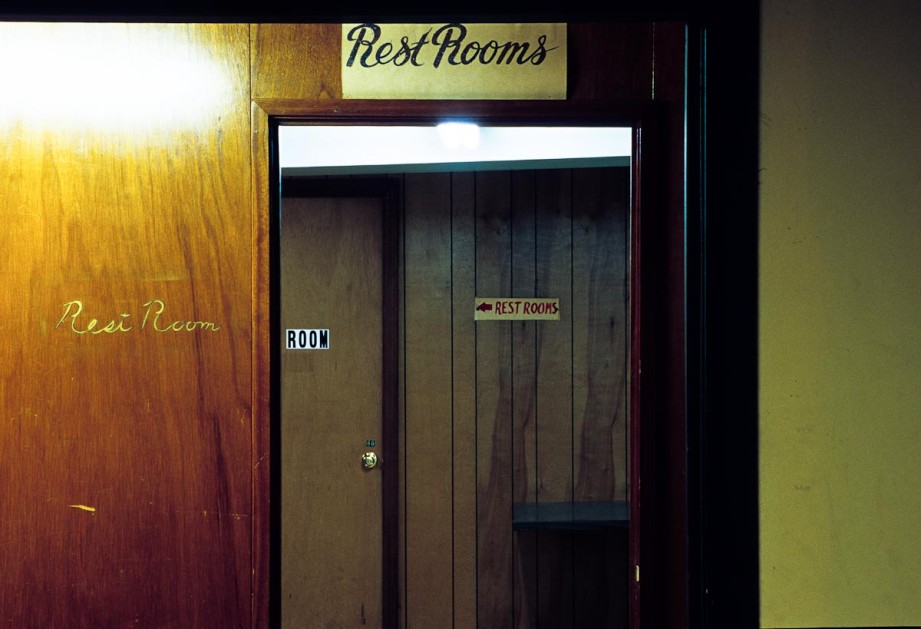
“The bathrooms are roped off,” the mother said.
“I’m sorry. Plumbing issue.” Don’t get into details with the guests, Ray’s supervisor had told him. Just keep it closed till a crew
gets there.
“They’re closed at the gas station, too,” she said, which Ray’s supervisor hadn’t mentioned. “My little girl needs to go.”
Ray shrugged, even though he knew it would just piss the woman off, the way it pissed off Susanna every time she asked what he wanted for dinner, what movie to see, whether it was worth driving the thirty minutes to a theater at all. He meant them, the shrugs, honest appraisals of his own uncertainty. He didn’t know what this woman should do, any more than he knew what to tell Susanna about her plan: the cousin in Arizona, the place to crash while they looked for work. He just didn’t know, and pretending like he did seemed to add more bullshit to the already fragrant world.
“The next service area’s forty miles from here,” the woman prodded, and Ray nodded sympathetically. The turnpike had been built miles from everything, the towns hidden to the north and south. A driver could cross half the state without seeing a sign of human habitation. Ray thought about telling the woman to take the exit—his town was just four miles away. There was a café on the main drag still, with bad coffee but decent burgers. Susanna would steer them straight, tell them what to order. He could tell the woman to tell Susanna that Ray sent his love.