


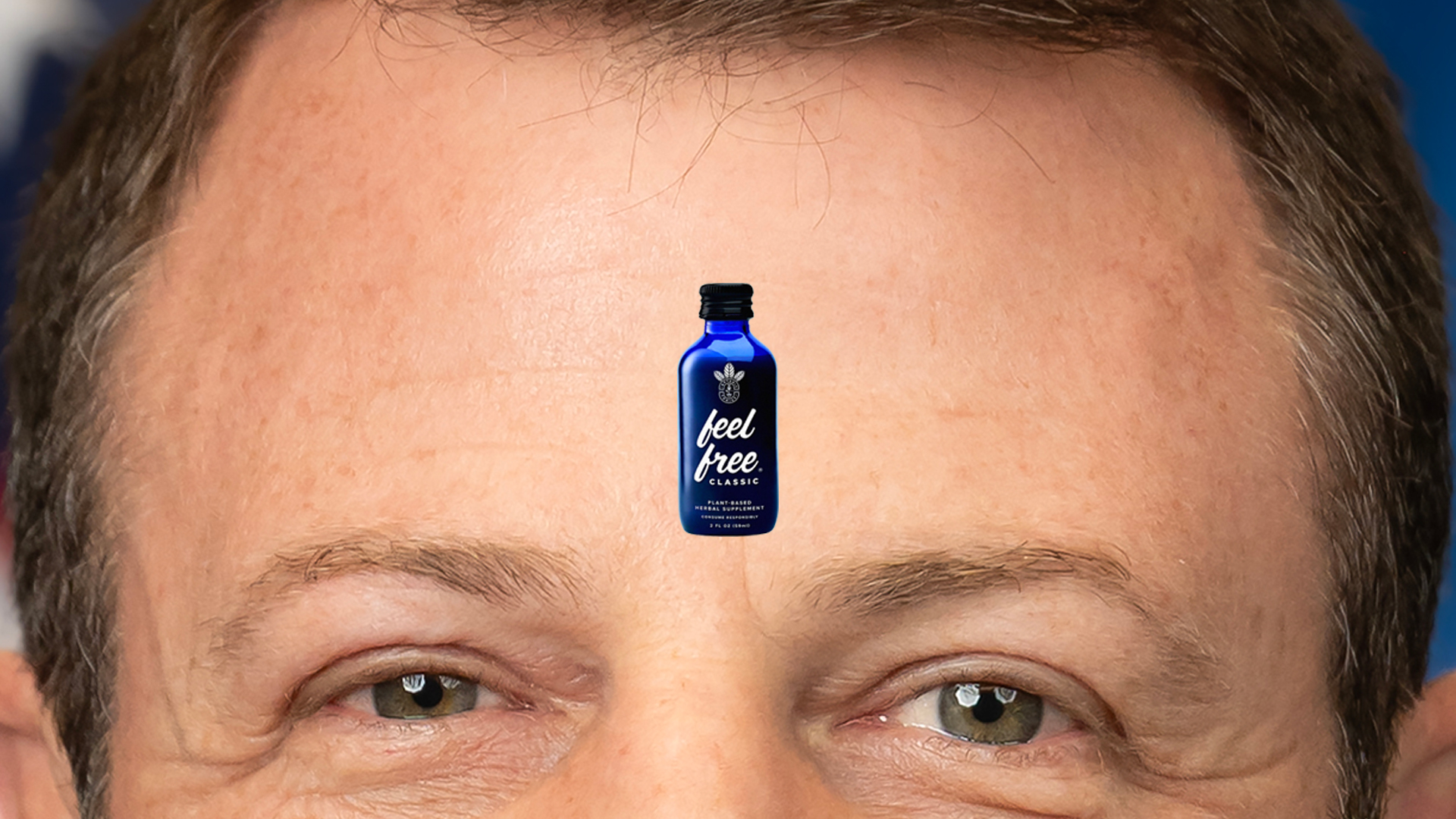
It's important to support our fellow Oklahomans when they make it to the big leagues. So next time you're checking out at QuikTrip, look between the scratchers and the Swishers for the little blue bottle of Feel Free: an all-natural kratom tonic from Botanic Tonics out of Broken Arrow, whose investors include our very own plumber-cum-senator-cum-Secretary of Homeland Security, Markwayne Mullin.
Mullin's stake in Botanic Tonics is worth as much as $1 million and was acquired at a date his disclosure declines to mention, according to a recent investigation published by the New York Times. But Mullin is merely an investor. The mastermind behind the little blue bottle is Jerry W. Ross, wellness entrepreneur. He used to go by a different name: Jerry D. Cash (no relation to yours truly, and yes, I double-checked).
In 2010, Ross né Cash pled guilty to “concealing diversion” (legalese for stealing and then covering up the stealing) of $10 million from Quest, the energy company where he was chief executive. Sentenced to 9 years in federal prison, Ross served less than 3 after, in his convenient telling, exposing a threat against a federal judge and entering the witness protection program. He reemerged with a new name and a kratom company.
Kratom comes from Mitragyna speciosa, a Southeast Asian tree whose leaves bind to the same brain receptors as opioids. Indigenous communities have brewed it for centuries; Americans discovered it in the 2010s, just as actual opioids got harder to acquire, and within a few years it joined vape juice and CBD to form a holy trinity of products available in every smoke shop in Oklahoma. And as with every natural drug American capitalists discover, the humble leaf soon gave way to concentrated extracts and synthetics that mimic opioids with ever-greater fidelity, dependency included.
Last July, while still a senator, Mullin appeared at an FDA press conference on stricter regulation of synthetic kratom, speaking in emotional terms on how addiction has affected his family.
Behind the scenes, he was reportedly urging HHS officials to remove warnings from the FDA website about kratom’s risks of liver toxicity, seizures and substance use disorder; the agency deleted select links but kept the side effect warnings. Mullin argued that synthetic products were exploiting a regulatory “loophole”—one so large, we'd soon learn, you could drive a Mullin Plumbing van straight through it.
Mullin’s stake was still undisclosed, but Ross was already hard at work creating a paper trail of conflicts of interest, donating nearly $150,000 to Robert F. Kennedy Jr.’s defunct presidential campaign weeks before Trump’s inauguration and telling friends that he was “working on a plan for Bobby.”
The plan? In 2023, U.S. Marshals had seized $3 million worth of Feel Free from the Broken Arrow plant, in a case titled U.S. v. 250,000 Filled Bottles of Liquid Product. In December of last year, the DOJ dismissed the case. The bottles, it explained, had expired. A few months later, Botanic Tonics donated $500,000 to MAHA PAC, the fund aligned with Kennedy. Per sources, the company has pledged to continue the half-a-million dollar gift on a monthly basis, and as of May accounted for 44% of the PAC’s total fundraising. With Feel Free’s annual sales exceeding $250 million, they can afford it.
Given their shared affinities, Mullin and RFK Jr. were destined to find each other. Mullin was famously reprimanded by John Boehner for wearing jeans on the House floor, while Kennedy famously does all manner of normal activities in jeans, like cold plunging with Kid Rock. The two cabinet members also share a passion for strength training: former undefeated professional MMA fighter Mullin was notorious for Capitol Hill workouts so punishing that they often made Kennedy’s nephew, then-Rep. Joe, upchuck.
Vomiting and nausea are common side effects of kratom use, but those are far from the worst effects. Just last year, Botanic Tonics paid $8.75 million to settle a class-action lawsuit regarding Feel Free’s marketing as a safe alcohol alternative. Claimants alleged the company gave no warning of the serious risks of dependency and withdrawal. While the settlement resulted in no admission of wrongdoing, it did require Feel Free’s label to state the product “can become habit-forming” and that people with a history of substance abuse should consider avoiding it. The subreddit r/Quittingfeelfree, a support community for people trying to quit the tonic, has 16,000 weekly visitors, as of this story’s publication.
In the interest of serving my readers, I offered to sample Feel Free myself—a two-ounce blend of kava root and kratom that one former head of dietary supplements at the NIH described as “2,600 milligrams of goop.” My editor refused, texting me that “in good faith I can’t recommend anybody do that stuff, not even for a story,” which I'd note is more warning than Feel Free’s label offered anyone before 2024. If you want to run the experiment yourself, it's $11.99 and no one at QuikTrip will stop you. Just know you’ll be assuming all the risk while Secretary Mullin reaps the profits.
Given Ross's past alcoholism, Kennedy's heroin years, and the addiction in Mullin's own family, you’d think MAHA might view kratom with trepidation. But with the help of Ross’s lobbying group literally named Stop Gas Station Heroin and Mullin’s tireless advocacy with Kennedy and J.D. Vance, they've focused on a narrower goal: banning the synthetics that directly compete with Feel Free for shelf space.
If it's natural, it must be healthy. Just like raw milk!
Last week they got their wish: the DEA moved to schedule synthetic kratom products alongside heroin, while the little blue bottle remains available for anyone tall enough to see over the Kum & Go counter. This is moral clarity, MAHA-style: gas station heroin must be stopped; gas station codeine, in the words of the FDA commissioner, “we're not targeting.”
As for Mullin, federal filings show he has not divested from Botanic Tonics. In his defense, he's been busy doing a “happy dance” over revoking the Iranian soccer team's World Cup visas, and threatening local election officials over exaggerated claims of voter fraud. All part of a hard day’s work securing our homeland. A DHS spokesperson says the secretary “follows all ethics and conflict of interest standards and has not lobbied for any individual or company.”


