


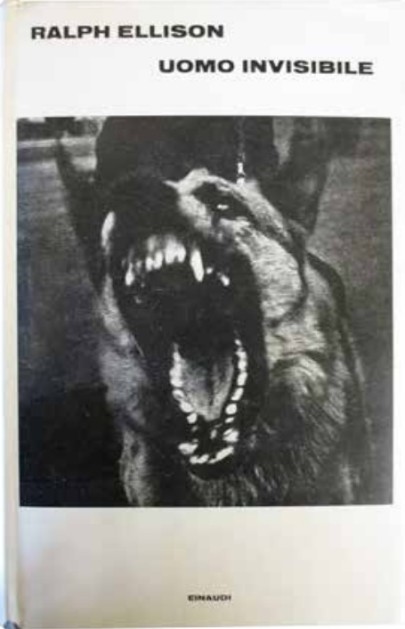
Editor's Note: This story was originally published in This Land, Vol. 5 Issue 5, March 1, 2014.
I was 17 when I first encountered Invisible Man. I inhaled it over the summer before my senior year, passing impossibly hot July afternoons in the family den, facedown on the floor for hours on end, raptured from the sweltering heat by its cool, lyrical largesse and penetrating social wisdom. Not only did it spur me to think about race and history in dynamic and troubling new ways, but it also moved me deeply as a piece of art. That strange, hypnotizing and herculean novel reached across the chasm of a half-century and fundamentally rearranged my inner life forever.
It didn’t matter that I had never personally experienced the sort of discrimination that forces its unnamed protagonist underground. Ellison writes with such moral urgency and aesthetic power that it’s impossible not to be changed by it afterward, and the novel’s parting shot (“Who knows but that, on the lower frequencies, I speak for you?”) is a powerful reminder that this is a story about all of us.
Imagine my surprise, then—my disbelief—upon learning that the person responsible for this electrifying document was born and raised 100 miles north of my rural farming and manufacturing community in south-central Oklahoma. Now imagine another sort of disbelief: sitting after class in my too-small plastic desk and hearing from a twofer Oklahoma history teacher and varsity defensive coordinator that Ralph Ellison, and my experience with him, was insignificant.
“It’s gotta be somebody famous,” Coach Landgraff insisted. “It’s gotta be somebody where people at least know who he is. If I never heard of this guy, how important can he be?” The assignment was to write an essay on the contributions of an influential Oklahoman, and apparently my Ralph Ellison proposal wasn’t going to fly.
After numerous protestations, and another failed proposal on Wayne Coyne, I—like approximately 90 percent of the class—wrote about Will Rogers. The rest wrote about Toby Keith.
***
When Ralph Ellison claimed that “geography is fate” during a 1979 speech at Brown University, he did so with a sense of possibility. He was speaking on the profound impact of Dr. Inman Page, Brown’s first African-American graduate, who became principal of the all-black Douglass High School in Oklahoma City, which Ellison had attended from 1927 to 1932. Ellison used Page’s story to reflect on Oklahoma’s historical significance in the African-American struggle for selfhood: