


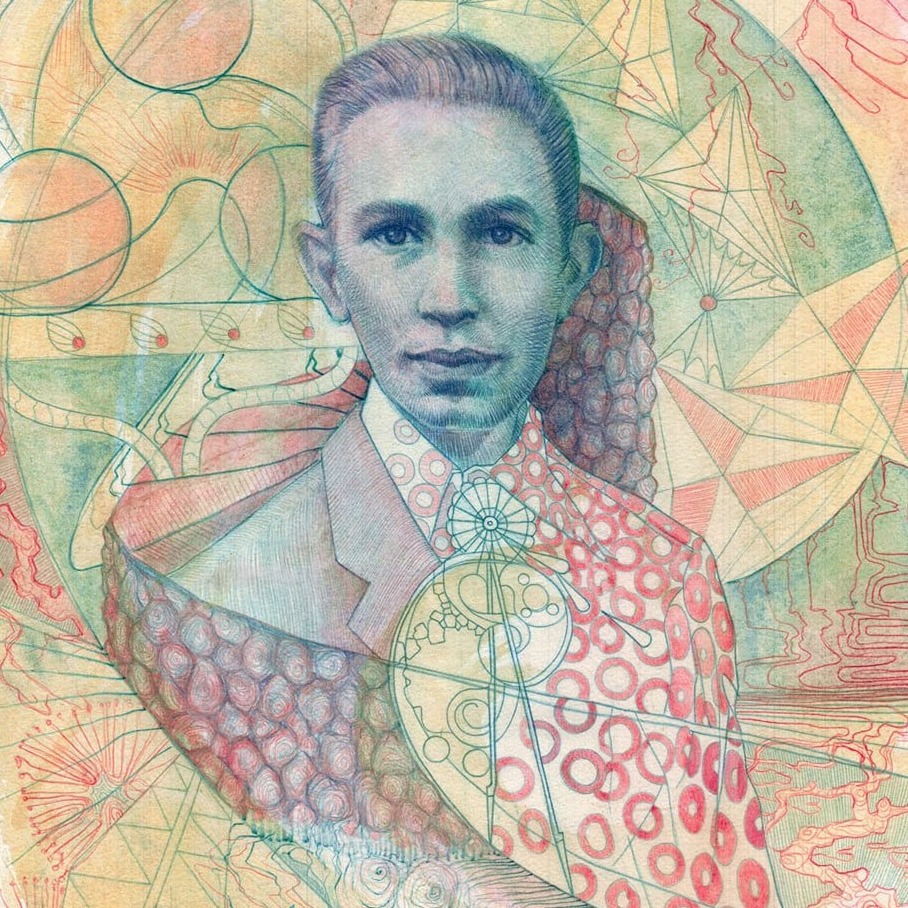
GOFF Fest
Various locations
November 1-7, 2021
This story originally appeared in Root Tulsa in 2021, the inaugural year of GOFF Fest.
What if a genius Oklahoma creator who was misunderstood, dismissed and diminished in his own lifetime could be understood, valued and amplified in ours? That’s one mission of GOFF Fest, the inaugural festival from the nonprofit Goff Center of the Continuous Present, which takes over Tulsa this weekend in celebration of architect Bruce Goff.
Never heard of him? That’s about to change. Over four days, you can get to know this polymathic, avant-garde, largely self-taught gay pioneer of design through a series of diverse events across the city—many in landmarks and hidden treasure locations you probably didn’t know were created by one of our own. From a family festival at the Spotlight Theatre, to a rooftop Beaux Arts Ball and costume contest at the Reunion Apartments, to a VIP brunch at the Tulsa Club Hotel, GOFF Fest makes Goff’s presence in our local cultural landscape impossible to ignore.
For documentary filmmaker Britni Harris and Tulsa Artist Fellow Karl Jones—the festival’s founders and organizers, both of whom have studied Goff for years—getting acquainted with the architect and his work opened up a whole new wing, as it were, of mid-century Tulsa. “He’s one of these exceptional artists who have been put to one side or not enough is known about them, criminally, because they didn't fit the mold of the kind of people that were supposed to be here,” Jones explained. “And so these things are hiding in plain sight, all around us.”
Born in 1904, Goff started drawing buildings as a child (everything from castles to cathedrals, according to his mother). By age 12, he was recognized as a prodigy and apprenticed to the Tulsa architectural firm Rush, Endacott & Rush. If you find yourself doing a double-take when driving by a particular midtown house of a certain vintage, chances are good that it’s by Goff. He created about a dozen homes here—his first, a bungalow with an iconic sweep of concrete porch at 17th and Yorktown, at age 15. Mentored and admired by the likes of Frank Lloyd Wright and inspired by everything from Balinese music to ocean life forms, Goff went on to create a stunningly beautiful, thoroughly convention-shattering body of work from Los Angeles to Bartlesville (home to his masterpiece Shin’en Kan, destroyed by arson in 1996).
But at his death in 1982, despite a lifetime of groundbreaking invention and execution, he was unknown even in many creative circles—and the “why” of that is one of Harris and Jones’s big questions. In the late 1940s and early 1950s Goff was a popular professor and chairman of the OU School of Architecture; he was forced to resign, many historians believe, because of his homosexuality. Jones has noticed a reluctance among many in the field to speak of Goff the human being, the gay man, one whose work and life were deeply different from the norm in Oklahoma.
“There are people who have shepherded his legacy for a long time, architects and architectural historians whose training in that craft controls how they are participating in the narrative,” Jones said. “When you come in without that training, it's sometimes hard to even have a language to speak together. The question is often, ‘Why can't we just talk about the work? Why do you have to talk about this persona?’ Well, sure. That would have been fine, but his work was interrupted many times because of other people's interest in his personal life. And so that's part of the story. The work stands for itself—and we can also talk about his personal life. That’s one of the big things we're hoping to spend some more time doing. Britni’s documentary does that. And the festival will hopefully open those conversations up as well.”