



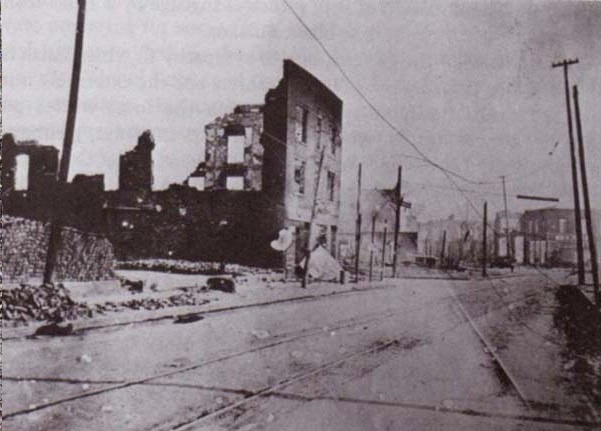
Editor's Note: J. B. Stradford was one of the most successful men in Greenwood. His commitment to his community and defense of his ventures led him to indictments for instigating a riot in the aftermath of 1921. It would take years for his family to clear his name, as Steve Gerkin details in this story originally published in This Land in February 2014.
John the Baptist moved to Tulsa in 1899. The Stradford family called him J. B. 1 He was a former Kentucky slave who was not afraid to preach the gospel of equal treatment and racial solidarity for black Americans. College-educated in Ohio at Oberlin College, Stradford received his law degree from Indiana University, practicing in Indianapolis and yearning to influence black equality. Tulsa became his destiny. Leaders of the local white community yearned for his demise.
In America, the late 1800s provided an unpainted canvas of opportunity for post-emancipation blacks. They were free to relocate, joining up with other freshly freed blacks and freedmen from Creek enslavement to start communities separate from the white population. While racial distrust remained, their new beginnings were sites of burgeoning entrepreneurship.
Over 60 percent of the U.S. black population served whites as domestics, restaurant cooks, bootblacks, and laborers. Wages were brought back to their new settlements and spent with black grocers, black lumberyards, black saloons and gambling enterprises, black theaters, and a cadre of like-skinned businesses.
Oklahoma’s future looked bright for blacks. Led by the vision of Edwin McCabe, founder of the first black community of Langston in 1890, the state became a mecca for black towns and self-reliant communities—50 by 1920.2 The New York Times warned on March 1, 1890, that a Negro settlement is “a camp of savages.” McCabe sent recruiters to the South, appealing to racial pride, and hoped to recruit enough blacks to become the majority race and force the whites to turn over the region to them.
McCabe’s dream of a politically powerful, black-friendly state lured Stradford from Indianapolis to the dirt streets of Tulsa’s undeveloped Greenwood area.