



Skip to Content
Reviews

Elise Paschen’s “Blood Wolf Moon” Is An Unflinching Look At Identity And Inheritance

The Osage poet who inspired the title “Killers of the Flower Moon” is back with an astounding new collection

We’re on sale! New customers get 25% off our Red Dirt subscription in December, and gift subscriptions only cost $45 for the year! At The Pickup we write stories for real people, not AI scrapers or search engines. Become a paying subscriber today to read all of our articles, get bonus newsletters and more. 

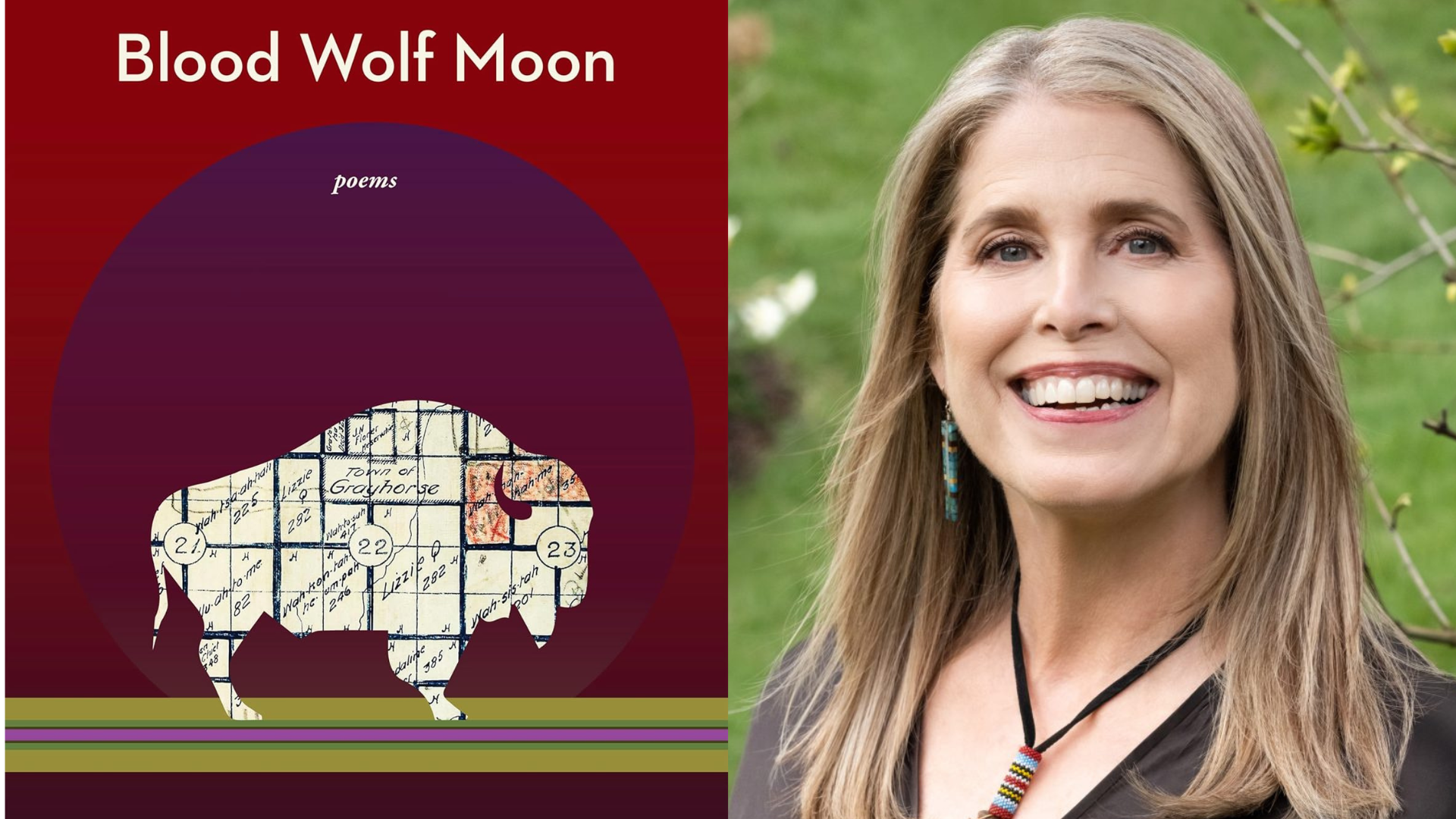
Blood Wolf Moon by Elise Paschen
Red Hen Press, 2025

How does one build an identity? It’s an ongoing venture of discerning and refining, discarding narratives as much as creating them. For a poet, especially one who writes autobiographically, that work involves filtering through experiences and memory, presenting and processing meaningful moments to build the story of self on the page, as well as in life.

With her sixth book of poetry, Blood Wolf Moon, Osage poet Elise Paschen does just that with an arresting collection that reflects on her childhood as the daughter of renowned prima ballerina Maria Tallchief, her Osage heritage, and the work of processing multiple generations of trauma, including her personal experience with assault.

The collection opens with the 14-part poem “Heritage,” which sets up the inquiries Paschen makes into her identity—with her family’s troubled past always in the wings. “Once I had a name / for everything I possessed, but now am silent, afraid / to trespass,” she writes, before noting that her Osage name “descends from the Buffalo clan” and that she was “born in the month of the Blood Wolf Moon.” The lines become more assertive, assured, as if they themselves become possessions she’s not afraid to name. Perhaps, as we age and feel the gravity of history, it’s impossible to escape the struggles of our ancestors—and silence about those struggles becomes acquiescence.

Paschen’s mother, Maria Tallchief, was the first Native American prima ballerina in America, and in “Heritage,” Paschen acknowledges the sacrifices that path required. “Tell me / about departure,” she writes. “Tell me / how often she left the newborn, jetted / away on Pan Am, tied up the ribbons / of her satin toe shoes.” And yet, finally, Paschen yields: “I am not one to antagonize her. / I bow low to her voice.”

Tallchief was born in 1925, during the “Reign of Terror,” when the Oklahoma Osage were murdered for their oil headrights, famously documented in Killers of the Flower Moon by David Grann—a book whose title was inspired by a line in Paschen’s 2009 poem “Wi’-gi-e,” which is Osage for “prayer.” Paschen’s new book converses with Grann’s as well as the culminating Scorsese movie from 2023, considering the distance between what her family experienced and what she has inherited. 

As readers of Grann’s book and viewers of Scorsese’s film will remember, the U.S. had forced the Osage to relocate from where Kansas is today into Oklahoma (then Indian Territory), not realizing the gold mine that sat underneath, which eventually made some of the Osage wealthy. Paschen writes that her mother and aunt, growing up in Fairfax, Oklahoma, “believed they owned / the town. TALL CHIEF spelled / out on the marquee, / the gem of Fairfax, / built by their father.” And yet they were bullied by white residents for that same last name and their difference as Osage girls. When Tallchief performed in the ballet Apollo in Paris, headlines referred to her Peau Rouge, or red skin. Paschen writes that the term came from “the bodies of Natives brought in for bounty,” a fact she learned from poet Joy Harjo.

Exploring this history is fraught, just like exploring an unforgiving land. With lines like “From Pawhuska to Fairfax— / driving in Oklahoma— / how brash, the wind,” Paschen’s poetry is sweeping yet grounded in matter-of-fact phrases, which she often uses to bring thoughts to a close. It’s also grounded in the natural world: how the everyday sensory details we encounter can speak to us like ghosts. In the poem “After Killers of the Flower Moon,” Paschen writes that the film’s star “Lily Gladstone confides she wore my great / grandmother Eliza’s blankets in three scenes.” And then, beautifully: “Eliza’s blankets fold and unfold stories. / Into every pattern, I fly back home.”

The poem “No” is a powerful lament about how women are persistently pressured to say yes. And then Paschen lays herself bare:

Back home I witness citizens
repeating no, while every day
this brute in charge ignores our words,

like the man I couldn’t fight off
that night he squeaked open the door
and, wordless, crawled into my bed.

In a later prose poem, “123 West 69th Street,” we learn that when Paschen was a child, her mother sometimes left her at an apartment with a young dancer who would throw parties while Paschen was there. “All these years later, why do I still wake up afraid there is a strange man in my room,” she writes. And in “Ode to the Lost Mother,” she at last confronts her mother directly, saying simply, “Where were you?” 

Blood Wolf Moon covers a lot of ground while Paschen untangles the narratives and facts she has gathered, which are sometimes personal and sometimes historical, and often both at once. In the collection’s final poem, “𐓨𐓘͘ ́ 𐓺𐓟 𐓱𐓘́𐓱𐓘𐓺𐓟/Máze Htáhtaze/Typewriter,” which is written first in Osage, then in the phonetic spelling, and then translated into English, her self-assertion is clear:

Source: Poetry Magazine 

What really separates then from now, our forebears from ourselves? Perhaps discovering how close we really are to them, Paschen ends the poem, “Time is just / the ticking noise / against metal.”

Paschen’s collection is astounding in its breadth and its sensitive depictions of the tensions of being human. Through her unflinching, accessible language and vulnerability, she reveals the steps necessary to craft a foundational web of identity from intersecting, unresolved stories. 

If you liked this story, please share it! Your referrals help The Pickup reach new readers, and they'll be able to read a few articles for free before they encounter our paywall.

Stay in touch

Sign up for our free newsletter

More from The Pickup

Tulsa High Schools Used To Have Open Lunches. Then I Got Shot At A Wendy’s.

Reminiscing on one of the most important days of my life, 32 years ago now

February 12, 2026

Much Love Lost

In these true Oklahoma love stories, “till death do us part” is easier said than survived.

February 12, 2026

The Week’s Best Tulsa Events: Valentine’s Day Edition

Make all your Valentine's, Galentine's and early Mardi Gras plans right here.

February 10, 2026

“Beauty And The Beast” Still Has The Stuff

The touring show cut through any pretensions I might have had about it

February 10, 2026

How It Feels To Live In Minneapolis Right Now

We interviewed a local living through Operation Metro Surge.

February 9, 2026

A Night With Brooklyn Rider At WOMPA Delivered Strings, Glass, And Grit

Who knew Philip Glass would sound so good in an industrial warehouse?

February 6, 2026
See all posts