


In this excerpt from her 2012 book, "Killers on the Road: Violence and the American Interstate" (The University of Texas Press) friend-of-This Land Ginger Strand renders in shocking detail the violent criminality accompanying the Interstate Highway System and how it converges in Oklahoma City. This excerpt was published in the March 15th, 2012 edition of This Land.
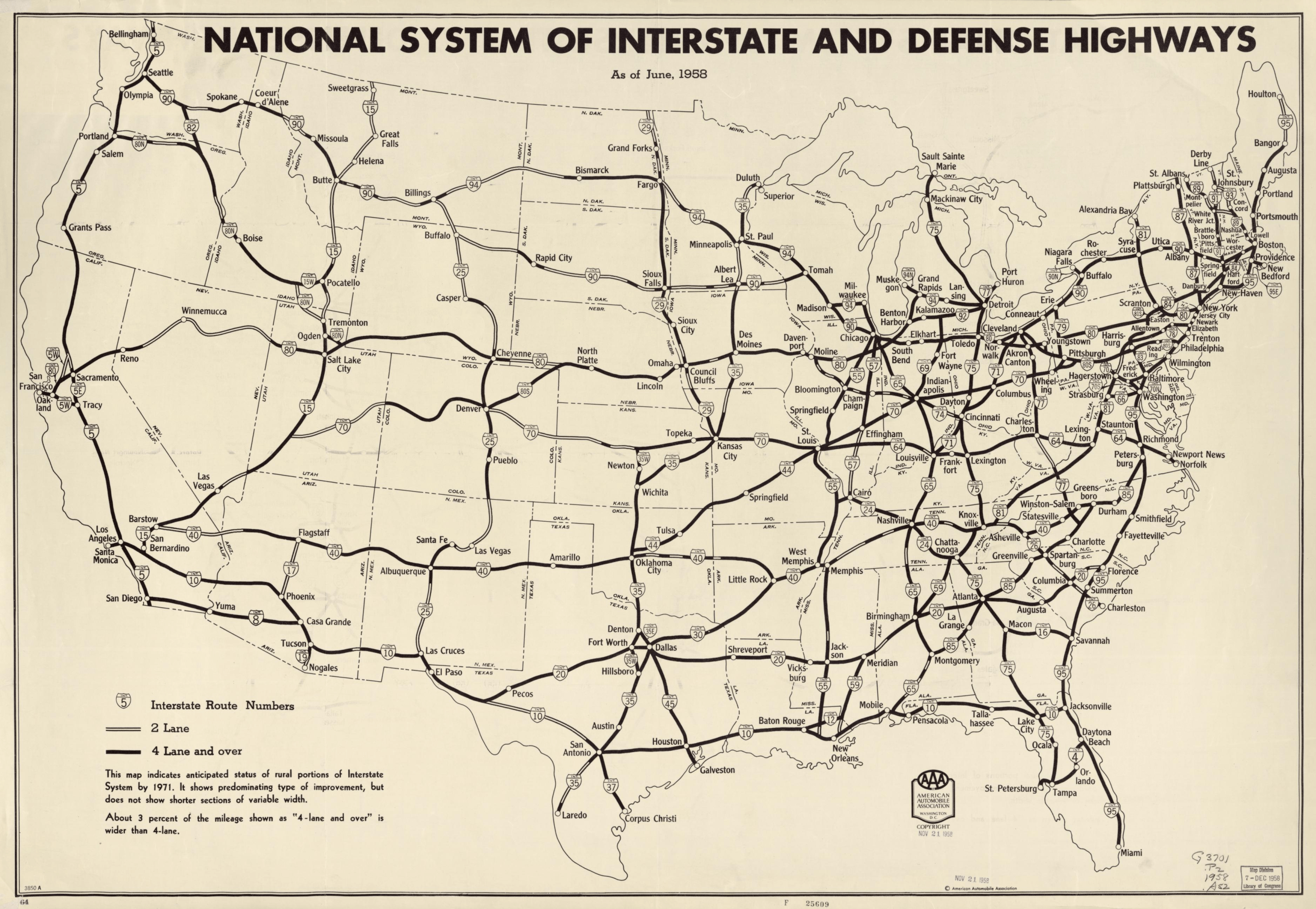
In the years since the interstate era began, the proportion of freight going over the road has steadily increased. After the Motor Carrier Act of 1980 deregulated trucking, the number of trucks on the road shot up even more. In the last 20 years alone, there has been an increase of 44 percent in registered trucks and a leap of 86 percent in how many miles those trucks travel. Today, roughly 70 percent of all domestic freight goes over the road. To survive cutthroat competition, trucking has become leaner and more efficient. Unionized trucking companies have dwindled while smaller, low-wage ones have multiplied. Trucks have become “sweatshops on wheels,” with truckers driving harder, longer, and faster, for lower relative pay. Like pieceworkers, most are paid by the mile—on average around 39 cents.
As the need for drivers has expanded, the bar to entry has been lowered. Today, you don't need a high school diploma or to go through a criminal background check to drive a truck. In fact, beginning with welfare reform in 1996, employers could get a Federal Work Opportunity Tax Credit for hiring convicted felons, and many in the trucking industry did. Most trucking companies don’t care if drivers have a permanent address. It’s possible to drive a truck with drunk driving convictions on your regular license. Annual employee turnover at trucking companies is around 100 percent.
As trucking has changed, it has attracted a new demographic: less educated, less stable, less tied to unions, and less rooted in family life. Has it also begun attracting a criminal element?
***
“At the end of this testimony,” declared deputy district attorney Tom Thurman, “there will be no doubt that there is a cold-blooded killer in the courtroom.” It was May 2010, nearly three years after the murder of Sara Hulbert, and day one of Bruce Mendenhall’s trial.
The accused sat impassively between his lawyers. Mendenhall is no Dexter. In fact, even as real serial killers go, he gets low marks for mediagenics—he isn’t dashing like Ted Bundy, passionately deranged like Charles Manson, or eerily normal like John Wayne Gacy. He is 59, and not a youthful 59. He has a cartoon trucker’s body—beer belly, sloping shoulders, and trudging gait. He is diabetic. His cheeks sag in deep hollows and his limp hair could use a trim.
The prosecution and the defense agreed on the basics. Sara Hulbert was killed in Bruce Mendenhall’s truck with Bruce Mendenhall’s gun. But they took differing positions on who had done the killing. Mendenhall claimed it was someone else. Two guys followed him around, he said, killing women in his truck, with his gun, and leaving him to clean up the mess. That was the story he had told Detective Postiglione immediately after his arrest.