


Skip to Content
News

Despite Tribal Citizenship, Traffic Tickets For Freedmen Descendants To Remain In City Court

A deal between the City of Tulsa and the Muscogee Nation doesn’t apply to Freedmen descendants who don’t have documentation of a degree of Indian blood.

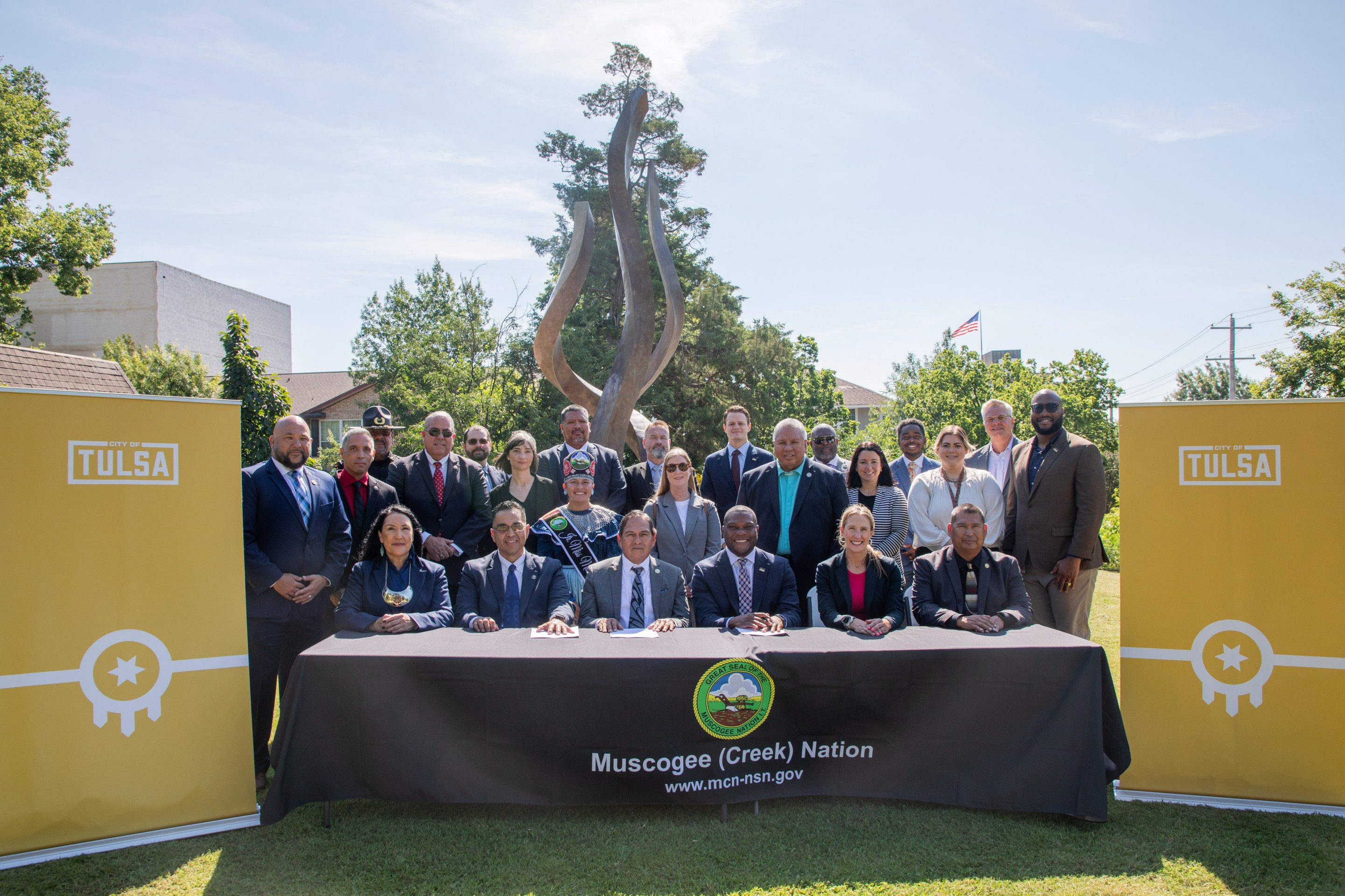
Leaders from the Muscogee Nation and City of Tulsa hold a formal signing of an agreement that would send municipal tickets against tribal citizens to tribal court.

|City of Tulsa

A deal for the City of Tulsa to send traffic and other municipal cases involving Muscogee Nation citizens to tribal court doesn’t cover the descendants of formerly enslaved people who are also tribal citizens.

Tulsa will still prosecute tribal citizens who can trace their lineage back to a Freedmen ancestor — people who were enslaved by the Five Tribes but freed and at one time granted citizenship within their respective tribal nations following the Civil War.

A deal the Muscogee Nation and Tulsa reached in June covers all Native American citizens who commit crimes within the Muscogee Nation reservation. Under the terms of the deal, the city agreed to drop pending municipal charges against Native people and send their cases to tribal court. Moving forward, the city will send most cases involving most tribal citizens to the Muscogee Nation court system.

Stay in touch

Sign up for our free newsletter, The Talegate

But the agreement includes a provision that, in addition to being a tribal citizen, people must have a certified degree of Indian blood for their cases to be sent to tribal court.

Michelle Brooks, a spokesperson for Tulsa Mayor Monroe Nichols said that the settlements “does not expressly include or exclude Freedmen” but follows a standard set by federal courts.

A 19th-century U.S. Supreme Court case, United States v. Rogers, set out the requirement of a blood quantum — a person’s documented degree of American Indian ancestry to be considered a tribal citizen in state and federal court.

Jason Salsman, a spokesperson for the Muscogee Nation, said that the new agreement with Tulsa doesn’t apply to Freedmen because the federal government “requires Indian blood to be considered an Indian.” Tribal citizenship cards issued to Cherokee Freedmen list a zero blood quantum; therefore, they are still under Oklahoma state jurisdiction.

The Five Tribes — the Cherokee, Chickasaw, Choctaw, Muscogee and Seminole nations — all sided with the Confederacy during the Civil War. After the Confederacy lost, these tribal nations signed treaties to re-establish their relationships with the United States government and end the practice of chattel slavery. In some cases, tribes agreed to grant citizenship to enslaved people. Then in 1887, the United States enacted the Dawes Act, which created citizenship rolls for tribal citizens who were citizens “by blood” and those who were not. The Dawes rolls for Freedmen had no blood quantum.

Marlon Drew, 31, a Cherokee citizen of Freedmen descent, cannot have his case transferred to tribal court because of his lack of degree of Indian blood. Drew was arrested by Tulsa police on misdemeanor complaints of trespassing, obstruction and resisting arrest in March 2024. His case was still pending in Tulsa municipal court as of Aug. 7.

Cherokee Freedmen had no blood quantum listed on the Dawes rolls but were finally granted tribal citizenship in 2017 after a hard-fought legal battle.

The lack of blood quantum still has legal consequences for descendants like Drew today.

Drew’s lawyer, Sabah Khalaf, said he intends to take the case to trial if the city doesn’t drop the charges, arguing that his client should be charged in tribal court.

Khalaf says it’s a “double whammy” of injustice for Drew.

He said he feels like his client is being given disparate treatment for being Black man in the criminal justice system and not being given the chance to have his case heard in the right court, all because of his lack of blood quantum.

“It is a moral thing,” Khalaf said. “I feel like he was treated inherently unfair.”

Khalaf worked in the Tulsa County District Attorney’s office as a prosecutor before he opened a private practice. He wants to help people who’ve made mistakes and need real help with addiction or other issues that landed them in the crosshairs of law enforcement.

When the U.S. Supreme Court ruled in the 2020 McGirt decision that much of Oklahoma was still Indian Country, he immediately applied to be admitted to practice law in Cherokee and Muscogee Nation courts, where he’s represented many clients.

The number of Freedmen caught in the same legal predicament as Drew is unknown. However, there may be more attention paid to the issue after the Muscogee Nation’s Supreme Court ruled earlier this year that Freedmen descendants are eligible for citizenship.

Last year, Cherokee Nation Principal Chief Chuck Hoskin Jr. called for an act of Congress to fix the law so Freedmen descendants can take advantage of the McGirt ruling and have their cases transferred to tribal court.

Khalaf said he doesn’t see Congress taking up that issue any time soon, which could leave his client and other Freedmen descendants facing charges in state court, rather than tribal court.

The Frontier is a nonprofit newsroom that produces fearless journalism with impact in Oklahoma. Read more at www.readfrontier.org.

If you liked this story, please share it! Your referrals help The Pickup reach new readers, and they'll be able to read a few articles for free before they encounter our paywall.

Stay in touch

Sign up for our free newsletter

More from The Pickup

Ask Tulsa Bae: Who’s Anxious, And Who’s Avoidant? 

Separating fact from fiction in pop psychology

January 13, 2026

Tulsa Picks: This Week’s Best Events, January 14-20

Theatre, racing, music, and more: 43 things to do this week

January 13, 2026

A Night Of Uncategorizable Talent

The first show of the year at Drifters Theater was the reset we needed

January 9, 2026

A Stunning End Of Year Show For 108|Contemporary 

“The State of Craft 2025” marks another year for Tulsa’s strongest downtown gallery

January 8, 2026

Yes, Your Electricity Bill Will Probably Go Up

A utility cost increase and astounding comments from Markwayne Mullin in our latest news roundup.

January 8, 2026

Tulsa Artist Scott Taylor Found Liable For $1.2 Million In Damages

The judgment capped a multiyear legal battle over claims of sexual abuse and predatory behavior made against Taylor.

January 6, 2026
See all posts